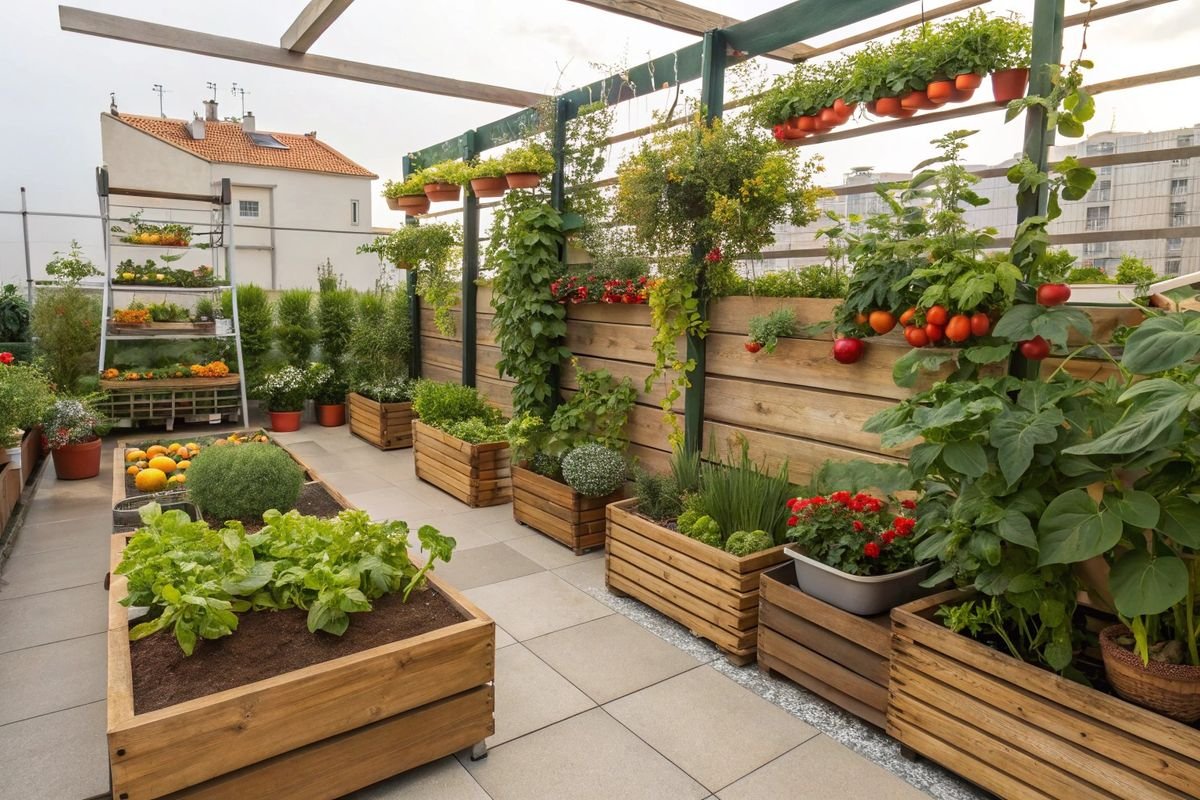
Let me be honest with you — when I first moved into my apartment, my balcony was basically a storage unit for things I didn’t know where else to put. Broken umbrella, a dusty yoga mat, three pairs of shoes I kept meaning to donate. Classic.
Then one summer, I got really tired of paying grocery store prices for fresh herbs. Basil especially. I use it constantly and it wilts two days after you buy it. So I cleared off one corner of that tiny balcony — maybe 4 square feet of usable space — and I started experimenting.
That was two years ago. Now that same balcony grows tomatoes, herbs, lettuce, a couple of dwarf pepper plants, and honestly looks better than some full gardens I’ve seen. The space didn’t change. My approach did.
Here are the 5 hacks that actually made the difference — no fluff, no stuff you’ve already read a hundred times.
1. Stop Thinking Horizontally — Go Vertical Immediately
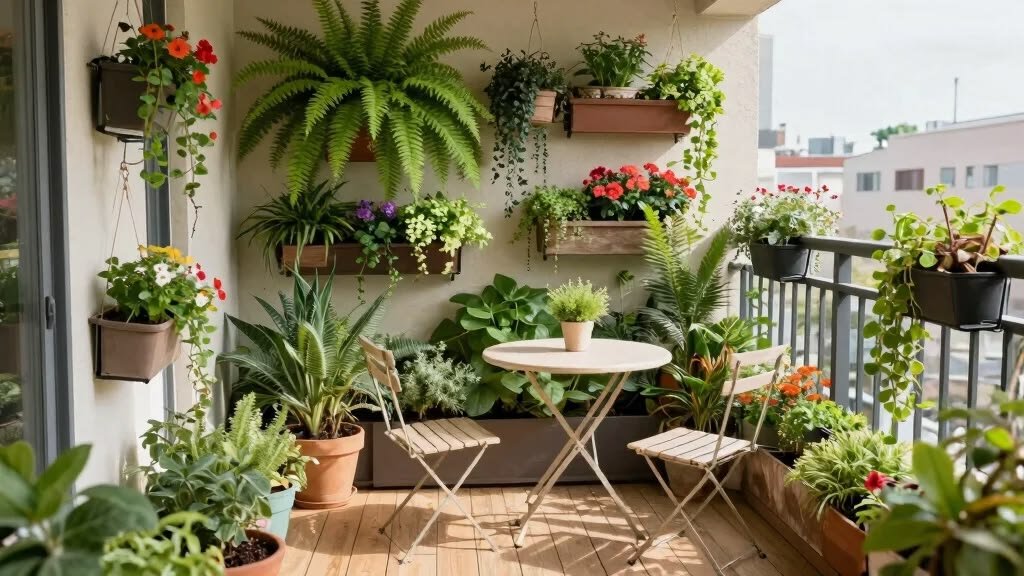
This was the single biggest shift for me. I kept arranging pots on the floor like I had a backyard. I didn’t. I had maybe 6 feet of railing and a wall.
The moment I installed a vertical wall planter — one of those pocket-style fabric ones you can get for around $20-$30 on Amazon — everything changed. I went from fitting 4 pots to growing 12 different plants in the same footprint.
Here’s what I’d suggest:
- Mount a vertical planter on your balcony wall or railing
- Use the top pockets for plants that need more sun (herbs, peppers)
- Put moisture-loving plants like lettuce in the lower pockets where there’s a bit more shade
- If you don’t want to drill into walls, get a freestanding tiered shelf — IKEA and similar stores sell outdoor-rated ones for under $40
I also added a rail planter that hooks directly onto my balcony railing. Those are brilliant because they use completely dead space. The railing was just sitting there being a railing. Now it’s growing strawberries.
A mistake I made early on: I crammed too many plants into the vertical planter without thinking about airflow. Plants got leggy and a few developed mold at the base. Leave a little breathing room — it’s not about quantity, it’s about healthy plants.
If you want more inspiration on how to really make a small balcony feel bigger and more functional, 7 Easy Apartment Garden Guide Vertical Gardening Ideas That Save Space is a great starting point.
2. Use Self-Watering Containers (Seriously, They’re Not Just for Lazy People)
Okay, I’ll admit — I first bought self-watering pots because I travel for work and couldn’t trust myself to remember watering schedules. But after using them for a season, I realized they’re actually better for plant health in general, not just for convenience.
Here’s why this matters on a tiny balcony specifically: small containers dry out fast. On a hot summer afternoon, a regular terracotta pot can go from damp to bone dry in a few hours if it’s in direct sun. I lost a whole basil plant this way before I understood what was happening.
Self-watering containers have a reservoir at the bottom. Roots grow down toward the moisture, which also encourages deeper, stronger root systems. You fill the reservoir every few days instead of watering daily.
What I’m currently using:
| Container Type | Best For | Approximate Cost |
|---|---|---|
| Self-watering window boxes | Herbs, lettuce | $15–$35 |
| Self-watering round pots | Tomatoes, peppers | $20–$50 |
| DIY wicking pots (plastic tub + wicks) | Budget option, any plant | Under $10 |
The DIY version actually works really well if you’re on a budget. You basically put a smaller pot inside a larger one, run cotton rope wicks through the drainage holes, and fill the bottom reservoir with water. I did this for three of my herb pots and they’ve been thriving.
One thing to watch: self-watering containers can cause root rot if the reservoir never fully empties. I let mine dry out completely every two to three weeks just to reset it. Small detail, big difference.
3. Match Your Plants to Your Balcony’s Light — Not Your Wishlist
This is where most beginners (including past me) go completely wrong.
I wanted to grow everything. Tomatoes, cucumbers, eggplant, herbs, flowers — all at once. The problem? My balcony faces northeast. It gets maybe 3-4 hours of direct sun in the morning and then goes into shade. That’s not enough for heavy fruiting vegetables.
I kept wondering why my tomatoes were flowering but not fruiting. Why my pepper plants looked sad and pale. It wasn’t the watering, it wasn’t the soil — it was the light. Or lack of it.
Here’s a simple framework:
- Full sun (6+ hours): Tomatoes, peppers, cucumbers, basil, most fruiting crops
- Partial sun (3-6 hours): Lettuce, spinach, herbs like cilantro and parsley, strawberries
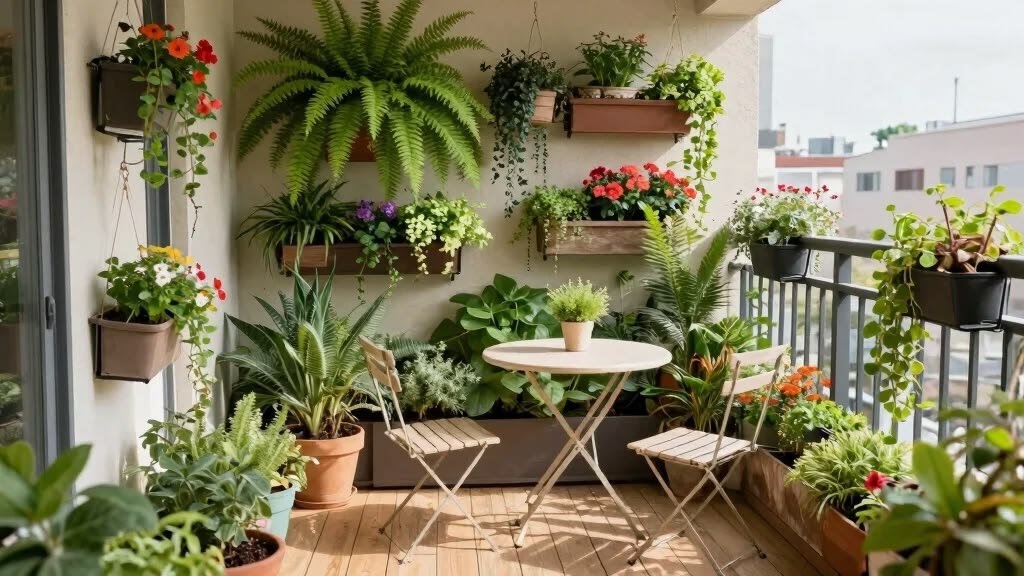
- Low light (under 3 hours): Mint, ferns, peace lily, pothos, snake plants
Once I switched to growing what actually suited my balcony’s light conditions — lots of leafy greens, mint, chives, and a few strawberries — everything started thriving. And I actually started harvesting things instead of watching plants struggle.
If you do have a south or west-facing balcony and get good sun, you’re in luck — you can grow a lot more. Check out 10 Smart Apartment Garden Guide Vegetable Picks for Small Spaces for a solid list of what works well in containers.
A quick tip for tracking light: Download an app called Sun Seeker or simply observe your balcony at 9am, 12pm, and 3pm on a clear day. Note which areas get direct sun at each time. That 15-minute exercise will save you months of plant frustration.
4. Treat Your Soil Like It Actually Matters (Because It Really Does)
For the longest time I just grabbed whatever bag of potting mix was cheapest at the garden center. Figured soil was soil. I was wrong about this in a way that cost me quite a few plants and a fair amount of money.
Regular garden soil in containers is a trap. It compacts over time, stops draining properly, and basically suffocates roots. I had pots where water would just sit on top and take forever to drain — classic sign of compacted, poor-quality soil.
What I mix now for almost every container:
- 60% quality potting mix (I like Miracle-Gro or FoxFarm)
- 20% perlite (for drainage and aeration)
- 20% compost or worm castings (for nutrients)
This combination stays light and airy, drains well, and gives plants a good nutrient base. The perlite especially makes a huge difference — those tiny white pieces prevent the soil from compacting.
For herbs specifically, I add a little extra perlite because most herbs hate wet feet. Rosemary and lavender especially — they want almost sandy conditions.
Refreshing your soil each season is also something I wish someone had told me earlier. After one growing season, potting mix loses a lot of its structure and nutrients. I now dump out old soil, mix in fresh compost, and refill before each new planting cycle. The difference in plant health is immediately visible.
For deeper guidance on this topic, 6 Powerful Apartment Garden Guide Soil Tips for Better Growth covers it really thoroughly.
5. Build a Simple Watering Routine That Fits Your Real Life
I’ve noticed that most plant deaths in apartment gardens aren’t from pests or disease or bad soil. They’re from inconsistent watering — either too much all at once or completely forgotten for a week.
The problem is that life gets busy. You have a long day at work, you forget. Then you feel guilty and overwater to compensate. Plants don’t like either extreme.
Here’s what actually helped me build consistency:
Morning watering, always. Not evening. Evening watering on a balcony leaves moisture sitting on leaves overnight, which invites fungal problems. Morning watering gives leaves time to dry and lets roots absorb moisture before the heat of the day.
The finger test before every water. Stick your finger an inch into the soil. If it’s still damp, skip it. If it’s dry, water thoroughly. This sounds too simple but it genuinely prevents 90% of overwatering issues.
A simple weekly schedule I use:
| Day | Task |
|---|---|
| Monday | Check all pots, water as needed |
| Wednesday | Mid-week check, fertilize if scheduled |
| Friday | Deep water, check for pests |
| Sunday | General cleanup, remove dead leaves |
I also set a phone reminder called “plant check” every Monday and Friday. Takes 10 minutes total. That routine has kept everything alive through some pretty chaotic weeks.
If you want to build something more structured, 4 Simple Apartment Garden Guide Schedules That Keep Plants Thriving has some really practical templates you can adapt.
A Few Common Mistakes I See (And Made Myself)
Since I’ve been through the trial-and-error phase, let me just quickly flag a few things that trip up most beginners:
Buying too many plants at once. It feels exciting, but you end up overwhelmed and some plants get neglected. Start with 3-5 things you’ll actually use. Herbs are always a good first pick.
Ignoring drainage. Every container needs drainage holes. No exceptions. Plants sitting in standing water will develop root rot and die. If you love the look of a pot that doesn’t have holes, use it as a cachepot (outer decorative pot) and keep the plant in a plain nursery pot inside it.
Skipping fertilizer. Container plants use up nutrients quickly because they’re in a limited amount of soil. A slow-release granular fertilizer mixed into the soil at planting time, plus a liquid feed every 2-3 weeks during growing season, makes a noticeable difference.
Treating every plant the same. Mint loves water. Rosemary hates it. Tomatoes need feeding every week. Succulents barely need any. Learn the individual needs of what you’re growing — it doesn’t take long and it changes everything.
What My Balcony Looks Like Now (Just So You Know This Works)
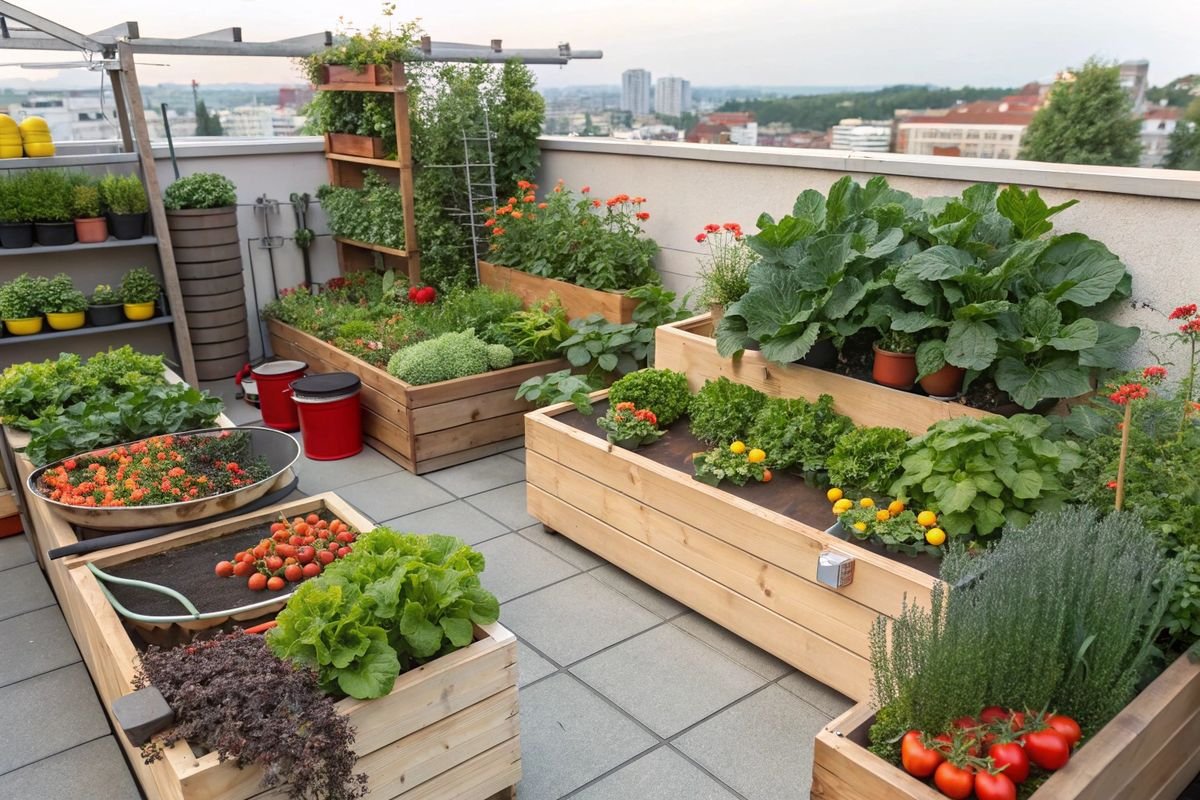
In roughly 30 square feet of balcony space, I currently have: two cherry tomato plants in large self-watering containers, a vertical planter with basil, cilantro, parsley, mint, and chives, a railing planter with strawberries, two pots of lettuce, and a dwarf pepper plant that’s producing more than I expected.
I haven’t bought fresh herbs from a grocery store in about eight months. The lettuce and tomatoes mean I’m regularly cutting my produce bill too. Not by a dramatic amount, but enough that I notice.
More than the savings though, I genuinely enjoy going out there in the morning with my coffee and checking on everything. It’s become one of my favorite parts of the day. There’s something really satisfying about eating something you grew yourself, even if it’s just a handful of basil on pasta.
If you’re just getting started and feeling a little overwhelmed by where to begin, don’t overthink it. Pick one hack from this list — ideally the vertical planting one or the self-watering containers — and just start there. The rest builds naturally as you go.
Also worth reading: 9 Smart Apartment Garden Guide Tricks for Tiny Balconies — it goes into even more detail on maximizing small outdoor spaces and has some clever ideas I hadn’t even thought of when I first started.