Okay, I’ll be honest — when I first set up my balcony garden, I was so proud of it. I’d spent three weekends hauling pots, stringing up fairy lights, and cramming every inch with plants I’d impulse-bought from the nursery. Then my friend visited, looked around, and said, “Oh… it’s cozy in here.”
She meant cramped. I knew it. I felt it.
That moment sent me down a rabbit hole of rearranging, researching, and honestly, a lot of trial and error. What I discovered is that most small balcony gardens don’t look tiny because of size — they look tiny because of decor decisions. Decisions I was making without even realizing it.
So here are the five mistakes I made (and have seen repeated over and over in apartment gardening communities) that shrunk my balcony visually — and what I did to fix each one.
1. I Overcrowded the Floor Space With Too Many Pots
This was my biggest sin. I had twelve pots on a balcony that was maybe 6 feet by 8 feet. Twelve. I told myself more plants = more garden, but what it actually meant was less walkable space, a tripping hazard, and a visual mess that overwhelmed anyone who stepped out there.
The thing about floor clutter is that it draws the eye down. When your eyes hit the ground first and there’s chaos there, your brain registers “small.” It’s the same reason cluttered rooms feel smaller than open ones, even at the same square footage.
What I changed:
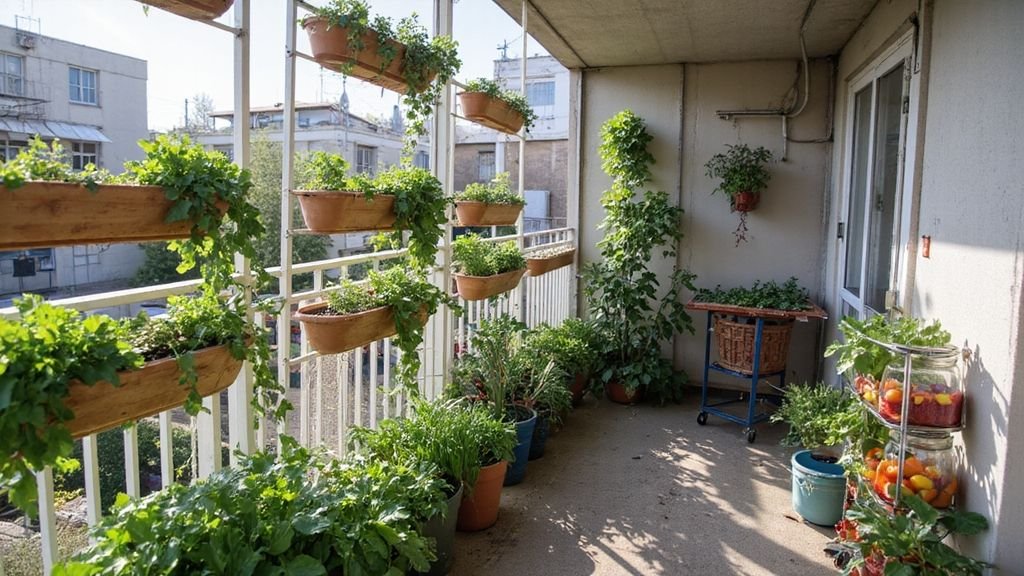
I pulled everything off the floor temporarily and only put back what I actually needed at ground level. Tall plants — my olive tree, a tall snake plant — stayed. The rest went vertical.
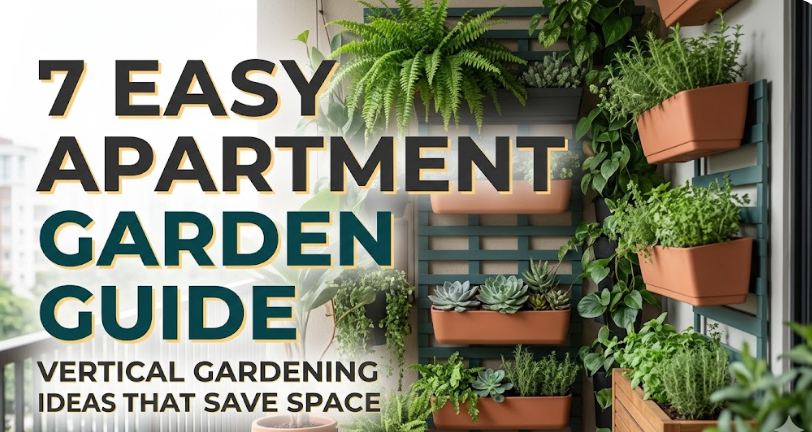
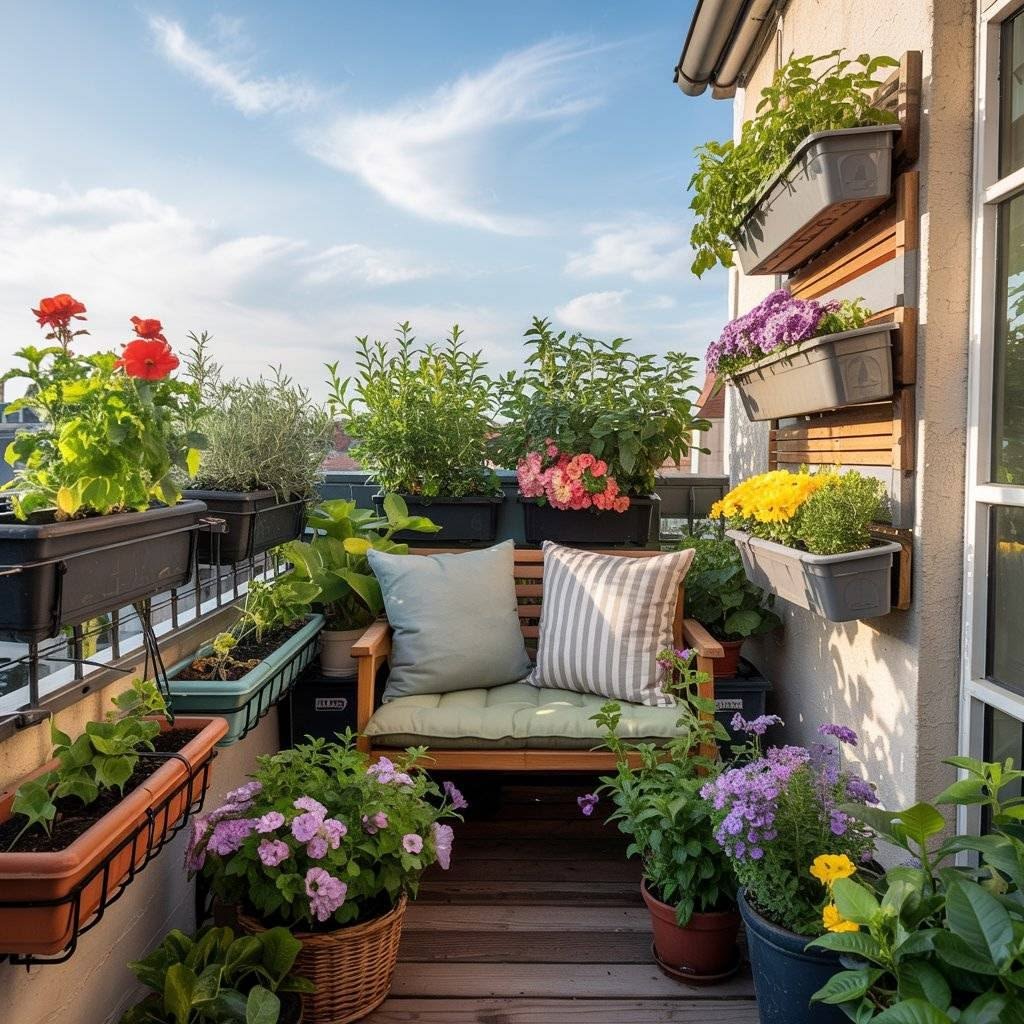
I picked up a tiered plant stand (nothing fancy, about $25 from a local home store) and a wall-mounted planter rack. Moving pots up the wall immediately gave my floor breathing room. The balcony felt like it doubled in size overnight — same plants, completely different arrangement.
A quick rule I now follow: No more than 3–4 pots directly on the floor at any time. Everything else goes on shelves, railings, or wall mounts.
If you want real inspiration for this, check out these 5 Powerful Apartment Garden Guide Setup Ideas for Small Spaces — the section on vertical layering genuinely changed how I think about floor-to-ceiling use.
2. I Chose Pots That Were All the Same Height
This one is subtle but deadly for small spaces. When I first set up, I bought a matching set of pots — same terracotta color, same height, lined up like little soldiers along my railing. It looked “neat” but also completely flat and weirdly institutional, like a waiting room at a garden center.
The problem? Visual monotony makes a space feel confined. Your eye has nowhere interesting to travel, so it just… stops. And a space that stops your eye feels small.
What actually works: varying heights dramatically.
Think of it like a skyline — some buildings are short, some are mid-rise, some are towers. That variation creates visual depth and movement.
Here’s a simple height guide I use now:
| Layer | Height Range | Example Plants |
|---|---|---|
| Low | 6–12 inches | Herbs, succulents, strawberries |
| Mid | 18–30 inches | Tomatoes, peppers, pothos |
| Tall | 3–5 feet | Olive tree, bamboo, tall grasses |
When I rearranged with this in mind — tallest at the back/corners, shortest at the front/railing — suddenly the balcony had dimension. It looked curated rather than crowded.
3. I Ignored the Color of My Pots and Furniture
This one genuinely surprised me. I’d always thought of plant decor as being about the plants, not the containers. But after a brutal afternoon staring at my balcony wondering why it felt so heavy and dark, I realized: I had dark grey pots, a dark brown railing, dark green plants everywhere, and a dark outdoor rug I’d bought on sale.
The whole space was absorbing light instead of reflecting it.
Dark colors visually advance — meaning they feel closer to you. In a large space, that creates coziness. In a tiny balcony, it creates a cave.
What I switched to:
- Light-colored or white pots (even just a few) to bounce light around
- A lighter rug — I went with a natural jute one that brightened the floor without looking sterile
- One or two pots in a warm terracotta to add warmth without heaviness
I also added a small mirror — a weatherproof outdoor one — on one wall. This is genuinely the sneakiest trick in the book. It reflects the greenery and sky and makes the brain think the space extends further. Restaurants do this all the time.
The color balance I aim for now:
- 60% light or neutral tones (pots, furniture, walls)
- 30% natural green (plants, obviously)
- 10% accent color (one bold pot, a cushion, some flowers)
For more on making your garden look good visually, these 8 Proven Apartment Garden Guide Aesthetic Tips for Instagram-Worthy Balconies are actually practical, not just pretty.
4. I Put Furniture in the Wrong Place
At one point I had a little bistro table and two chairs on my balcony because I wanted to eat breakfast outside. Adorable in theory. In practice, the chairs, once pulled out, blocked access to half my plants and created a pinch point that made the whole area feel like an obstacle course.
But I didn’t want to give up the seating. So I just… left it badly placed for four months. Every time I went out there I’d squeeze around the chairs, knock a pot, feel vaguely annoyed.
The fix was embarrassingly simple: I pushed the table into the corner diagonally, angled the chairs to face outward (toward the railing/view), and suddenly the center of the balcony was open again. That open central zone makes a huge difference — it’s where your eye lands first when you step out, and if that space is clear, the whole balcony reads as bigger.
A few furniture lessons I’ve learned:
- Corner placement beats center placement almost always on small balconies
- Folding or stackable furniture is your best friend — chairs you can hang on the wall when not in use are genuinely life-changing
- Furniture with legs (that you can see under) feels lighter than solid blocky pieces
- Avoid anything that blocks sightlines to the railing or the sky — that visual connection to “outside” is what stops a balcony from feeling like a box
5. I Used the Wrong Size Planters for the Space
This is the mistake I see most often in apartment gardening groups online, and I made it myself twice before I understood what was happening.
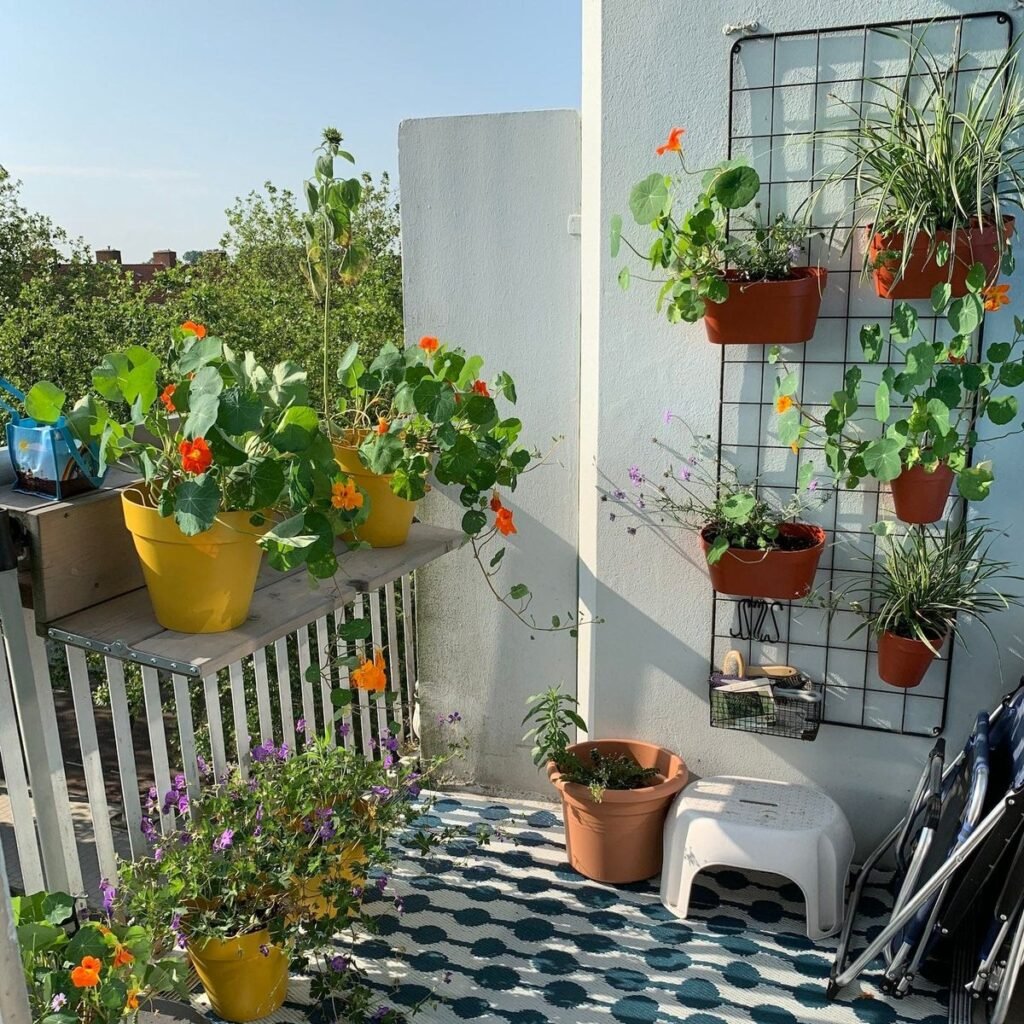
First mistake: I used pots that were too small. My basil was in a little 4-inch pot, my cherry tomatoes in a 6-inch one, and everything looked sad and underscaled — like doll furniture in a real room. Small pots create visual busyness because you have too many of them, and they also make the space feel more cramped because the eye reads many small objects as chaotic.
Second mistake (after I overcorrected): I went too big. I bought one enormous planter — about 24 inches — thinking one statement piece would anchor the balcony. It took up a full third of the floor space and blocked natural light from reaching the other plants.
The sweet spot for most small balconies:
| Balcony Size | Recommended Max Pot Size | Number of Pots |
|---|---|---|
| Under 40 sq ft | 12–14 inches | 6–8 total |
| 40–60 sq ft | 14–18 inches | 8–12 total |
| 60–80 sq ft | Up to 20 inches | 12–16 total |
The rule I use now: one or two “statement” pots (larger, maybe 14–18 inches), and everything else in a consistent mid-size (10–12 inches). Consistent sizing across most of your containers creates visual calm — and calm reads as spacious.
Also, pot shape matters. Tall, narrow pots take up less floor space than wide, shallow ones and pull the eye upward. If you’re working with very limited floor space, swap wide pots for tall cylindrical ones wherever you can.
If you’re still figuring out which plants to put in those pots, these 9 Smart Apartment Garden Guide Tricks for Tiny Balconies cover plant selection for small spaces really well — it’s not just about what fits, it’s about what looks right in a compact area.
A Quick Summary of the Fixes
Here’s everything I changed, at a glance:
| Mistake | Why It Shrinks the Space | The Fix |
|---|---|---|
| Too many floor pots | Draws eyes down, creates chaos | Go vertical — shelves, wall mounts, railings |
| Same-height pots | Flat, monotonous visual | Layer heights: low, mid, tall |
| Dark colors everywhere | Absorbs light, advances visually | Add light pots, lighter rug, a small mirror |
| Bad furniture placement | Blocks flow and sightlines | Corner placement, open center, folding furniture |
| Wrong pot sizes | Too small = busy, too big = dominant | One or two statement pots, consistent mid-size for rest |
The Bigger Lesson I Took From All This
When your balcony garden feels cramped, the instinct is usually to remove things. And sometimes that’s right. But often the issue isn’t quantity — it’s arrangement, proportion, and how light is moving (or not moving) through the space.
I kept every plant I had after making these changes. I just moved them up, spread them out, lightened up the colors, and cleared the center. The balcony didn’t get any bigger, but it felt like it did — and that’s really what matters when you’re out there with your morning coffee.
Small balconies are actually a really fun design challenge once you stop fighting the size and start working with it. Think of it as a tiny gallery instead of a miniature yard. Every element matters, every pot earns its place, and when it comes together, it’s genuinely satisfying in a way a sprawling garden sometimes isn’t.
If you’re just getting started and want to avoid the bigger pitfalls before they happen, I’d highly recommend reading 7 Essential Apartment Garden Guide Tips for Beginners — it covers the foundational stuff I wish someone had told me in month one.