I still remember the day I looked at my sad little basil plant sitting on the windowsill, its leaves turning yellow, drooping like it had given up on life. I had watered it. I had talked to it (yes, really). I had done everything I thought was right — and yet there it was, basically begging me to put it out of its misery.
That was about two years ago. Today, that same windowsill holds a thriving mini herb garden, two tomato plants that actually produce tomatoes, and a monstera that’s practically trying to take over the kitchen. The difference? I stopped guessing and started actually learning what plants need to grow fast in an apartment setting.
If you’re in that early frustrating phase where nothing seems to grow the way it should, these tricks are going to feel like someone finally turned the lights on.
1. Stop Watering on a Schedule — Water Based on the Soil
This was my biggest mistake early on. I had set a reminder on my phone: water plants every two days. Sounded logical, right? Nope. Completely wrong.
Plants don’t care what day it is. They care about what their soil feels like. Some weeks my apartment gets dry air from the AC running nonstop, and the soil dries out in a day. Other weeks, humidity is high and the pot stays moist for four days.
What actually works:
Stick your finger about an inch into the soil. If it feels dry at that depth, water. If it still feels damp, leave it alone. For succulents and cacti, go even deeper — two inches at least.
I also picked up a cheap soil moisture meter from a local garden shop (cost me around 400 PKR). It takes the guesswork out completely. Green means wait, red means water. Simple.
Overwatering is genuinely the #1 killer of apartment plants. Once I fixed this one habit, my plant survival rate jumped dramatically.
2. Match Your Plant to Your Light — Not the Other Way Around
Here’s something nobody tells beginners: you can’t force a sun-loving plant to thrive in a dim corner, no matter how much you love it.
I learned this the hard way with a pepper plant I tried to grow in my north-facing room. The thing barely survived. Meanwhile, the same variety my neighbor grew near her south-facing window was producing peppers like crazy.
A quick light guide for apartments:
| Window Direction | Light Level | Best Plants |
|---|---|---|
| South-facing | Bright, direct light | Tomatoes, peppers, herbs, citrus |
| East-facing | Gentle morning sun | Ferns, pothos, peace lily |
| West-facing | Warm afternoon light | Succulents, geraniums, lavender |
| North-facing | Low/indirect light | Snake plant, ZZ plant, philodendron |
Before buying any plant, check which direction your main windows face. Then choose plants that suit your space instead of fighting against it.
If your apartment is genuinely dark, grow lights are a game-changer. I use a basic LED grow light strip from Daraz — plugged in for 12-14 hours a day, and my herbs think they’re living in sunshine.
For more plant ideas suited to small spaces, check out 9 Easy Apartment Garden Guide Plants That Grow Like Crazy.
3. Upgrade Your Soil — Potting Mix Is Not All the Same
When I first started, I bought whatever bag of soil was cheapest at the nursery. Big mistake.
Generic garden soil is usually too dense for containers. It compacts over time, stops draining properly, and essentially suffocates your plant’s roots. Growth slows down, leaves look sad, and you can’t figure out why.
What I use now:
For most vegetables and herbs, I mix:
- 60% good quality potting mix
- 20% perlite (for drainage and aeration)
- 20% compost (for nutrients)
Perlite looks like tiny white balls — it keeps the soil light and airy so roots can breathe and spread out faster. This one change made a noticeable difference in how quickly my plants started putting out new growth.
For succulents and cacti, I swap the compost for coarse sand and increase the perlite ratio.
If you want to dig deeper into this, 6 Powerful Apartment Garden Guide Soil Tips for Better Growth is worth a read — it covers soil mixes in a lot more detail.
4. Feed Your Plants — But Don’t Overfeed Them
Plants growing in pots use up nutrients faster than plants in the ground. Rain doesn’t wash in fresh minerals, earthworms don’t aerate and enrich the soil, and the same small amount of potting mix has to keep feeding your plant indefinitely.
That means you have to step in.
I fertilize my plants once every two weeks during spring and summer (their active growing season), and cut back to once a month in winter.
What I use:
- Liquid seaweed fertilizer — gentle, hard to burn plants with, great for leafy greens and herbs
- Tomato feed — high in potassium, brilliant for fruiting plants
- Slow-release granules — for plants I don’t want to think about too much; just sprinkle on the soil surface every 2-3 months
The mistake most beginners make is overfeeding. More fertilizer does not mean faster growth — it usually means burned roots and yellow leaves. Always follow the instructions on the packaging and when in doubt, go half-strength.
5. Prune Regularly — Even When It Feels Wrong
The first time someone told me to cut my basil back, I panicked. It looked so healthy. Why would I cut it?
But pruning is genuinely one of the fastest ways to encourage new growth. When you snip off the top of a plant, it redirects energy into producing two new shoots from the sides. More branches = more leaves = more harvests.
How to prune herbs the right way:
- Never cut more than 1/3 of the plant at once
- Always cut just above a leaf node (the point where leaves branch off the stem)
- Remove any yellowing or dead leaves immediately
- Pinch off flowers on herb plants — once herbs flower (called “bolting”), the leaves lose flavor and growth slows
I do a quick 5-minute pruning round every week or two. It sounds tedious but honestly becomes a kind of meditative routine. And the results are real — my mint went from a scraggly little clump to a full bushy plant within a month of regular pinching.
6. Get the Temperature and Humidity Right
Most apartment plants are actually tropical by origin. They like warmth and humidity — which is ironic because most apartments have dry air, especially with air conditioning running constantly.
I noticed my plants started really struggling in summer once I cranked up the AC. The leaves got dry and crispy at the edges, and growth slowed noticeably.
Here’s what helped:
- Grouping plants together — they create a little microclimate of humidity around each other through transpiration
- A small humidifier near my plant corner — this made a noticeable difference for my tropical plants like the monstera and the peace lily
- Pebble tray with water — put a shallow tray filled with pebbles and water under your pot; as the water evaporates, it adds humidity right around the plant
- Misting — I do this a few times a week for my leafy plants, though honestly the humidifier works better for consistency
Keep plants away from AC vents and heating units — the direct airflow dries them out and stresses them badly.
7. Choose the Right Pot — Size and Material Both Matter
This one surprised me. I didn’t think the pot itself would make much difference. Turns out it makes a huge difference.
Pot size:
If you put a small plant in a massive pot, the extra soil holds too much water and the roots sit in dampness — hello, root rot. If the pot is too small, roots get cramped and growth stops.
A good rule of thumb: choose a pot that’s about 1-2 inches larger in diameter than your plant’s current root ball. When roots start coming out of the drainage holes, it’s time to pot up.
Pot material:
| Material | Pros | Cons |
|---|---|---|
| Terracotta | Breathable, prevents overwatering | Dries out faster, heavier |
| Plastic | Retains moisture, lightweight | Can get waterlogged if overwatered |
| Ceramic | Looks great, good weight | Heavier, can crack in cold |
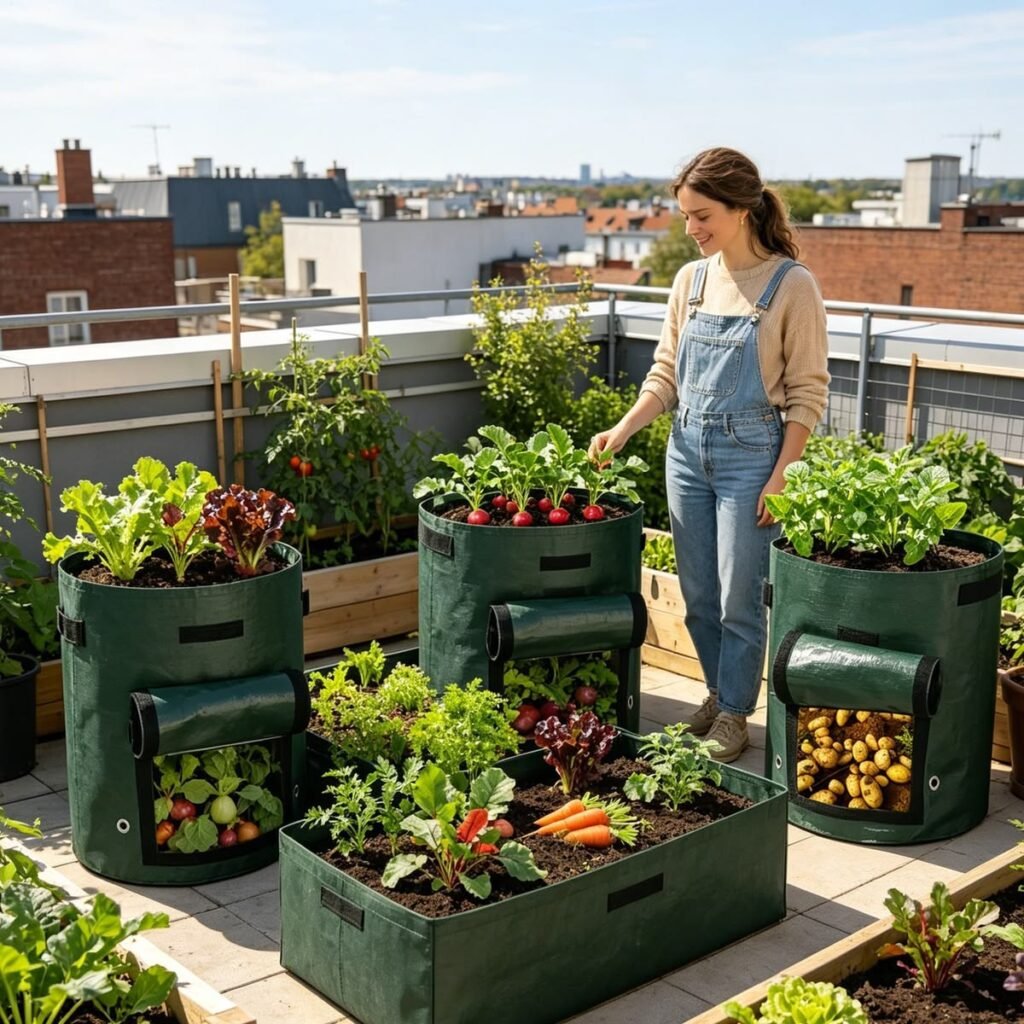
| Fabric grow bags | Excellent drainage, air-prunes roots | Dries quickly, less aesthetic |
I personally love fabric grow bags for tomatoes and peppers — the air-pruning effect encourages incredibly healthy root systems. For herbs and decorative plants near the window, terracotta or ceramic pots work beautifully.
Always, always make sure your pot has drainage holes. I’ve seen people block them up because they’re worried about mess. Plants sitting in stagnant water will rot. No exceptions.
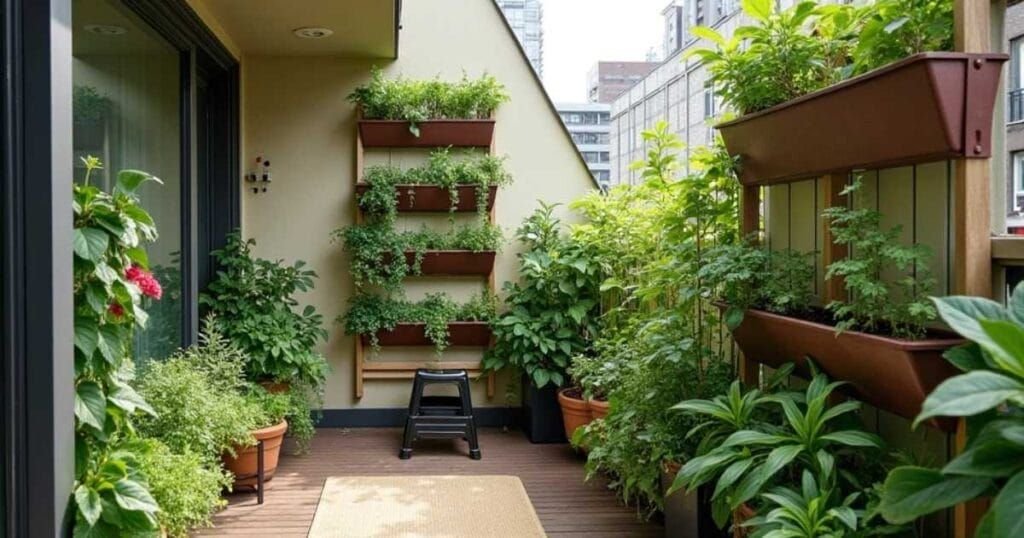
For layout ideas that make the most of these containers in a small space, 5 Powerful Apartment Garden Guide Setup Ideas for Small Spaces has some really practical suggestions.
8. Be Consistent With Your Care Routine
I know this sounds obvious, but hear me out — inconsistency is probably the silent killer of more apartment gardens than any single pest or disease.
Plants thrive on routine. They adapt to the conditions you give them. If you water deeply once a week, they develop deep roots. If you fertilize regularly, they build strong growth cycles. If you check on them every few days, you catch problems before they spiral.
The weeks I got lazy and ignored my plants for 10 days? I always came back to something sad — a pest problem that had exploded, a plant that had dried out completely, or a pot that had somehow become waterlogged.
My actual weekly routine (takes about 20 minutes total):
- Monday: Check soil moisture on everything, water what needs it
- Wednesday: Quick visual check — any yellowing leaves? Pests? New growth?
- Friday: Water again if needed, rotate pots so all sides get light exposure
- Every two weeks: Fertilize, prune, and wipe down large leaves with a damp cloth (yes, dusty leaves photosynthesize less efficiently)
Rotating your pots is something a lot of people skip, but it stops plants from growing lopsided toward the light source. A quarter turn every few days and your plant grows evenly in all directions.
Common Mistakes That Kill Growth (And How I Learned to Avoid Them)
Since I’ve made basically all of these myself, I can say this with confidence:
Ignoring drainage — Water must escape. If it sits in the bottom of the pot, roots rot. Always check that drainage holes are clear.
Using tap water without thinking — In many cities, tap water has chlorine and fluoride that can build up in soil over time. Leaving tap water in an open container overnight lets the chlorine evaporate. Or use filtered water if your plants are sensitive.
Repotting too often — Repotting stresses plants. Only do it when the plant has truly outgrown its container.
Putting plants in the wrong spots and leaving them there — If a plant looks unhappy, move it. Sometimes the answer is just more light, or less direct sun, or a spot away from the AC.
Expecting overnight results — Plants grow slowly. A new leaf on a monstera might take 2-3 weeks. That doesn’t mean something’s wrong — it means you need to be patient and keep showing up consistently.
What Growth Actually Looks Like When You Get It Right
Once I started applying all of these consistently, things changed noticeably within about 6-8 weeks. My basil started producing so much I was giving it away to neighbors. My cherry tomato plant on the balcony gave me a small harvest I was genuinely proud of. Even the snake plant I’d basically ignored for months started pushing out a new leaf.
It’s not magic. It’s just understanding what your plants actually need — light, water, nutrients, the right soil, and consistency — and then showing up for them.
The apartment doesn’t limit you as much as you think. I’ve seen people grow full herb gardens, strawberries, and even dwarf lemon trees in tiny flats. The space isn’t the problem. The approach is.
Start with one or two plants, apply these tricks, and watch what happens. I think you’ll surprise yourself.
Also worth reading: 10 Easy Apartment Garden Guide Hacks I Wish I Knew Earlier — genuinely useful stuff if you’re still in the early stages of figuring all this out.