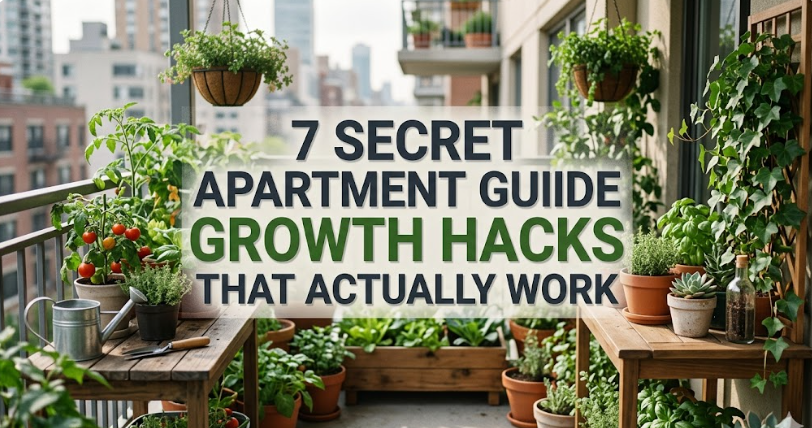
7 Apartment Garden Growth Hacks That No Secret Guide Will Tell You
So you live in an apartment. Perhaps you have a small balcony. Or maybe you don’t even have that — just a window with a sad little ledge.
And you want to grow things.
Good news: you absolutely can. People grow tomatoes on fire escapes, herbs on kitchen counters, and entire salad greens under a grow light in the closet. Urban gardening is not only possible — it’s flourishing.
This is not your run-of-the-mill “buy a pot and add dirt” apartment garden guide. These are seven hacks — real, tested, and a little bit secret — that make an absolutely huge difference in small spaces. This guide will help you grow something worth bragging about — whether you’re a total novice, or one of those people who has managed to kill three basil plants in a row (we’ve all been there).
Let’s get into it.
Why Most Apartment Gardens Fail While They Are Still Theoretical
Before the hacks, let’s explain what is wrong.
Most people fail at apartment gardening not because of bad luck — but due to bad setup. They buy the wrong soil. They select plants that require full sun, even when their apartment faces north. They over- or under-water.
The biggest mistakes are:
- Not optimal light conditions for the selected plant
- Using normal garden soil in containers (it compacts and suffocates roots)
- Too much water — the most common cause of indoor plants dying
- Choosing plants that require too much space
Once you know the traps, you can avoid them. And that’s precisely what these hacks are meant to do.
Hack No. 1: Choose Your Plant for Your Light — Not Vice Versa
This is the best thing in this entire guide.
Apartment gardeners generally choose a plant they would like to grow and attempt to cram it into their space. That’s backwards.
Start with your light. Take a look at your window throughout the day. Observe how much direct sun the space gets, and for how long.
The Three Light Zones
| Light Type | What It Looks Like | Best Plants |
|---|---|---|
| Bright Direct Light | Full sun 4–6+ hours a day | Tomatoes, peppers, basil, succulents |
| Bright Indirect Light | Near a window but no direct sunlight | Lettuce, spinach, herbs, pothos |
| Low Light | Distant from windows most of the time | Ferns, snake plants, peace lily |
- South-facing windows — You’re lucky. That’s prime real estate for edible plants.
- East or west-facing windows — A few hours of direct sun. Great for herbs and leafy greens.
- North-facing windows — Low-light zones. Stick to shade-loving houseplants or embrace a grow light.
The Grow Light Shortcut
Even a basic LED grow light makes all the difference. You can suspend one beneath a shelf or above a countertop and grow herbs, greens, or even strawberries throughout the year.
Opt for a full-spectrum LED panel. Even a budget one (under $30) has an impact. Schedule it for 14–16 hours a day.
This one upgrade turns a dark apartment into a growing machine year-round.
Hack No. 2: Create a “Soil Stack” That Really Feeds Your Plants
Here’s something most beginners don’t realize: the soil you use is more important than just about anything else.
Bagged potting mix from a hardware store is fine as a base — but it runs out of nutrients quickly on its own, especially in containers. You have to create what experienced growers refer to as a soil stack.
The 3-Layer Soil Stack Formula
- Drainage layer — A flat layer of perlite or coarse gravel. This prevents the roots from sitting in water.
- Middle layer (main growing medium) — Good-quality potting mix. Not garden soil — that compacts in pots and smothers roots.
- Top layer (time-release nutrients) — Worm castings, compost, or a slow-release organic fertilizer. It nourishes your plants for weeks.
These are the mini ecosystems you create in your pot. Roots grow strong. Nutrients stay available longer. You water less often.
Quick Soil Mix Ratio
For a typical 10-inch pot, use:
- 60% quality potting mix
- 20% perlite (for drainage)
- 20% worm castings or compost (for nutrients)
Mix it well before planting. This ratio applies to almost all vegetables, herbs, and fruiting plants.
Hack No. 3: Use Vertical Space Like a Pro
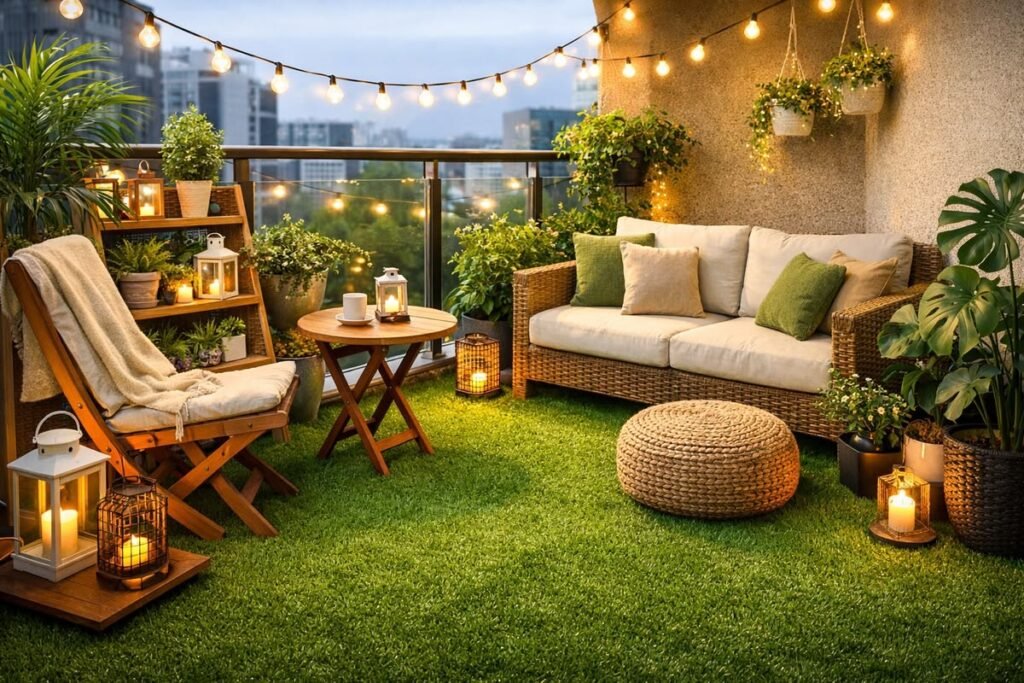
There is very limited square footage in an apartment. But wall space? That’s often completely wasted.
Vertical gardening is the growth hack that doubles — sometimes triples — your growing space without taking up a single additional square foot of floor space.
Vertical Options That Fit in Small Spaces
- Pocket planters — Fabric wall pockets placed on a fence or wall. Perfect for strawberries, herbs, lettuce, and succulents. Cheap and easy to install.
- Stackable planters — Tower-style pots that stack one on another. Some take up the footprint of a single pot but can hold 12–20 plants.
- Shelf systems — A basic IKEA-style shelving unit placed near a window turns into a multilevel garden. Each shelf lined with small pots.
- Trellis climbing — Grow cucumbers, pole beans, or sweet peas up a trellis or wire grid. Lots of vertical plant, very little floor space.
- Hanging planters — Use ceiling hooks or curtain rods to hold hanging pots. Trailing herbs like thyme or mint are wonderful here.
How to Choose the Right Vertical System
| System | Best For | Space Required | Difficulty |
|---|---|---|---|
| Pocket planters | Herbs, small greens | Wall space | Easy |
| Stackable towers | Strawberries, lettuce | 1 sq ft floor | Easy |
| Shelving units | Any plants | Near window | Medium |
| Trellis | Cucumbers, beans | Balcony/wall | Medium |
| Hanging pots | Trailing herbs | Ceiling hook | Easy |
Choose one or two of these and stick to them. You’ll be amazed at how much you can grow on a wall or balcony railing.
Hack No. 4: Water Smart with the Finger Test and Self-Watering Pots
Overwatering is the number one killer of apartment plants. And yet it’s also the most straightforward problem to solve.
The rule is: water when the soil is dry, not on a calendar.
The Finger Test
Probe the soil with your finger to the second knuckle (about two inches down). If the soil feels wet, do not water. If it feels dry, it’s time.
It sounds almost too simple. But most new growers water every day regardless, resulting in roots sitting in soggy soil and subsequently rotting.
Different plants require different watering frequency:
- Herbs (basil, cilantro) — Water when top inch is dry
- Succulents and cacti — Water once the entire pot feels dry
- Leafy greens (lettuce, spinach) — Soil should be consistently moist but not wet
- Tomatoes and peppers — Water deeply every 2–3 days during hot weather
The Self-Watering Pot Hack
Self-watering pots have a bottom reservoir. The plant absorbs water through the roots as needed.
This is a game-changer for busy people or any plant owners who forget to water. You fill up the reservoir every few days, and the plant manages its own consumption.
Ideal for tomatoes, herbs, peppers, and any plant you want to grow with less babysitting.
Hack No. 5: Grow the Highest-Yield Plants Your Space Can Handle
Not every plant is worth growing in limited space. Some take months and amount to little. Others give you food or beauty consistently and keep going.
This is about return on investment — which plants give you the most from your limited square footage.
The Best High-Yield Apartment Plants
Leaf Lettuce and Salad Greens The royalty of small-space growing. They grow quickly (4–6 weeks to harvest), thrive in indirect light, and you can pluck outer leaves while the plant keeps growing. A 12-inch pot provides salad for months.
Herbs — particularly basil, mint, and chives Herbs are pricey at grocery stores and perish quickly once cut. Growing your own means maximum freshness. Mint is virtually indestructible. Basil loves a sunny window.
Cherry Tomatoes Most large tomato varieties won’t behave in containers, but cherry varieties like Tiny Tim or Tumbling Tom are compact and heavy producers. A single 5-gallon pot can produce hundreds of tomatoes per season.
Radishes The fastest vegetable you can grow. Ready in 25–30 days. A great “quick win” plant while waiting for slower crops.
Green Onions (Scallions) You can regrow these from grocery store scraps. Just set the white root ends in a glass of water. They regrow in days.
Strawberries Dwarf strawberry varieties do exceptionally well in hanging baskets and pocket planters. They’re gorgeous to look at and fruit all season.
High-Yield Plant Comparison
| Plant | Days to Harvest | Light Needs | Container Size | Difficulty |
|---|---|---|---|---|
| Leaf Lettuce | 30–45 days | Indirect | 6–12 inch pot | Very Easy |
| Basil | 60–90 days | Bright direct | 6 inch pot | Easy |
| Cherry Tomatoes | 55–70 days | Full sun | 5-gallon pot | Medium |
| Radishes | 25–30 days | Indirect/direct | 4–6 inch pot | Very Easy |
| Green Onions (regrow) | 3–7 days | Any light | Glass of water | Easiest |
| Strawberries | 60–90 days | Bright indirect | Hanging basket | Easy |
Start with two or three of these. Get comfortable. Then expand.
Hack No. 6: Feed Your Plants on a Schedule (Most People Skip This)
Here is one practice that separates struggling apartment gardens from thriving ones: steady feeding.
Container plants can’t search for nutrients the way garden plants in the ground can. The roots are confined. When the nutrient content in the potting mix runs out — normally within 4–6 weeks — the plant will struggle.
Signs Your Plant Is Hungry
- Pale or yellowing leaves
- Slow or stunted growth
- Leaves dropping for no reason
- Fewer flowers or fruit than usual
The Simple Feeding Schedule
- Every two weeks — Apply a balanced liquid fertilizer (such as a 10-10-10 or fish emulsion). For most herbs and greens, dilute to half strength.
- Once a month — Sprinkle a fresh layer of worm castings on top of the soil. This feeds beneficial microbes and acts as a slow-release fertilizer.
- At planting time — Mix a slow-release granular fertilizer into the soil. It handles the first 30–60 days with no effort on your part.
Best Fertilizers for Apartment Gardening
| Fertilizer Type | Best For | How Often | Notes |
|---|---|---|---|
| Liquid fish emulsion | Leafy greens, herbs | Every 2 weeks | Smelly but effective |
| Balanced liquid (10-10-10) | All-purpose | Every 2 weeks | Easy to manage |
| Worm castings | All plants | Monthly top dress | Gentle, no burn risk |
| Slow-release granules | Long-term feeding | At planting | Easy set-and-forget |
Don’t overdo it. Too much fertilizer is worse than not enough — it can burn roots. Follow the recommended amounts on the label.
Hack No. 7: Reuse and Repurpose Containers to Save Money
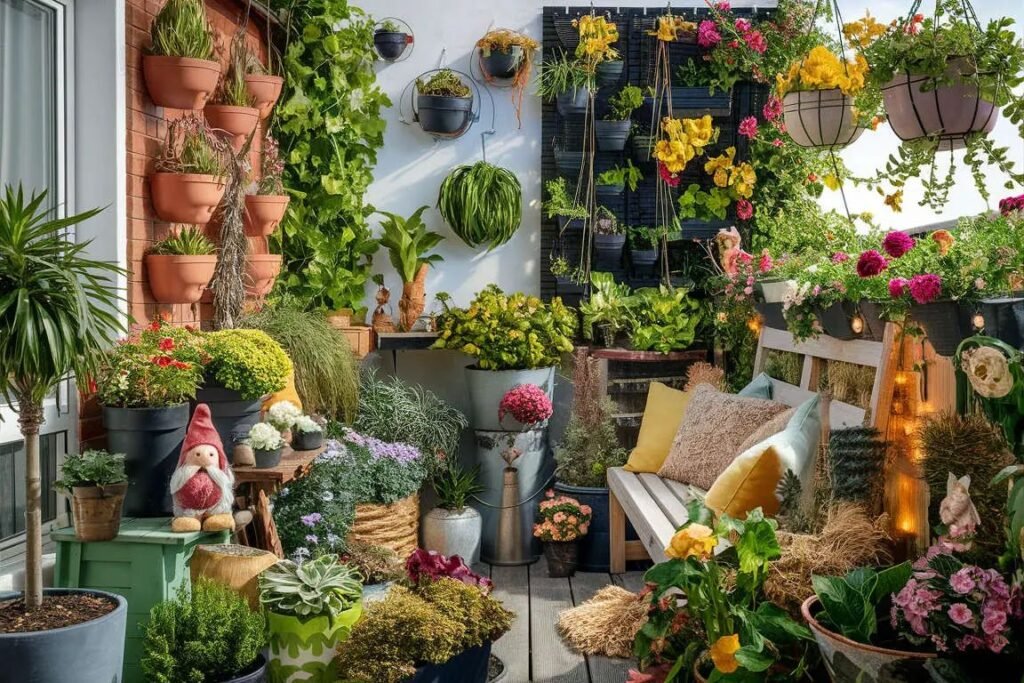
You don’t need fancy pots to grow a lovely apartment garden. Some of the most productive setups use containers that cost nothing and are repurposed from everyday items.
This hack is equal parts cost savings and creativity. It also makes your garden unique and personal.
Surprising Containers That Work Brilliantly
- Colanders — Metal or plastic colanders come with drainage holes built in. Perfect for strawberries or herbs. Air circulation to the roots is excellent.
- Wooden crates — Line with burlap or landscape fabric. Great for deep-rooted plants like tomatoes or peppers.
- 5-gallon buckets — The classic. Inexpensive, sturdy, and big enough for virtually any vegetable. Drill holes in the bottom for drainage.
- Fabric grow bags — Cheap, foldable, and better for plant health since they air-prune roots (preventing them from circling and becoming root-bound). Great for tomatoes, peppers, and potatoes.
- PVC pipe planters — Cut PVC pipe into sections, seal the bottom, drill a few holes on the side, and you’ve got a vertical herb planter. A super easy, low-cost DIY hack.
- Tin cans — Coffee tins, large sauce cans — washed and fitted with drainage holes. Perfect for herbs.
Container Size Guide
| Plant | Minimum Container Size |
|---|---|
| Herbs (single plant) | 4–6 inches |
| Lettuce, greens | 6–8 inches |
| Green onions, radishes | 4–6 inches |
| Cherry tomatoes | 5-gallon (12+ inches deep) |
| Peppers | 3–5 gallon |
| Cucumbers | 5-gallon minimum |
| Strawberries | 6–8 inches per plant |
Whatever container you choose, the rule is this: drainage holes are non-negotiable. No drainage = wet roots = dead plant.
Putting It All Together: A Simple Apartment Garden Starter Plan
Here’s how to put all seven hacks into one simple plan you can begin this week.
Week 1
- Assess your light zones
- Purchase potting mix, perlite, and worm castings
- Set up a single vertical space (a shelf, a pocket planter, or a hanging pot)
Week 2
- Plant fast-growing crops: lettuce, radishes, and one herb
- Begin your watering routine using the finger test
- If light is low, order or purchase a simple LED grow light
Week 3
- Begin feeding on schedule
- Plant a second set of fast-maturing crops for successive harvests
- Explore your container options — be resourceful with what you have
By Week 6
- You should be harvesting your first lettuce and radishes
- Herbs growing strong enough to be trimmed regularly
- Tomatoes or peppers established and starting to grow
FAQs: Apartment Garden Guide
Q: Is it even possible to grow vegetables in my apartment if I don’t have a balcony? Yes, absolutely. Lettuce, herbs, radishes, green onions, and even small tomatoes do well indoors on windowsills or under grow lights. You don’t need outdoor space.
Q: What is the best vegetable for beginners to grow indoors? Leaf lettuce is the top pick. It grows quickly, tolerates lower light, and you can harvest the outer leaves over time without pulling out the whole plant.
Q: How can I prevent root rot in my apartment plants? Use a pot with drainage holes, use well-draining soil (add perlite), and only water when the top 1–2 inches of soil are dry. Never allow pots to sit in standing water.
Q: Do I need expensive equipment to grow plants inside? Not at all. A cheap LED grow light, basic potting mix, and any container with drainage holes are all you need to get started. Many people begin with things they already have at home.
Q: How frequently should I fertilize my apartment garden plants? Every two weeks with a diluted liquid fertilizer is a solid standard. Regular feeding is especially important for leafy greens and fruiting plants during the growing season.
Q: Is it possible to grow plants in a north-facing apartment? Yes, but your options are limited. Use a grow light, or stick to shade-tolerant plants like ferns, snake plants, or peace lilies. Greens may still grow with supplemental lighting.
Q: What’s the most affordable way to start an apartment garden? Begin with seeds rather than transplants — much less expensive. Use repurposed containers like metal tins or 5-gallon buckets. Buy basic potting mix in bulk. Start with high-yield crops like lettuce and herbs so you see results quickly.
Key Takeaways: Your Apartment Can Be a Garden
The truth about apartment gardening is this: the space you have is quite enough. You just need the right strategies.
This apartment garden guide covers all the real roadblocks — light, space, soil, water, nutrients, and cost. None of the seven hacks are complicated. All of them work.
Start small. Pick one or two hacks from this guide and implement them this week. Don’t try to build a complete setup in one go.
The goal isn’t perfection. The idea is to grow something — and then grow more.
According to the Royal Horticultural Society, urban gardening is one of the most accessible ways to improve wellbeing, food security, and connection to nature — regardless of how much space you have.
Your apartment garden doesn’t have to remain a fantasy. It just needs a plan.
And now you have one.