10 Apartment Garden Hacks for Beginners That Actually Work
10 Hacks I Wish I Knew Sooner For Apartment Garden Guide
So you live in a walk-up and want to grow something green. Perhaps a few cooking herbs. With maybe a windowsill brimming with flowers. Or maybe you just need that one lush corner to make your living room feel alive.
The problem? A lot of gardening advice is aimed at people with a backyard and a tool shed.
This apartment garden guide is not that. These are tried-and-true hacks that will save you time, money, and a whole lot of dead plants. Whether your place gets six hours of sunlight a day, or only two, there’s something here for you.
Let’s get into it.
Hack #1: Quit Guessing — Map Your Light First
The most common misconception among new apartment gardeners: people get a plant they love, place it where it looks nice, and then question why it disappears in weeks.
Plan to monitor your sunlight for a day before you buy a single plant.
Walk through your space at 8 AM, 12 PM, and again at 4 PM. Notice where direct sunlight shines, where it’s bright but indirect, and where it really is dim. Write it down or take photos.
Most apartments belong to one of these three categories:
| Light Type | Hours of Direct Sun Per Day | Best For |
|---|---|---|
| Low light | 0–2 | Pothos, snake plants, ZZ plants |
| Medium light | 2–4 | Peace lilies, spider plants, ferns |
| Bright indirect | 4–6 | Herbs, succulents, monstera |
| Full sun | 6+ | Tomatoes, peppers, and most vegetables |
When you know what you have to work with, every plant choice gets a whole lot easier. You no longer make impulse buys — instead, you start making smart purchases.
Pro tip: In the Northern Hemisphere, south-facing windows receive the most light. East-facing windows provide soft morning sun. North-facing windows are the most challenging for many plants.
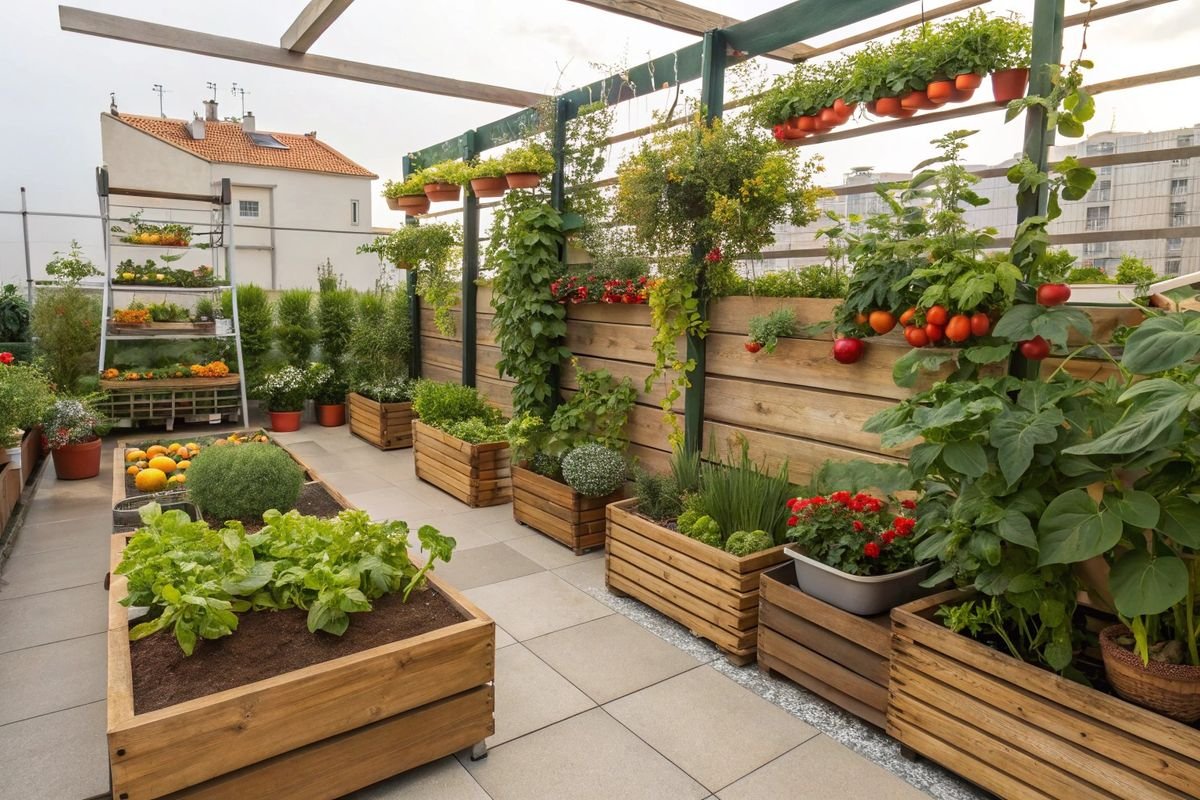
Hack #2: Use Vertical Space As If Your Rent Depends On It
Apartment floor space is precious. But your walls? Almost totally unused.
Growing up is the quickest way to triple your growing space without breaking the bank.
Here are some vertical solutions that work for apartments:
- Pegboard herb walls — Hang a pegboard on a sunny wall. Attach small pots with S-hooks. This is especially useful in kitchens where you want fresh herbs immediately within arm’s reach.
- Hanging planters — Trailing plants, such as pothos or string of pearls, look amazing and take up zero floor space.
- Tension rod shelves in windows — Stack two or three tension rods across a wide window and place small pots on top. It turns one window into a little greenhouse.
- Stackable pocket planters — These fabric pockets can be attached to walls or balcony railings and allow you to grow strawberries, lettuce, or herbs in a narrow column.
Vertical growing also allows for better air circulation around your plants, helping to prevent mold and pests. So that’s a win in every direction — and upward, too.
Hack #3: The Self-Watering Pot Hack That Saves Plants (and Trips)
Overwatering kills more houseplants than underwatering. It’s not even close.
The solution is almost embarrassingly simple: self-watering pots. Or better yet, make your own.
A self-watering pot has a reservoir at the bottom. The plant absorbs water as needed through the soil rather than sitting in wet dirt. The roots remain moist, but not flooded.
DIY version (two-minute setup):
- Use a standard plastic pot with drainage holes
- Place it inside a slightly bigger pot or tray without holes
- Fill the outer tray with water every week
- The plant waters itself from below
This is especially useful if you travel or forget watering days. Plants typically need a refill every 1–2 weeks, depending on size and season. Self-watering setups can dramatically cut how often you need to water — particularly for plants that are easy to overdo it with.
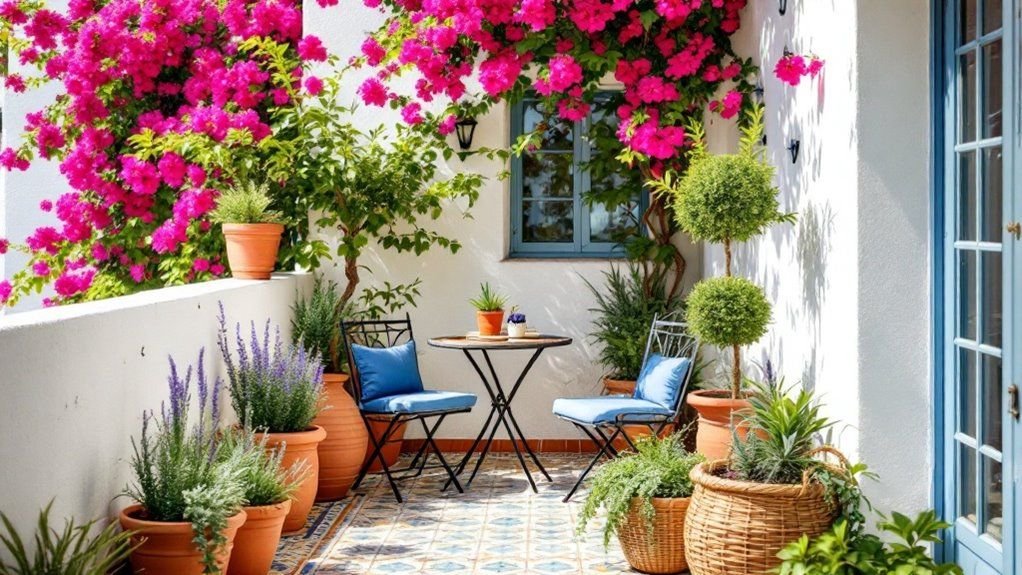
Hack #4: Only Grow What You Eat (Start with Herbs)
The number-one motivation killer in apartment gardening is growing something that isn’t connected to your everyday life.
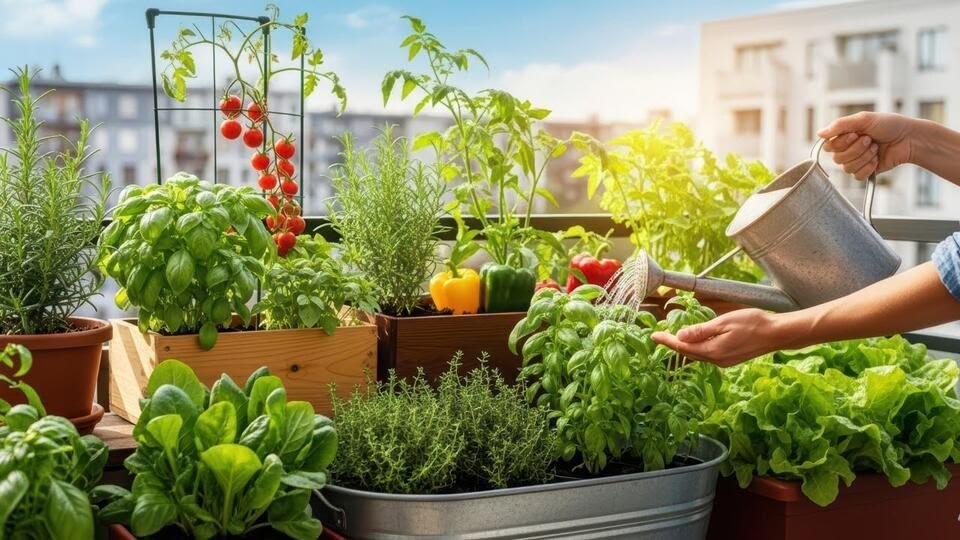
If you do any cooking at all, herbs are the ideal beginners. They’re small. They grow fast. And fresh basil on pasta or fresh mint in a drink really does taste different from the dried kind.
The top five easy-to-grow herbs for apartments:
- Basil — Prefers warmth and bright light. Pinch the flowers to keep it leafy.
- Mint — Very invasive (keep it in its own pot). Tolerates lower light.
- Chives — Nearly indestructible. Cut them back to the base each time they grow.
- Parsley — Steady and reliable. Does well in a south- or east-facing window.
- Green onions (scallions) — You can regrow these from store-bought scraps in a glass of water.
Starting with something useful keeps you hooked. You tend to it more because you enjoy the outcome. And suddenly, without barely even trying, you have a thriving apartment garden.
Hack #5: The Secret Soil Mix No One Talks About
Standard potting soil from the hardware store isn’t terrible. However, it’s also not ideal for most indoor containers.
Here’s why: soil in pots gets compacted over time. It prevents water from draining properly. Roots suffocate. Plants decline slowly.
The solution: mix in perlite (the little white bits) and compost.
A simple mix that works for most apartment plants:
| Ingredient | Amount | Purpose |
|---|---|---|
| Potting mix | 60% | Base structure and nutrients |
| Perlite | 30% | Drainage and aeration |
| Compost | 10% | Extra nutrients and microbial life |
For succulents and cacti, go up to 50% perlite. For ferns and moisture-lovers, lower it to 20%.
A small bag costs around two dollars and lasts a long time. You’ll see a marked difference in how your plants grow with this one adjustment.
Hack #6: Use Common Household Objects as Containers
You don’t need to splurge on fancy pots to have a beautiful apartment garden.
The best containers may be things you already have in your kitchen or recycling bin.
Great repurposed containers:
- Tin cans — Clean, punch a hole in the bottom, and paint. Instant industrial-chic herb pots.
- Colanders — The built-in drainage holes are fantastic. Line with burlap for a rustic look.
- Old mugs or teapots — Perfect for small succulents or air plants.
- Plastic bottles (halved) — Use the bottom half as a pot, and the top as a mini-cloche to protect seedlings.
- Wine crates or wooden boxes — Line with a plastic bag, poke holes, fill with soil. Great for a balcony herb box.
The only real rule: make sure there’s a way for excess water to escape. Roots in standing water rot very quickly. If your container doesn’t have holes, drill a few — or use it as a decorative outer pot with a simple plastic pot inside.
Hack #7: Keep a Simple Feeding Schedule for Your Plants
Plants in containers use up nutrients more quickly than those in the ground. No new minerals wash in. Microbes are limited. What you put in the pot is what they’ve got.
Most beginners either never fertilize or fertilize too heavily. Both cause problems.
A simple schedule works best:
- During the growing season (spring and summer): Feed every other week with a balanced liquid fertilizer. Look for numbers like 10-10-10 or 5-5-5 on the label — those are nitrogen, phosphorus, and potassium.
- During the rest season (fall and winter): Reduce to once a month or stop altogether. Most plants slow significantly in low light and cold. Feeding a plant that isn’t actively growing leads to salt buildup in the soil.
Organic options that work well:
- Diluted fish emulsion (terrible smell, great results)
- Compost tea
- Worm castings worked into the top layer of soil
Shiny leaves and slow or pale growth usually signal your plant is hungry. Brown leaf tips typically indicate the opposite — either too much fertilizer or not enough humidity.
Hack #8: Fix Pests Before They Become a Crisis
Pests in an apartment feel personal. You’re indoors. You’re clean. How do you have bugs?
The reality is that pests arrive on new plants, in soil, and even through open windows. It’s not a reflection of your care — it’s just part of growing things.
The three most common apartment garden pests:
- Fungus gnats — Little flies hovering around your soil. The adults are largely harmless, but the larvae feed on roots. Fix: Allow the soil to dry out completely between waterings. Add a layer of sand over the soil. Yellow sticky traps catch adults.
- Spider mites — Tiny dots on leaves, sometimes with fine webbing. They hate humidity. Fix: Mist plants often and wipe leaves with a damp cloth. Spray with neem oil weekly until gone.
- Mealybugs — White cottony clusters, usually where leaves meet stems. Fix: Dab rubbing alcohol on a cotton swab and apply directly. Repeat weekly for three weeks.
Simple preventive habits:
- Quarantine new plants before placing them near others
- Wipe down leaves monthly
- Avoid water pooling in saucers
- Give plants space for airflow
Catch pests early and you can deal with it in a weekend. Neglect them and you risk losing the plant entirely.
Hack #9: Know What Your Plant Really Needs (Not What the Tag Says)
Plant care tags are designed to sell plants, not keep them alive long-term.
“Full sun” on a tag doesn’t mean the same thing for a cactus in Arizona as it does for one sitting two feet from your apartment window.
Here’s how to decode common tag language into apartment reality:
| What the Tag Says | What It Means for Apartments |
|---|---|
| “Full sun” | Your sunniest window, preferably south-facing |
| “Bright indirect light” | Near a window but not in the direct beam |
| “Low light” | Away from windows, but still in a room that gets some light (not a closet) |
| “Water regularly” | Check soil every few days; when the top inch is dry, water |
| “Well-draining soil” | Use a perlite mix; roots should never sit in water |
| “Humidity-loving” | Mist leaves, or use a pebble tray or small humidifier |
The more you learn about what plants really want — not just what the label says — the fewer you’ll inadvertently kill.
Hack #10: Group Plants and Use Humidity Trays to Create a Microclimate
Plants subtly alter their environment just by being. They release moisture from their leaves in a process called transpiration. Kept together, grouped plants create a micro-zone that is slightly more humid than the surrounding air.
This is particularly helpful in dry indoor conditions — and that’s most apartments in winter when the heat runs nonstop.
How to build a humidity tray:
- Grab a shallow tray or baking dish
- Fill it with pebbles or marbles
- Add water just below the surface of the pebbles
- Set your pots on top — they should sit above, not in, the water
As the water evaporates, it adds soft humidity right around your plants. Refill the tray once a week.
Plant grouping tips:
- Group tropical plants together
- Keep humidity-lovers (ferns, calatheas) together
- Group succulents and cacti separately — they prefer drier air
- Leave some space between pots for air circulation
According to the RHS (Royal Horticultural Society), grouping plants together is one of the most effective low-effort ways to improve indoor growing conditions, especially for tropical varieties.
This single tweak can revive struggling tropical plants without purchasing a single new item.
Bringing It All Together: First Month Playbook
You don’t have to implement all ten hacks at once. In fact, trying to do everything simultaneously is the fastest way to burn out.
Here’s a simple four-week start:
- Week 1: Map your light. Get one or two plants that match what you actually have.
- Week 2: Add one vertical element — even a hanging planter — and place a small herb in your kitchen window.
- Week 3: Repot your plants in a perlite-amended soil mix. Set up a humidity tray or a basic drainage saucer system.
- Week 4: Begin a fertilizing schedule. Inspect each plant for pests. Adjust placement based on how things are performing.
By the end of month one, you’ll already have a fully functioning apartment garden — and a solid understanding of your space that makes every future plant decision easier.
FAQs About Apartment Gardening
Q: What are the easiest plants to grow in a low-light apartment? Pothos, snake plants, and ZZ plants are the top three. They’re more tolerant of neglect, low light, and irregular watering than nearly anything else.
Q: Can I grow vegetables in an apartment? Yes, with the right setup. Cherry tomatoes, peppers, lettuce, radishes, and green onions all thrive in containers. Most vegetables need a really bright window or a grow light to survive and thrive.
Q: How do I know if my plant is thirsty? Push your finger an inch into the soil. If it’s dry, water. If it’s still moist, wait. Checking every 3–4 days is all you need for most houseplants.
Q: Do I need a grow light for an apartment garden? Only if your apartment is truly dark (no south- or east-facing windows). For herbs or vegetables, a budget LED grow light — the kind that costs less than $30 — will make a big difference.
Q: Why are my plant’s leaves turning yellow? Yellow leaves typically indicate overwatering, but can also point to low nutrients (especially nitrogen) or root rot. Check soil moisture first. If it stays wet, cut back on watering frequency.
Q: Can I use garden soil from outside in pots? No. Outdoor soil compacts heavily in containers, doesn’t drain properly, and can introduce pests and disease. Potting mix made for containers is always the way to go.
Q: How do I get rid of fungus gnats? Allow your soil to dry out more between waterings. Gnats breed in moist soil. Let the top two inches dry out completely before each watering and you’ll disrupt their lifecycle within a few weeks.
Wrapping Up
The best apartment garden guide isn’t a series of rigid rules — it’s a collection of small improvements that add up over time.
Map your light. Use your vertical space. Stop overwatering. Feed consistently. Catch pests early. Learn what your plants really need versus what their tags say.
None of these hacks require a balcony, a green thumb, or deep pockets. They simply need some attention and a willingness to try.
Pick one hack and start today. Then add another next week. Before you know it, your apartment will be a green, living space — and you’ll wonder why you didn’t start sooner.