10 Fruits You Can Grow Inside With This Apartment Garden Guide
You live in an apartment, and now you’re dreaming of plucking fresh fruit right from your home. Sounds impossible, right?
It’s not.
More people are now growing fruit indoors — on balconies, windowsills and small spare corners than ever. You don’t need a garden. You don’t even have to own a yard. Just the right fruit, the right pot and a bit of know-how.
We won’t lie; growing fruits in an apartment garden can be challenging. This guide covers 10 fruits that can easily grow indoors in your apartment (yes, really) — let’s get started! Whether you’re a total novice or someone who has put a few plants to rest, there are options here for you.
Let’s dig in.
The Surprising Methods Behind Growing Fruit Indoors
Plants don’t care where they live. But they do care about light, water and nutrients.
A south-facing window is a sun spot that can provide as much usable light as an outdoor garden. LED grow lights have become so inexpensive that flowering plants can supplement on cloudy days without costing much. Also, some modern dwarf varieties of fruit plants are bred for staying small, bearing big and growing in containers.
The biggest barrier isn’t space. It’s about choosing the right fruits.
Some fruits, like melons, require enormous root space and sun all day. Others, like strawberries, are practically designed for pots. This guide focuses on the winners — your apartment-friendly fruits, without the fuss.
What to Know Before You Start
Before we dive into the list, there are a couple of quick things every indoor fruit grower needs to know.
Light is everything. Most fruiting plants require 6 to 8 hours of direct or bright indirect light daily. Windows facing south or west are best. If your apartment is low on natural light, a simple LED grow light is a game changer.
Drainage matters a lot. Fruit plants do not like to sit in wet soil. Always use pots with drainage holes. A soggy root is a dead root.
Container size controls growth. Put your plant in a bigger pot, you get a bigger plant, and more fruits. Most of the plants included in this guide will do well in containers from 5 to 15 gallons.
Pollination may need your help. Indoor plants don’t have bees visiting, so some fruit will require hand-pollination. It’s simple — just use a small paintbrush to move pollen from one bloom to another.
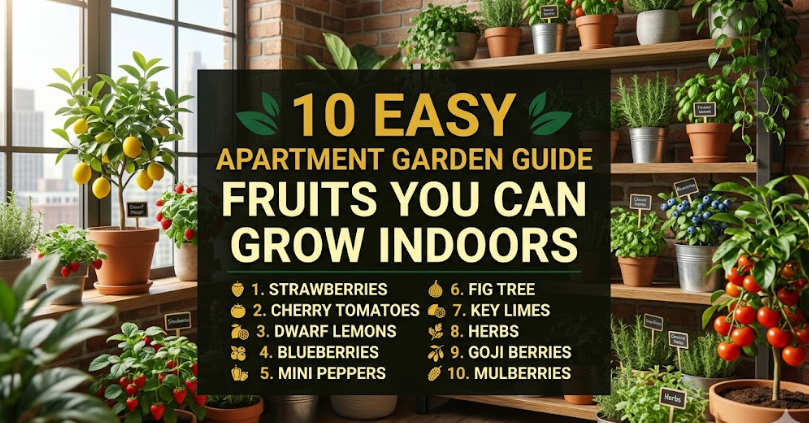
Fruits That Can Be Grown Indoors
1. Strawberries – The Ideal First Fruit
This is where to start if you’ve never grown anything.
Strawberries are tiny, fast-growing and very content in containers. In one hanging basket or a window box, you can have multiple plants. You’ll notice flowers within weeks of planting, and ripe berries soon after.
Best for indoor growing: Alpine strawberries (also known as woodland strawberries) are particularly suited to apartment living. They are compact, not aggressively spreading and bear small but extraordinarily sweet berries almost nonstop. Popular ones include “Mignonette” and “Alexandria.” For larger berries, try pots of ‘Seascape’ and ‘Albion.’
How to cultivate them: Use a well-draining potting mix. Let the soil remain evenly moist but never wet. Place near your sunniest window. Strawberries don’t require deep pots — 6 to 8 inches is typically sufficient. Fertilize with a liquid fertilizer every two weeks when flowers develop.
Pro tip: When you first plant your flowers, pinch off the first set. It is painful, but this redirects energy into root growth and you will have a much larger harvest afterwards.
2. Miniature Lemon Trees — Fresh Citrus at Home
Surely a dwarf lemon tree in your apartment is one of those small luxuries that sounds extravagant but is completely feasible.
‘Meyer Lemon’ is the gold standard for growing indoors. It never grows taller than 4 feet but produces full-size lemons, and when it blooms, it smells amazing. ‘Improved Meyer Lemon’ is a disease-resistant version that’s widely available.
What it requires: Plenty of light — this is not optional. 8 hours minimum. Invest in a grow light if your windows can’t provide that. Use a potting mix specifically for citrus, which is mixed to give you the slightly acidic pH that lemons crave. Water thoroughly, and then allow the top inch of soil to dry out between waterings.
Pollination: If they’re indoors, you’ll have to hand-pollinate. As the flowers open, take a small soft brush and lightly swipe it across flower to flower. Do this every day or so while the flowers are open. Skip this step and you’ll end up with flowers but no lemons.
Repot every two to three years as the tree expands. Feed with a citrus fertilizer in the growing season (spring through fall).

3. Figs — Low-Maintenance and Rewarding
Fig trees have been grown in pots for thousands of years. They’re incredibly forgiving of container living and most varieties don’t need pollination.
‘Petite Negra’ and ‘Little Miss Figgy’ are bred specifically for containers and growing in the house. They remain small — less than 3 feet in a pot — but bear true-to-fruit, full-flavored figs.
The best thing about figs: They don’t require a pollinator plant like most fruit trees do. Most common varieties are self-fruitful. Just one plant is enough.
Care basics: Figs thrive in heat and bright light. Put them in the sunniest place you have. Water frequently in summer, then water less towards fall and winter when the tree goes semi-dormant. A simple guideline: water if the top two inches of soil are dry.
In winter, figs will go dormant and may lose their leaves. Don’t panic — this is normal. In spring, new leaves will come back. That dormancy period actually aids the tree in producing more fruit during the next season.
4. Cherry Tomatoes — Fruits by Definition, Multipliers in the Garden
Botanically speaking, tomatoes are fruit. And the cherry tomato varieties are among the most rewarding plants you can grow indoors.
Pot a single plant in a 5-gallon container and it will produce hundreds of tomatoes over the course of a season. Diminutive varieties such as ‘Tiny Tim’, ‘Tumbling Tom’ and ‘Sweet 100’ are bred for small spaces and growing in containers.
Setup tip: Tomatoes require a pole to climb. Use a small tomato cage or bamboo stakes. As your plant grows, gently tie it to the support using twine.
Light is critical. Ideal is at least 8 hours of direct sun. In low-light apartments, a grow light is nearly essential for good fruit production. Too little light, and you’ll have plenty of leaves but few fruits.
Don’t forget to water regularly and evenly — erratic watering can cause a condition called blossom end rot, in which the bottom of the fruit blackens. Once flowers appear, feed weekly or every other week with a tomato fertilizer.
5. Blueberries — Surprisingly Apartment-Friendly
Blueberries are known to be fussy. And honestly? They are a little picky. But once you know what they’re after, they flourish in containers and look lovely while doing so.
The main thing blueberries require is acidic soil. Regular potting mix won’t do. You want a soil designed specifically for acid-loving plants (like an azalea or rhododendron mix), or you can amend regular potting soil with peat moss to create the low pH of between 4.5 and 5.5 that you are seeking.
Best varieties: ‘Sunshine Blue’ and ‘Top Hat’ are dwarf versions of blueberry bush, maxing at about 3 feet tall, bred specifically for containers. Another sought-after option is “Peach Sorbet,” which features gorgeous foliage that turns orange in fall.
One key rule: Blueberries yield much more fruit if you have a second plant for cross-pollination. Two plants in separate pots (preferably different varieties) will yield many more berries than one plant alone.
Be patient with blueberries. For the first year, prune off flowers to let the plant take root. In year two, you’ll receive a few berries. By year three, it’ll be a real harvest.
6. Dwarf Banana Plants — Tropical Vibes, Actual Fruit
This one always surprises people. Bananas. In an apartment. Yes.
Dwarf banana cultivars such as ‘Dwarf Cavendish’ and ‘Super Dwarf Cavendish’ will reach about 4 to 6 feet tall, which is manageable in an apartment with decent ceiling height. With enough warmth, humidity and light they do yield actual edible bananas.
What they really need: Bananas are tropical plants. They want warmth (above 60°F at all times), humidity (mist the leaves regularly or use a pebble tray with water) and as much light as you can provide.
They’re also big drinkers. During summer — especially if warm — water regularly. Feed with a high-nitrogen fertilizer monthly during the growing season.
The honest truth about bananas: They are more of a long-game fruit. It may take 1 to 2 years to get your first harvest. Some apartment growers keep them more for the sheer dramatic tropical look and any fruit is a bonus. That being said, indoor banana harvests do occur — and they are very gratifying when they do!
7. Passion Fruit — The Showstopper
One of the most visually striking plants you can grow indoors is the passion fruit vine. The flowers are unlike any other — intricate, strange, beautiful. The fruit is the icing on an already fabulous plant.
Popular indoor varieties are ‘Possum Purple’ and ‘Frederick.’ They are vigorous climbers, so you will want a trellis, tension rods across a window frame or some other structure for them to grab onto.
Growing tips: Passion fruit prefers full sun and even moisture. It grows quickly — sometimes shockingly fast. It can be kept in check in an apartment space by regular pruning. Once established, it fruits faster than most vines.
Hand-pollination is important indoors. The blooms last one day, so when they’re open, have your paintbrush out and transfer pollen between flowers immediately.
The fruit is ripe when it turns dark purple (or yellow, depending on the variety) and the skin begins to slightly wrinkle. That wrinkling signals peak sweetness — don’t harvest too early.
8. Avocado — Grow Your Own (From a Pit or Purchase)
The classic rite of passage: growing an avocado from a pit. Suspend the pit over water with toothpicks, let it sprout, then pot it up and watch a beautiful tropical tree grow. Fun, educational, and free.
But here’s the catch: pit-grown avocados rarely bear fruit, and when they do, it may take 10 to 15 years.
If you actually want to eat avocados, get a grafted dwarf. The most widely available dwarf avocado is called ‘Little Cado’ (or ‘Wurtz’). It will stay under 8 feet — often less in a pot — and can produce fruit in 3 to 5 years.
What avocados want: Lots of light, good drainage (they will die in soggy soil) and regular feeding. They’re heavy feeders — a slow-release fertilizer for citrus or tropical plants is effective.
Indoor avocado plants typically require hand-pollination. They have a distinctive flowering pattern — the male and female parts of every flower open at different times — so you have to take pollen from one flower and put it onto another that’s in the female phase.
9. Potted Grapes — Yes, Grapes Can Be Your Indoor Plant
Indoor grape growing isn’t the most common choice, but some dwarf types adapt well to containers. It’s an ambitious undertaking, but worth it for apartment gardeners seeking something a little different.
‘Pixie’ and ‘Einset Seedless’ are compact varieties that will work in 7 to 10 gallon containers. All grape vines, even dwarf ones, like to climb and require a solid trellis or support structure.
The rule of thumb: Grapes bear fruit on new wood. You must prune quite aggressively in winter — heading back most of the previous year’s growth — to promote vigorous new shoots the following spring. It feels brutal, but that’s how you get fruit.
Light is critical. Grapes prefer as much sun for as many hours as they can get. A south-facing window with extra grow lighting will give you the best shot.
Fruit won’t show until the second or third year, but once the vine is established, a vigorous container grape can yield a modest but true harvest.
10. Kumquats — The Easiest Citrus to Grow Indoors
If dwarf lemons sound a little daunting, kumquats are the ideal gateway to indoor citrus.
Kumquats are more cold-tolerant than most other citrus, more tolerant of less-than-perfect conditions and they have high yields. The fruits are small — about the size of a large grape — and unlike any other citrus, you eat the entire thing, peel and all. The skin is sweet, the interior is sour.
The most common variety is ‘Nagami’. ‘Meiwa’ is sweeter and a little bigger. Both work fabulously in containers.
Kumquats win because: They’re self-pollinating (no hand-pollination needed), will usually stay under 4 feet indoors, and look gorgeous as ornamental plants even when they aren’t fruiting. The small, shiny leaves and clusters of little orange fruit make them one of the prettiest fruiting plants for apartments.
Place them where they will get the most sun, water when the top inch of soil begins to dry out and fertilize with citrus food in the spring and summer.

How To Set Up Your Indoor Fruit Garden
Setting up your apartment garden really doesn’t have to be complicated. Here’s a simple starting framework.
Choose your spot first. Spend time in different rooms of your apartment at various times during the day. Your big question: where does the sun actually hit? South-facing windows receive the most light throughout the year. East windows provide gentle morning sun. West windows give hot afternoon sun. North windows — alas — don’t cut it for most fruiting plants.
Choose one or two fruits to start with. Don’t try to grow all ten at once. Begin with the simplest choices for your light conditions. If you have good natural light: strawberries and cherry tomatoes are foolproof. If you’re including a grow light: almost everything on this list is fair game.
Match the pot to the plant. Little buckets dry out quickly and limit roots. Give each plant more space than you think it requires. When in doubt, go bigger.
Establish a watering routine. The majority of fruit plants die from overwatering rather than underwatering. Insert your finger in the soil up to the first knuckle. If it feels dry, water. If it feels moist, wait.
Common Problems and Quick Fixes
| Problem | Likely Cause | Fix |
|---|---|---|
| Yellowing leaves | Overwatering or nutrient deficiency | Check drainage; feed with balanced fertilizer |
| Flowers but no fruit | Needs pollination | Hand-pollinate with a paintbrush |
| Dropping leaves | Sudden temperature change or shock | Move away from drafts; maintain consistent temp |
| Leggy, stretched stems | Not enough light | Move closer to window or add grow light |
| Brown leaf tips | Low humidity or fluoride in tap water | Mist leaves; switch to filtered water |
| No growth | Wrong season or root-bound | Monitor pot size; feed during growing season |
Frequently Asked Questions
Will I be able to have a decent harvest from fruit grown in my apartment?
Yes, although “good harvest” is relative. You’re not going to be feeding your entire neighborhood, but you can realistically pick fresh strawberries for your morning yogurt, a handful of cherry tomatoes for salads or have a few lemons ready for cooking throughout the year. There is also an added quality that supermarket fruit lacks — the joy of growing your own.
Do I need a grow light?
It truly depends on your apartment’s light situation. Many fruits on this list will do fine without one if you have a south-facing window that receives 6 to 8 hours of direct sun per day. For a north-facing apartment or limited light, a simple full-spectrum LED grow light (2,000 to 3,000 lumens is enough for a small setup) does wonders and doesn’t need to be pricey.
How do I know when to repot?
Check for roots coming out of the drainage holes at the bottom of the pot, or pay attention to the plant wilting very quickly after watering. This is an indication that the plant is root-bound. Transfer it into a pot that’s 2 to 3 inches wider in diameter — not dramatically bigger, which can lead to root rot in overly wet soil.
What fruit is the simplest to start with for a total beginner?
Strawberries, every time. They’re speedy, forgiving, self-pollinating and once flowers start to show, the process from planting to eating takes only a few weeks. Cherry tomatoes come in a very close second.
Do I need to replant fruit crops every year?
The majority of plants in this guide are perennials — they continue to grow year after year. Long-term plants include strawberries, citrus, figs, blueberries and kumquats. Cherry tomatoes are technically annuals, so you’ll need to replant those each season.
What soil should I use?
Most of these fruits do best in a high-quality general potting mix. The exceptions are blueberries (need an acid mix) and citrus/kumquats (benefit from a citrus-specific mix). Never use garden soil from outside — it compacts in containers, doesn’t drain well and can bring in pests and diseases.
My plant produces fruit but it doesn’t ripen. What’s wrong?
Most commonly this is about insufficient light or warmth. Fruit requires solar energy to form sugars and ripen adequately. Relocate the plant to a sunnier location or increase grow-light hours. Also, don’t harvest too early — colour and firmness should guide you, not just size. The University of Minnesota Extension’s guide on ripening fruit is a helpful reference if you’re unsure.
Final Thoughts
This apartment garden guide is proof that small spaces don’t equal small possibilities.
Homegrown fruit doesn’t require a yard. You need some decent light, a bit of patience and the right plant for your circumstances.
Start small. Choose one fruit from this list that interests you. Place it in your sunniest spot, water it mindfully and wait to see what happens. There’s something truly magical about the first time you eat something you grew yourself, even if it’s just one strawberry from a pot on a windowsill.
Once you get the growing bug, it’s easy to add more fruits. Your apartment will green up, your air quality will improve and your kitchen will smell like citrus blossoms now and then.
That seems like a pretty good deal for some pots on the windowsill.