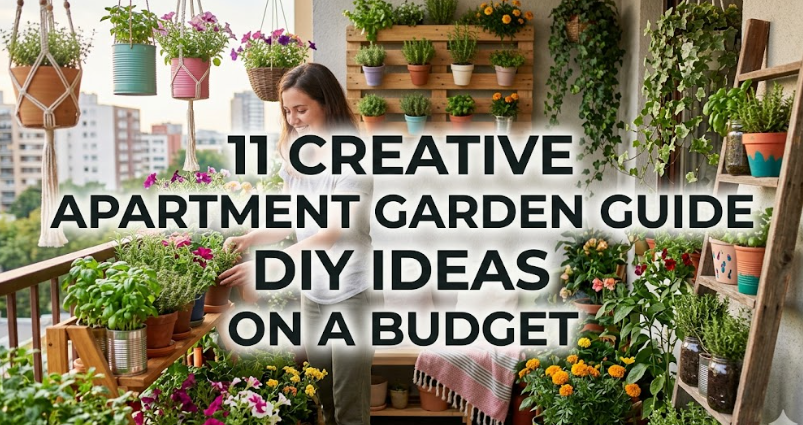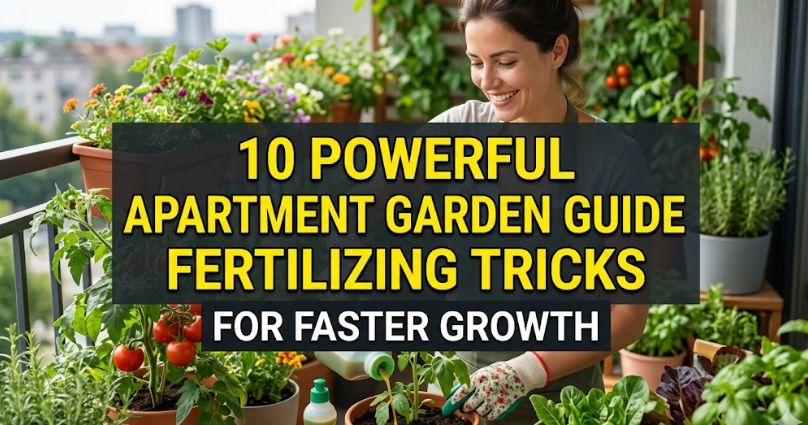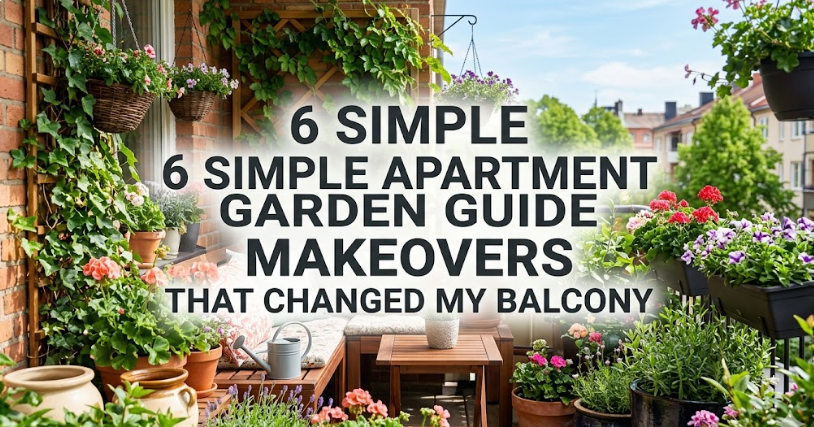
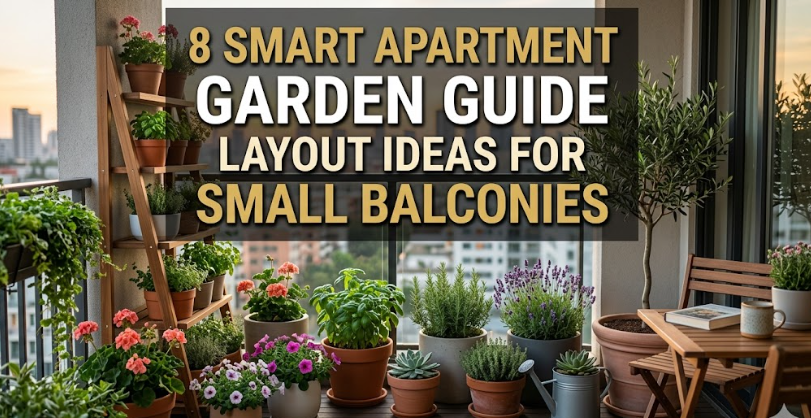
8 Smart Apartment Garden Guide Layout Ideas For Small Balconies
Meta Description: Use these Apartment Garden Guide layout ideas to convert your small balcony into a green oasis. Here are 8 smart, space-saving designs for small outdoor spaces.
Gardening in a small space: You don’t need an extensive backyard to grow your own garden. The right plan can turn even the tiniest balcony into a green, beautiful space. Whether you desire fresh herbs to cook with, colorful flowers to liven up your mornings, or just a peaceful corner in which to curl up — a balcony garden can fulfill those wishes.
This Apartment Garden Guide covers 8 creative layout ideas that are practical, budget-friendly, and suitable for small spaces. All of your square footage should be used down to the last drop.
Let’s get started.
Why You Should Spend Time Balcony Gardening
Before trying out layouts, let’s discuss why balcony gardening is a great idea.
First, it bolsters your mental health. Research has shown that plants lower stress and anxiety. Second, it can save you money on fresh produce. Third, it makes your apartment homier.
Even if your balcony is small — as in 4×6 feet — you can grow a surprising amount. You just need a smart layout.
Key Things to Verify Before You Begin
Every good apartment gardening guide begins with a few basic check-up items.
Sunlight: How many hours of direct sunlight does your balcony get? Most vegetables and flowers require a minimum of 4–6 hours of sun per day.
Weight restrictions: Balconies have weight limits. Pots, soil, and water are heavy. Check with your building manager before overloading containers.
Wind: High balconies can be drafty. Strong wind can cause soil to dry out quickly and damage tender plants.
Water accessibility: Is there a faucet nearby? Otherwise, you’ll have to carry your own water. This influences how many plants you can realistically care for.
After confirming all four, you are ready to choose a layout.
Layout Idea #1: The Vertical Wall Garden
Transform Your Walls Into a Green Work of Art
If you have floor space constraints, consider going vertical. Vertical wall gardens use your walls or railings to grow plants — not the ground.
You can use:
- Pocket planters (fabric or plastic pouches mounted on a wall)
- Pegboards with hanging pots
- Pallet planters (wooden pallets converted into planting containers)
- Stacked tiered shelves
This arrangement is ideal for herbs such as basil, mint, parsley, and thyme. It also pairs beautifully with trailing flowers such as petunias or nasturtiums.
What Makes It Smart
A vertical garden allows green space without requiring a single square foot of floor space. It also creates a gorgeous living wall that looks beautiful both in photos and in real life.
Pro tip: Use lightweight plastic pots instead of ceramic ones. It reduces the overall weight on your wall mounts.
| Plant | Good for Vertical Gardens? | Sun Needed |
|---|---|---|
| Basil | ✅ Yes | Full sun |
| Mint | ✅ Yes | Partial shade |
| Petunias | ✅ Yes | Full sun |
| Tomatoes | ❌ No (too heavy) | Full sun |
| Lettuce | ✅ Yes | Partial shade |
Layout Idea #2: The Rail Planter Setup
Make Use of Every Inch of Your Balcony Edge
Railing planters clip or hang on your balcony railing. They are among the most space-efficient choices in any apartment garden guide.
These planters are long and rectangular in shape. You can use them to line your entire railing, creating a wall of greenery that also provides a bit of privacy.
Best Plants for Railings
- Trailing lobelia (flowers cascade beautifully over the edge)
- Strawberries (they trail naturally)
- Herbs like chives and thyme
- Dwarf marigolds for color
Safety First
Always make sure railing planters are well anchored. Use a two-clip system, especially if you live on a higher floor — you don’t want a heavy pot falling from above.
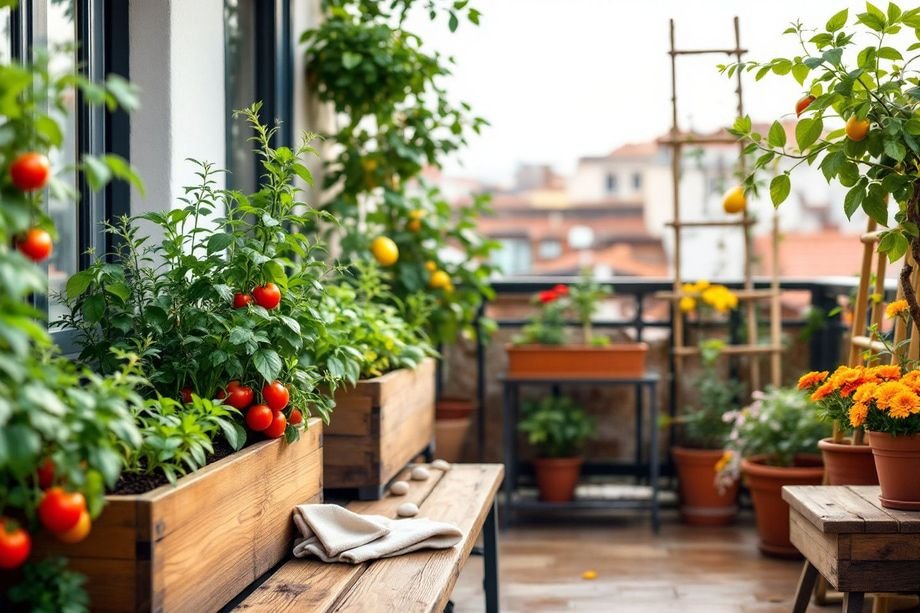
Layout Idea #3: The Corner Tiered Garden
Make Corners Work for You
Corners are often wasted space. A tiered corner shelf or plant stand converts that dead corner into the most productive area on your balcony.
These stands commonly have 3–5 levels, and each level holds multiple pots. You can grow different plants on each tier, for example:
- Top tier: Herbs that do well in full sun, like rosemary and basil
- Middle tier: Smaller flowering plants, such as pansies
- Lowest level: Shade-loving plants like ferns
Why This Layout Wins
It’s tidy, orderly, and extremely easy to water. You can view all your plants at once. It also adds a beautiful layered visual effect — nearly like a little garden display.
This works especially well if you have a square or L-shaped balcony.
Layout Idea #4: The Raised Bed Container Garden
Grow Big, Even If Your Space Is Tiny
A raised bed doesn’t have to live in a yard. To replicate the experience of a true raised garden bed, use large rectangular containers or wooden crates positioned directly on your balcony floor.
This layout is ideal for growing:
- Salad greens (lettuce, spinach, arugula)
- Shallow-rooted vegetables
- Annual flowers
Choosing the Right Container
| Container Type | Advantages | Disadvantages |
|---|---|---|
| Wooden crates | Natural look, affordable | Will rot over time |
| Galvanized metal troughs | Durable and stylish | Gets hot in direct sun |
| Fabric grow bags | Lightweight with good drainage | Less durable |
| Plastic rectangular planters | Cheap and lightweight | Not very attractive |
Use a blend of potting soil and compost to fill containers. Never use ordinary garden soil — it’s too heavy and compacts easily in containers.
Space-Saving Tip
Position two long rectangular containers side by side along the wall, leaving a narrow walking path at the front. This gives you a mini vegetable patch feel without the backyard.
Layout Idea #5: The Hanging Basket Garden
Take Your Plants to New Heights
Hanging baskets are classic for a reason — they utilize overhead space, which is the most untapped part of any balcony.
Hang baskets from ceiling hooks, pergola frames, or even a horizontal curtain rod strung between two walls.
Best Plants for Hanging Baskets
- Strawberries
- Cherry tomatoes (in larger baskets)
- Fuchsias and impatiens
- Sweet potato vine (wonderful as a trailing filler)
- Herbs like parsley and chives
Making It Look Beautiful
Combine plants of contrasting textures and growth habits into a single basket using the classic “thriller, filler, spiller” approach:
- Thriller: One tall or dramatic plant in the center
- Filler: Short, bushy plants surrounding it
- Spiller: Plants that trail and drape over the edges
This technique makes each hanging basket look as though a professional florist arranged it.
Layout Idea #6: The Herb Kitchen Garden Corner
Only Grow What You Use Daily
This is a purely functional layout. The concept is simple: dedicate one corner of your balcony entirely to herbs you actually cook with.
Place six to ten small pots in a tight grouping near your balcony door. This puts your herbs right at the heart of things. You can snip what you need while cooking without making a long trip outdoors.
Best Herbs for a Kitchen Corner Garden
| Herb | Flavor Profile | Ease of Growth |
|---|---|---|
| Basil | Sweet, peppery | Easy |
| Mint | Fresh, cool | Very easy |
| Rosemary | Earthy, piney | Easy |
| Thyme | Mildly floral or earthy | Easy |
| Chives | Mild onion | Very easy |
| Cilantro | Bright, citrusy | Moderate |
| Parsley | Fresh and mild | Easy |
Keeping It Organized
Use small wooden sticks or decorative tags to label each pot. Group herbs by their watering needs:
- Drought-resistant herbs (rosemary, thyme) → one cluster
- Moisture-loving herbs (basil, mint) → another cluster
This simplifies watering and protects against overwatering mistakes.
Layout Idea #7: The Zen Minimalist Garden
Less Is More — And More Beautiful
Not everyone wants a balcony packed with dozens of plants. The Zen minimalist approach is to select just a few striking plants and arrange them with care and serenity.
This layout typically includes:
- 2–3 large statement plants (such as a fiddle-leaf fig, ornamental grass, or a potted olive tree)
- Decorative pebbles or ceramic trays for visual grounding
- Simple, neutral-colored pots (white, concrete grey, or terracotta)
- One or two trailing plants for softness
Why This Works for Small Balconies
On a small balcony, too many pots can feel cluttered and stressful. A minimalist garden feels open, airy, and purposeful. It’s also low-maintenance — fewer plants means less watering, less feeding, and less upkeep.
Design Tips
- Stick to 2–3 colors only (green + terracotta + white is a stunning combination)
- Use pots of different heights for visual interest
- Add a small outdoor rug and one chair to complete the zen mood
This layout transforms your balcony into a retreat — a quiet spot to enjoy your morning tea and breathe.
Layout Idea #8: The Productive Edible Garden
Grow Your Own Food, Even on a Tiny Balcony
This is the dream for many — a balcony that actually grows food. And it’s entirely doable, even in a small apartment.
The key lies in plant selection. Look for compact or dwarf varieties that have been bred specifically for container growing. According to the Royal Horticultural Society, many vegetables perform exceptionally well in pots when given the right conditions.
Best Edible Plants for Small Balconies
| Plant | Container Size Needed | Harvest Time |
|---|---|---|
| Cherry tomatoes | 5-gallon pot | 60–80 days |
| Lettuce | Shallow tray | 30–45 days |
| Radishes | 6-inch pot | 25–30 days |
| Dwarf beans | 3-gallon pot | 50–60 days |
| Chili peppers | 3-gallon pot | 70–90 days |
Planning Your Edible Layout
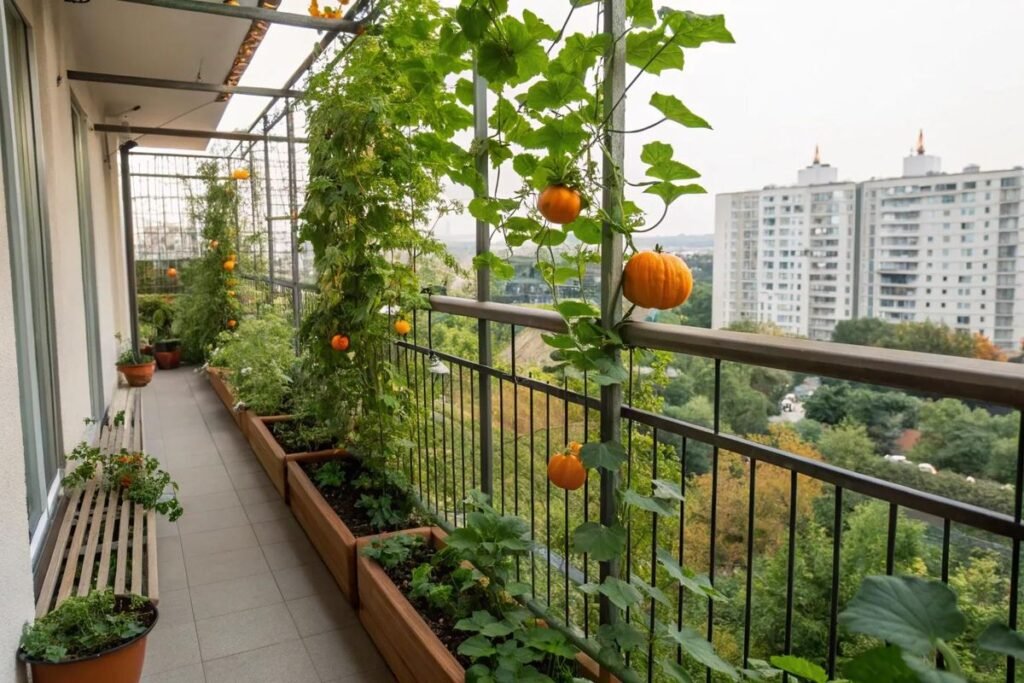
Position taller plants (such as tomatoes or peppers) toward the back or in corners so they don’t shade smaller plants. Arrange fast-growing crops like radishes and lettuce where you can easily reach them for frequent harvesting and replanting.
Use self-watering containers where possible. They feature a built-in water reservoir at the bottom that keeps roots evenly moist — ideal for vegetables that dislike drying out.
A Quick Comparison: Which Layout Is Right for You?
| Layout Idea | Best For | Maintenance Level | Cost to Start |
|---|---|---|---|
| Vertical Wall Garden | Tiny balconies, renters | Medium | Low–Medium |
| Railing Planters | Narrow balconies | Low | Low |
| Corner Tiered Garden | Square/L-shaped balconies | Low | Medium |
| Raised Bed Containers | Vegetable lovers | Medium | Medium |
| Hanging Baskets | Flower lovers, overhead space | Medium | Low |
| Herb Kitchen Corner | Cooks, beginners | Low | Very low |
| Zen Minimalist Garden | Relaxation seekers | Very low | Medium |
| Productive Edible Garden | Food growers | High | Medium–High |
General Tips for All Balcony Garden Layouts
No matter which layout you choose from this apartment garden guide, these tips will help.
Water Smartly
Soil in containers dries out faster than ground soil. In summer, watering may be needed daily. Push a finger an inch into the soil — if it feels dry, it’s time to water.
Feed Your Plants Regularly
Plants in containers deplete nutrients rapidly. Apply a slow-release granular fertilizer at the start of the season, then supplement with a liquid fertilizer every 2–3 weeks during the growing season.
Use Quality Potting Mix
This is not an area to cut corners. A good potting mix drains well but retains just enough moisture and nutrients. Look for mixes containing perlite or vermiculite for improved drainage.
Repot When Needed
If roots are poking out of the drainage holes and a plant looks stressed, it’s time for a larger pot. Simply moving up one pot size can make a world of difference.
Watch Out for Pests
Balcony plants can still attract aphids, spider mites, and fungus gnats. Check the undersides of leaves every few days. Most pest issues can be handled organically with a simple spray of diluted neem oil.
FAQs: Your Balcony Gardening Questions Answered
Q1: What is the most beginner-friendly plant to grow on a balcony? Mint is the easiest. It grows fast, tolerates some neglect, and bounces back when cut hard. Just keep it in its own pot — it will overrun other plants if combined.
Q2: Can I grow vegetables if my balcony only gets 3–4 hours of sunlight? Yes! Leafy greens like lettuce, spinach, and kale all thrive in partial shade. Avoid sun-loving crops like tomatoes and peppers in low-light spaces.
Q3: How can I prevent my balcony garden from looking untidy? Stick to coordinating pots or a color scheme. Use tiered stands to arrange plants neatly. Regularly remove dead leaves and spent blooms.
Q4: How much weight can I safely put on my balcony? Always check your building’s weight limit first. Use lighter materials like fabric grow bags or plastic pots rather than heavy ceramic or concrete. Distribute weight evenly across the balcony.
Q5: How often do I need to water balcony plants in summer? On hot days, once or twice a day may be necessary. Self-watering containers and a layer of mulch on top of the soil can help retain moisture between waterings.
Q6: Can I have a balcony garden if I rent? Absolutely. Use freestanding shelves, floor pots, and railing planters that don’t require drilling or permanent changes. Always check your lease for any restrictions on balcony use.
Q7: What is the best potting soil for balcony containers? Use a light, well-draining potting mix designed for containers. Never use garden soil — it’s too dense for pots. Adding perlite improves drainage even further.
Bringing It All Together
A tiny balcony isn’t a constraint — it’s an opportunity. With the right layout and a little forethought, even a 4×6-foot outdoor space can become a productive, beautiful, and calming garden.
Hopefully this apartment garden guide has opened up 8 different ways to garden in your small space — from lush vertical walls to neat herb corners to productive edible arrangements. Every configuration has its own character and purpose.
The best garden fits your lifestyle. If cooking is your passion, focus on the kitchen herb corner. For a beautiful, peaceful view, try the Zen minimalist layout. If you want to grow your own food, the productive edible garden is a must.
Start small. Pick one or two ideas. Get your hands in the soil. You’ll be surprised how quickly your balcony transforms — and how much happiness a handful of plants can bring to your daily life.
Your green space is waiting. All it needs is you.