7 Indoor Herbs in Small Spaces Will Change it Forever
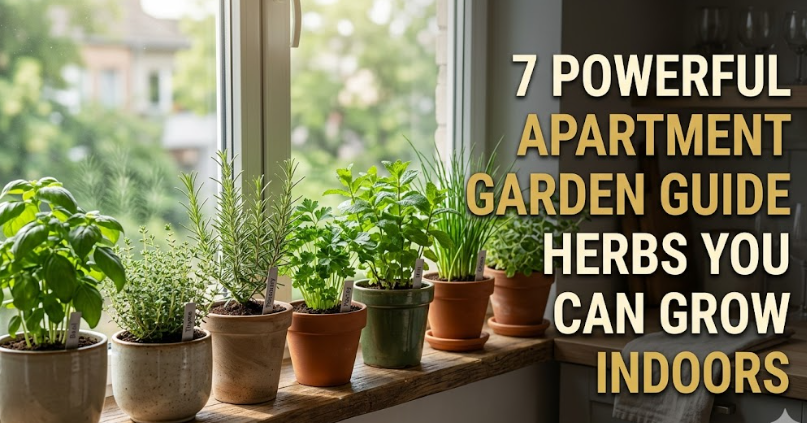
7 Fantastic Indoor Herbs For Apartment Gardens
Picture heading to your windowsill and snipping fresh basil for your pasta. Or crushing a mint leaf between your fingers before adding it to your tea. That’s the magic of growing herbs inside — and it is absolutely doable, even in a cramped apartment.
The majority associate gardening with a backyard. It does not. Everything you need is a sun-kissed window, some pots and the right know-how. In this apartment garden guide, we will help you discover the seven best herbs to grow inside your home.
Whether you’re a total novice or someone who never met a plant they couldn’t kill, this guide is for you. These herbs are forgiving, useful and truly rewarding to grow.
Let us get started.
Why You Should Grow Herbs Indoors
Before diving into the list, it’s worth knowing why this is such a clever idea.
Store-bought herbs are more expensive than people think. A small bunch of cilantro or basil costs $2–$4, and half goes limp before you use it. Growing your own means saving money week after week.
There’s also the freshness factor. The herbs that we buy lose their flavor the instant they are cut. Homegrown herbs, snipped just before cooking, are at their peak flavor. The difference is noticeable.
And beyond the cooking perks, indoor herb gardens are more aesthetically pleasing than your average spot. They add a little greenery to your home, are good for indoor air quality to a degree, and honestly just feel nice.
Here’s a quick overview of what makes growing herbs at home worthwhile:
| Benefit | Details |
|---|---|
| Cost Savings | Save $5–$15/month vs. store herbs |
| Flavor Quality | Fresher taste than packaged herbs |
| Space Needed | A windowsill is sufficient |
| Skill Level | For Beginners |
| Time Investment | 5–10 minutes of care per week |
Basil — The King of Kitchen Herbs
What Every Apartment Needs Is Basil
Basil is likely the most well known culinary herb in the world. It’s essential for Italian food, Southeast Asian dishes and fresh salads. It also smells amazing — like a warm summer garden.
The good news? Basil likes to be inside as long as it gets enough sun.
What Basil Needs to Thrive
Basil is a sun-lover. It requires a minimum of 6 hours of sunlight each day. A south-facing window is ideal. If your apartment doesn’t receive a lot of sun, a small grow light works absolutely fine.
Water basil when the earth’s top inch is dry. Don’t let it sit in standing water — wet roots will kill it quickly. Keep it in potting mix that drains well and in a container with drainage holes.
Key care tips:
- Temperature: 65–85°F (18–30°C)
- Container Size: At least 15 cm (6 in) wide
- Soil: Light, well-draining potting mix
- Water: Every 2–3 days depending on sunlight
When and How to Properly Harvest Basil
And this is where it goes wrong for many beginners. Avoid simply plucking leaves off the bottom of the plant. Instead, pinch stems at the top, just above a pair of leaves. This helps the plant to bush out rather than becoming tall and leggy.
Pinch off any flower buds that you see. When basil flowers the leaves will become bitter. Preventing it from flowering keeps your harvest flavorful for months.
Mint — Practically Grows Itself
The Simplest Herb You Will Ever Grow
Mint is the answer if you’re looking for an herb that’s practically impossible to kill. It grows quickly, spreads widely and demands very little in return.
Mint lends itself beautifully to teas, cocktails and desserts — and can enhance savory dishes too. There are also dozens of varieties — peppermint, spearmint, chocolate mint, apple mint — so you can choose a flavor that suits your cooking.
Keeping Mint Under Control Indoors
Here’s the one thing to know about mint: it spreads. A lot. In a garden, it can take over an entire bed. Inside, this means you should always plant mint in its own separate pot. Never plant it near other herbs — it will out-crowd them.
A good beginner pot size is 6–8 inches. If you keep the soil consistently moist, mint will reward you generously.
| Mint Variety | Ideal For |
|---|---|
| Peppermint | Tea, sweets |
| Spearmint | Cocktails, salads |
| Chocolate Mint | Desserts, cocoa |
| Apple Mint | Fruit salads and infused water |
Light and Watering for Mint
Mint does better than most herbs in lower light levels. It still likes a bright window, but it will survive with 4–5 hours of indirect sun. That makes it a good choice for sun-deprived apartments.
Give it regular water — mint does not want to dry out completely. The soil should be checked every other day.
Chives — Tiny but Mighty
The Herb That Does Everything
Chives are perhaps one of the more underrated herbs here. They appear as thin green tubes, have a mild onion flavor and complement nearly everything — eggs, potatoes, soups, cheese, fish and salads.
They’re also among the simplest herbs to grow indoors. Chives are cold-hardy, low-maintenance and grow back fast after snips.
Growing Chives on a Windowsill
Chives aren’t a deep-rooted plant needing a big pot. Their roots are very shallow, so a 4–6 inch container works perfectly. Fill it with regular potting soil and set it in a sunny window.
They require approximately 4–6 hours of sunlight a day. This is more forgiving than basil, so chives are a good choice for apartments with partial sun.
Quick care breakdown:
- Watering: When the soil’s top inch becomes dry
- Light: 4–6 hours daily
- Pot size: 4–6 inches
- Soil: Standard potting mix
How to Harvest Chives Without Damaging the Plant
Chives should always be harvested using scissors. Snip the green tubes an inch or so above the soil. The entire plant will regrow in a week or two. Never pull the entire plant out — it’s built for cutting time and again.
If your chives flower (they produce tiny purple flowers) those blossoms are also edible. Add them as a garnish or toss them in salads.
Parsley — More Than a Plate Decoration
Parsley Is an Actual Herb, Not Just a Decoration
To most, parsley is something that restaurants place on the rim of a plate. But good parsley is bright, peppery and truly magical in cooking. It lifts the flavor of soups and stews, pasta and grains in a way that’s hard to describe — until you taste it.
There are two kinds: flat-leaf (Italian) parsley and curly parsley. Flat-leaf has more intense flavor and cooks better. Curly is more mild and nicer as a garnish.
How to Grow Parsley Indoors Successfully
Parsley takes a little longer to establish than mint or chives, but once it gets going, it produces quite well.
It likes between 6–8 hours of sunlight daily. Use a deeper pot — at least 8 inches deep — because parsley has a long taproot.
One common mistake: overwatering. Parsley hates wet feet. Allow the top inch of soil to dry out between waterings.
| Type | Flavor | Best Use |
|---|---|---|
| Flat-leaf | Strong, peppery | Cooking (sauces, soups) |
| Curly | Mild, fresh | Garnish, salads |
Patience Pays Off With Parsley
Parsley is a biennial plant. In its first year, it concentrates on leaf production — and that’s what you want. Allow time for it to settle in (roughly 2–3 weeks after planting), and then you’ll have leaves to harvest from for a long stretch.
Pick outer leaves first and leave inner ones to continue growing.
Rosemary — An Italian Getaway In a Small Pot
Why Rosemary Surprisingly Works Indoors
Rosemary is tricky. But it is one of the most rewarding herbs you can grow under the right conditions. It has a vivid, piney smell that invigorates roasted meats, bread, olive oil and potatoes.
It’s also a lovely plant — evergreen, bushy and often studded with tiny blue flowers.
The Exact Conditions Rosemary Needs
Rosemary comes from the Mediterranean. It enjoys heat, full sun and dry conditions. Provide it with a south-facing window with at least 6–8 hours of direct sun, and it’ll be happy.
Overwatering is the biggest risk with indoor rosemary. It is a drought-tolerant plant. Allow the soil to dry out almost completely before watering again. A terra-cotta pot is ideal here because it permits moisture to escape through the sides.
Rosemary at a glance:
- Light: 6–8 hours of bright direct sunlight
- Watering: Only when soil is completely dry
- Pot: Terracotta with drainage holes
- Humidity: Low — good ventilation is key
How to Keep Rosemary Alive Over the Winter
Rosemary does poorly in cold or drafty areas. Keep it away from windows that admit cold air in winter. If the plant is losing its needles or looking grayish, it’s likely getting too much water or not enough light.
Harvest it and lightly trim afterward to retain a compact, bushy shape.
Thyme — Tiny Leaves, Mighty Flavor
The Underrated Herb That Never Gets Enough Credit
Thyme might be the most quietly useful herb in cooking. It’s used in soups, stews, marinades, roasted vegetables and poultry. It complements rosemary, garlic and lemon beautifully.
And it is a great indoor herb because it’s tough, compact and relatively low maintenance.
Growing Thyme in an Apartment
Like rosemary, thyme grows best under dry, sunny conditions. It hails from rocky Mediterranean hillsides, where rain is scarce and sun is plentiful. Replicate those conditions on your windowsill.
Provide 6+ hours of bright light daily. Water sparingly — thyme rots if kept too moist. A sandy or gritty potting mix aids drainage.
Use a small 4–6 inch pot. Thyme’s root system is compact and it does not need much space.
How to Harvest Thyme
Snip from the tips of the plant. Do not cut into the woody base of older stems — new growth occurs from the green, flexible sections near the top.
Thyme dries very well too. If you’re harvesting more than can be used fresh, tie a few stems together and hang them upside down in a warm, dry area. Dried thyme retains its flavor for months.
Cilantro — Strong, Polarizing, and Delicious
The Herb That People Love or Hate to Grow
Cilantro is among the most popular herbs in the world. It is important in Mexican, Indian, Thai and Middle Eastern cooking. The seeds (known as coriander) are also a favorite spice.
It is also, famously, an herb that some people genetically taste as soapy. If you are not one of those people, fresh cilantro can be a revelation in your kitchen.
Why Cilantro Is Tricky to Grow Indoors
Cilantro has, justifiably, a reputation for being fussy. It bolts (goes to seed rapidly), especially in warm weather. Once it bolts, the leaves get sparse and the flavor wanes.
The trick is to maintain a relatively cool apartment and to plant seeds in small clusters every 2–3 weeks, which is called succession planting. That way, you will always have some fresh growth on hand.
| Problem | Solution |
|---|---|
| Bolts early | Keep cool; plant in succession |
| Sparse leaves | More light; thin out overcrowded seedlings |
| Wilting fast | Water more consistently |
| Yellowing | Check for overwatering or waterlogging |
Light and Care for Cilantro
Cilantro requires 4–6 hours of light daily. Direct heat will promote bolting. A bright but not blazing window is best — east-facing windows are ideal.
Keep the soil consistently moist. Cilantro grows a deep taproot, so does best in a tall pot rather than one that is wide and shallow.
As you harvest, take leaves from the outer edges of the plant first. For the mildest, freshest flavor use the feathery younger leaves at the center.
Setting Up Your Apartment Herb Garden
Selecting the Right Containers and Soil
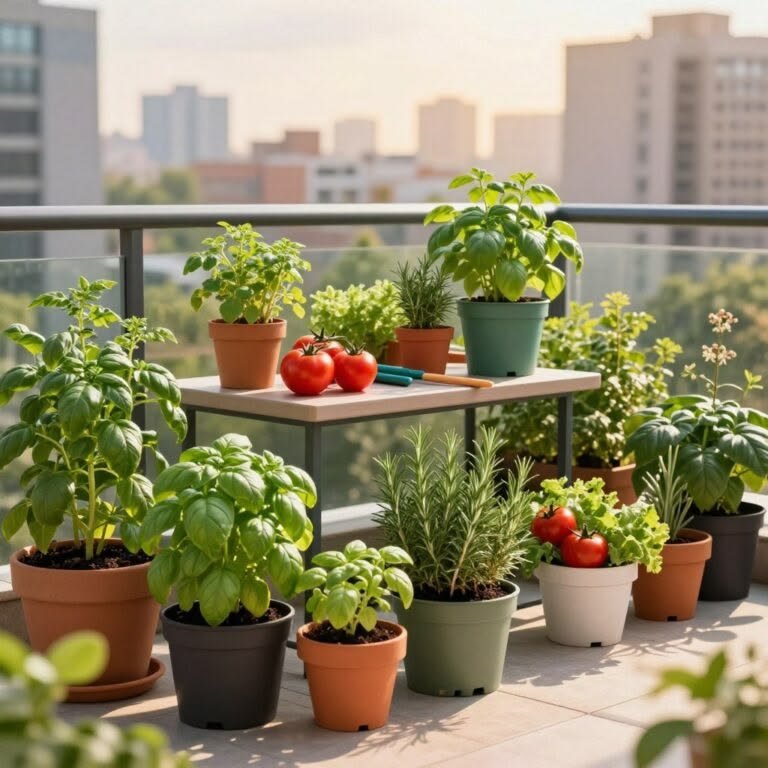
Not all pots are equal. Here is what to look for:
- Drainage holes — non-negotiable. Standing water kills roots.
- Correct size — too large and the soil remains moist for too long. Too small and the roots become cramped.
- Material — terracotta breathes (good for rosemary and thyme). Plastic holds moisture longer (good for mint and cilantro).
For soil, use a good indoor potting mix. Do not use garden soil from outdoors — it is too heavy and can bring in pests.
Light: The Most Important Factor
Light is the most important factor in whether indoor herbs live or die. Here is a simple breakdown:
| Light Level | Hours Per Day | Best Herbs |
|---|---|---|
| Full Sun | 6–8+ hours | Basil, rosemary, thyme |
| Partial Sun | 4–6 hours | Mint, chives, cilantro |
| Lower Light | 3–4 hours | Mint (tolerates it) |
If your apartment is dark, a simple LED grow light makes a profound difference. They’re inexpensive and energy-efficient. According to the Royal Horticultural Society, choosing the right light conditions is the single most important factor when growing herbs indoors.
Watering Without Overdoing It
The biggest mistake beginners make with herbs is overwatering, not underwatering. Before you water, put your finger into the soil up to the first knuckle. If it feels dry, water. If it still feels damp, wait.
Water gradually until it seeps through the bottom of the pot. After 30 minutes, empty the saucer to prevent roots from sitting in water.
Quick Reference Chart for Your Indoor Herb Garden
| Herb | Sun Needs | Water Frequency | Pot Size | Difficulty |
|---|---|---|---|---|
| Basil | 6+ hours | Every 2–3 days | 6 inches | Easy |
| Mint | 4–5 hours | Every 1–2 days | 6–8 inches | Very Easy |
| Chives | 4–6 hours | Every 2–3 days | 4–6 inches | Very Easy |
| Parsley | 6–8 hours | Every 2–3 days | 8 inches | Easy |
| Rosemary | 6–8 hours | When soil is dry | Terracotta | Moderate |
| Thyme | 6+ hours | Sparingly, when dry | 4–6 inches | Easy |
| Cilantro | 4–6 hours | Consistently moist | Tall pot | Moderate |
FAQs: Growing Herbs in an Apartment
Q: Can I grow herbs with absolutely no natural sunlight? Yes, but you have to get a grow light. LED grow lights work really well and don’t cost a fortune. Hang them 4–6 inches above the plants and keep them on for 12–14 hours a day.
Q: How often should I fertilize herbs I grow indoors? Once a month during spring and summer is sufficient. Apply a balanced liquid fertilizer at half-strength. Stop fertilizing in fall and winter when growth slows.
Q: Can I grow more than one herb in a pot? Some herbs can share a pot if they have similar needs — such as basil and parsley. But always keep mint separate, and don’t mix drought-lovers like rosemary and thyme with moisture-lovers like mint.
Q: The leaves of my herbs are yellowing. What is wrong? Yellow leaves usually mean one of three things: the plant is overwatered, under-watered or not getting enough light. Check the soil moisture first. If it is mushy, cut back on the water. If bone dry, water more frequently. If neither, relocate the plant to a sunnier spot.
Q: When is a good time to start an indoor herb garden? Anytime! That’s the beauty of growing herbs indoors. Unlike outdoor gardens, you are not limited by seasons. Spring is a common time to begin, though herbs can be planted and grown indoors throughout the year.
Q: When are herbs ready to be harvested? A good rule of thumb: wait until the plant has 6–8 sets of leaves or stems before taking any. This ensures the plant will be strong enough to not just survive harvesting, but thrive.
Q: Do bugs love indoor herbs? They can, but it rarely happens if your mix is clean and you refrain from overwatering. The most frequent pests are fungus gnats (from wet soil) and aphids. A light misting with diluted neem oil takes care of both.
Bringing It All Together
This guide has covered seven herbs that can realistically flourish in your home — no backyard or gardening experience necessary.
Basil, mint, chives, parsley, rosemary, thyme and cilantro can add variety to your kitchen and to the space around you. Some are bold and aromatic. Some are mild and versatile. They’re all manageable with some care and a few adjustments.
Begin with one or two herbs you actually cook with. Get comfortable with their needs. Then expand. Soon enough you’ll have a windowsill full of living, productive plants that save you money and make your food taste better every single day.
Today is the best time to begin your indoor herb garden. A pot, soil, a packet of seeds or one small plant from a nursery and some sunlight will do. The rest, you will pick up along the way.