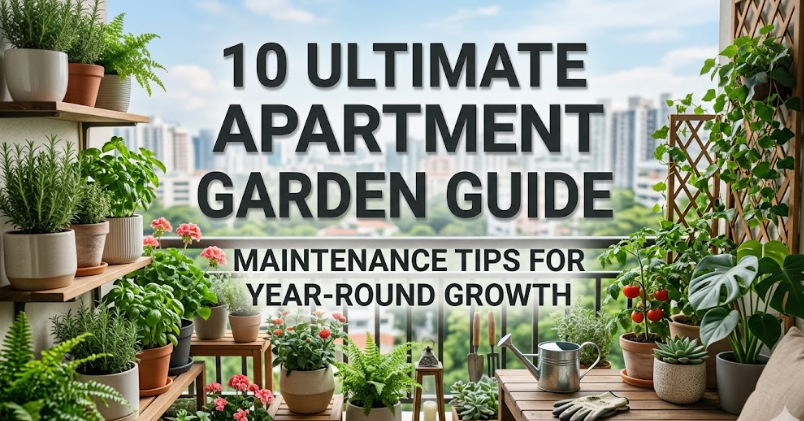
Apartment Garden Guide: Expert Tips and Maintenance Ideas
Learn how 10 expert practices will keep your indoor plants happy throughout the year — perfect for those with limited space, or starting out.
10 Year-Round Apartment Garden Maintenance Tips
It may sound impossible to grow a garden in an apartment. No backyard. No soil. Maybe just a little balcony or windowsill.
But here’s the thing: apartment gardening is not only possible, it’s incredibly rewarding.
People around the world are growing herbs, vegetables, flowers — even fruit trees — inside their apartments by the millions. With the right mentality and a little know-how, your tiny space can be a vibrant, lush oasis.
This apartment garden guide has 10 detailed, practical maintenance tips that will help your plants thrive, no matter what the season. Whether you’re starting from ground zero or have kept houseplants alive for years, there’s something in here for you.
Let’s dig in.
1. Let There Be Light — And Everything Changes
The single biggest factor in determining how well your apartment plants thrive is light. Before buying a single seed or pot, figure out your light situation.
North, South, East, or West?
The orientation of your windows makes a big difference.
- South-facing windows receive the most direct sunlight — perfect for herbs and fruiting plants.
- East-facing windows receive soft morning light — good for leafy greens and ferns.
- West-facing windows receive afternoon sun — good for succulents and Mediterranean herbs.
- North-facing windows receive the least amount of light, making them best for low-light plants such as pothos or snake plants.
What To Do If Natural Light Isn’t Enough
Most apartments do not receive sufficient natural light for food-producing plants. That’s where grow lights come into play.
Full-spectrum LED grow lights are nowadays cost-effective and energy-efficient. Hang them 6–12 inches above your plants and keep them on for 12–16 hours a day. A timer makes this effortless — set it once and forget it.
Pro Tip: Every week, give your pots a quarter turn. This prevents plants from leaning towards the light source and maintains even growth on each side.
2. Choose the Right Containers from the Beginning
Your pot is not merely a decoration. It’s your plant’s entire world. Choosing the wrong container can lead to root rot, slow growth, or soil that dries out too quickly.
Size Matters More Than You Think
| Plant Type | Minimum Pot Size |
|---|---|
| Herbs (basil, mint) | 6–8 inches |
| Leafy greens (lettuce, spinach) | 8–10 inches |
| Tomatoes, peppers | 5-gallon or larger |
| Root vegetables (carrots) | 12+ inches deep |
| Succulents and cacti | 4–6 inches |
An overly small pot limits root growth. A vessel that is too large can retain excess water and cause rot.
Drainage Is Non-Negotiable
Every container must have drainage holes. Without them, water gathers at the bottom, roots can’t breathe, and your plant slowly dies.
If you fall in love with a decorative pot that doesn’t have holes, use it as a cover pot. Keep your plant in its plain nursery pot with holes and simply slip it inside the decorative one.
Best Container Materials for Apartments
- Plastic pots — light, inexpensive, retain moisture.
- Terracotta pots — breathable, great for succulents but can be heavy and dry out quickly.
- Fabric grow bags — great airflow, prevent root circling, easy to store.
- Self-watering containers — ideal for the forgetful or busy person.
3. Create a Soil Mix That Really Feeds Your Plants
Apartment plants have no ground to draw nutrients from — they are completely dependent on what you put in the pot. Regular garden soil from outdoors is not a good idea for containers. It compacts, retains moisture and can harbor pests or disease.
Best Soil Mix for an Apartment Garden
A good potting mix should:
- Drain fast but retain some moisture
- Be light and fluffy, not dense
- Allow air to reach the roots
Basic recipe for most plants:
- 60% high-quality potting mix
- 20% perlite (to promote drainage and aeration)
- 20% compost (for nutrients)
For succulents and cacti, use 40–50% perlite. If you have moisture-loving plants such as ferns or peace lilies, add a handful of coco coir to retain water.
Refresh Your Soil Annually
Potting mix breaks down and loses nutrients over time. Every 12–18 months, repot your plants into fresh mix or top-dress the pot with a layer of compost.
Watch for these signals that your soil needs amending:
- Water flows right through instead of being absorbed
- Soil has receded from the edges of the pot
- Plant growth has slowed significantly
4. Water Smarter, Not More
Overwatering kills more apartment plants than underwatering — it’s the deadliest mistake beginners make. The goal is not to water on a schedule, but to water according to what your plant actually needs.
The Finger Test — Easy and Dependable
Poke your finger about an inch into the soil. If it feels dry, give it a good drink. If it feels damp, wait another day or two. For succulents and cacti, allow the top 2 inches to dry out completely.
How to Water Properly
When you water, do it slowly and deeply. Water the surface of the soil multiple times until it runs out of the bottom. This promotes downward root growth, resulting in a sturdier, drought-tolerant plant. Avoid light, frequent splashes — this causes roots to stay shallow, which weakens plants.
Seasonal Watering Adjustments
| Season | Watering Frequency |
|---|---|
| Spring & Summer | Every 2–4 days (daily checks) |
| Fall | Every 4–6 days |
| Winter | Every 7–10 days (most plants enter semi-dormancy) |
Note: These are general guidelines. Always check the soil before watering.
Water Quality Tips
Chlorinated water high in fluoride can stress some plants. Allow tap water to sit in an open container overnight before using it — this allows most chemicals to evaporate. If your tap water is extremely hard, use filtered or rainwater for sensitive plants.
5. Feed Your Plants — They Get Hungry, Too
Watering keeps your plants alive. Fertilizing helps them thrive. Every time you water, nutrients are depleted or washed away from the pot. Regular feeding replenishes those nutrients and encourages healthy, vigorous growth.
Types of Fertilizers
- Liquid fertilizers — fast release, easy to use, ideal for regular feeds during the growing season.
- Slow-release granules — mixed into soil or sprinkled on top, releasing nutrients over several months.
- Organic fertilizers — compost tea, worm castings, fish emulsion — gentler and build soil health over time.
Feeding Schedule for Apartment Gardens
- Spring and summer: Fertilize every 2–4 weeks with a balanced fertilizer (such as 10-10-10 or 5-5-5).
- Fall: Feed once monthly.
- Winter: Most plants stop needing feed altogether. Growth slows, and excess fertilizer may burn roots.
Signs Your Plant Is Underfed
- Pale yellow leaves
- Very slow or no new growth
- Smaller leaves than usual
- Weak, leggy stems
Important Warning: More fertilizer is NOT better. Over-fertilization leads to fertilizer burn — leaf tips turn brown and crispy, and roots may be damaged. Always follow the label instructions and, if in doubt, use half the recommended dose.
6. Maintain a Steady Temperature and Humidity
Most of the plants we keep in apartments originate from tropical or subtropical climates. They like warmth and humidity. Apartments tend to be warm but dry — particularly in winter, when heating units suck moisture out of the air.
| Plant | Ideal Temp (°F) | Ideal Humidity |
|---|---|---|
| Herbs (basil, cilantro) | 65–85°F | 40–60% |
| Tropical houseplants | 65–80°F | 50–70% |
| Succulents & cacti | 60–80°F | 10–30% |
| Vegetables (tomatoes) | 65–85°F | 50–70% |
| Ferns | 60–75°F | 60–80% |
Easy Ways to Boost Humidity
- Pebble tray method: Keep a shallow tray with pebbles and water under your pots. As the water evaporates, it adds humidity to the air around your plants.
- Group your plants together: Plants transpire — they release moisture through their leaves. Proximity creates a humid microclimate.
- Small humidifier: The most effective option. A basic ultrasonic humidifier makes a world of difference.
- Misting: A temporary solution, but not very long-lasting. Mist in the morning so leaves dry before nightfall.
Avoid These Temperature Pitfalls
- Prevent cold drafts near windows in winter.
- Don’t place plants directly over heating vents — hot, dry air causes stress.
- Sudden temperature changes (such as moving plants from indoors to a cold balcony) can lead to leaf drop or shock.
7. Prune Regularly to Encourage Bushy, Healthy Growth
Pruning can seem cruel — cutting away parts of a growing plant. But it’s one of the best things you can do for it.
Why Pruning Helps
When you prune back a stem, the plant responds with two new stems from just below where you cut. This stimulates bushier, fuller growth rather than tall and leggy plants. Pruning also removes dead, damaged, or diseased portions before they spread trouble to the rest of the plant.
What to Prune and When
- Herbs: Regularly pinch off the top two sets of leaves. This promotes new leaf growth and keeps the plant from flowering, which causes leaves to turn bitter.
- Fruiting plants (tomatoes, peppers): Prune “suckers” — the little shoots that form in the crotch between a stem and a branch. They pull energy away from fruit production.
- Houseplants: Remove yellow, brown, or dead leaves as soon as you see them. Trim leggy stems to stimulate compact foliage.
- Flowers: Deadhead (remove spent blooms) regularly. This encourages the plant to produce more blooms rather than go to seed.
Tools You Need
- A small pair of sharp scissors or pruning shears
- A clean cloth and rubbing alcohol to wipe blades between plants (to avoid spreading disease)
8. Stay on Top of Pests
Apartment gardens aren’t pest-free. In fact, since they’re indoors with no natural predators, pests can get out of hand quickly if you’re not watchful.
The Most Common Pests in Apartment Gardens
- Fungus gnats — little flies that buzz around soil. Their larvae eat plant roots and thrive in damp, overwatered soil.
- Spider mites — nearly invisible. Look for fine webbing on leaves and tiny yellow or brown specks.
- Aphids — tiny soft-bodied insects that swarm on new growth, sucking sap and inhibiting growth.
- Mealybugs — white, fuzzy insects that hide in leaf joints.
- Scale insects — brown, shell-like lumps on stems and leaves.
How to Deal With Each One
| Pest | Treatment |
|---|---|
| Fungus gnats | Let soil dry out more; use sticky yellow traps; add a layer of sand on top of soil |
| Spider mites | Wipe leaves with a damp cloth; spray with neem oil solution |
| Aphids | Spray with water to knock off; apply insecticidal soap |
| Mealybugs | Dab with rubbing alcohol on a cotton swab; spray with neem oil |
| Scale | Scrape off manually; treat with horticultural oil |
Prevention Is Better Than Treatment
- Inspect new plants thoroughly before bringing them inside.
- Keep any new plant in quarantine, separate from your others, for 1–2 weeks.
- Keep leaves clean — dust buildup attracts pests.
- Avoid overwatering — wet soil is a breeding ground for gnats and fungus.
9. Adapt Your Garden With the Seasons
One thing many apartment gardeners overlook is that plants change throughout the seasons — even indoors. Light levels shift, temperatures fluctuate, and plants move through different growth phases over the course of the year. A good apartment garden guide always accounts for these seasonal changes.
🌱 Spring — The Season of Awakening
- Start seeds indoors 6–8 weeks before your last frost date.
- Move root-bound plants into fresh pots, slightly larger than their current ones.
- Resume regular fertilizing.
- Add new plants or upgrade your setup.
☀️ Summer — Peak Growing Season
- Water regularly as heat and extended daylight speed up growth.
- Watch for pest explosions — warm weather accelerates reproduction.
- Harvest herbs and vegetables frequently to keep plants productive.
- Move plants to a brighter spot or outdoors if you have a balcony.
🍂 Fall — Begin Winding Down
- Bring outdoor balcony plants indoors before the first frost.
- Reduce watering and fertilizing gradually.
- Prune back overgrown plants to manageable sizes.
- Take cuttings and propagate new plants.
❄️ Winter — Rest and Recharge
- Most plants grow slowly or stop entirely. That’s normal and healthy.
- Reduce watering significantly.
- Stop fertilizing.
- Supplement with grow lights if natural light falls short.
- Enjoy low-maintenance gardening and plan next year’s layout.
10. Log and Learn From Your Plants
This may be the most underappreciated tip on this list. A simple garden journal transforms your plant care — turning trial and error into real knowledge you can apply year after year.
What to Track
You don’t need anything fancy — a notebook or a phone notes app works perfectly. Write down:
- What you planted and when
- When you watered and fertilized
- Any pest issues and how you dealt with them
- When plants flowered or produced food
- What worked and what didn’t
Why It Matters
Over time, patterns emerge. You’ll see which plants thrive in a given spot. You’ll figure out exactly how much water your specific plants need in your specific apartment. You stop guessing and start knowing.
Take Photos Regularly
A photo of each plant once a week creates a visual timeline. You can look back and spot early signs of trouble — a slight yellowing, a little leaning, leaves curling — that you might have missed at the time. The RHS (Royal Horticultural Society) is an excellent external resource for identifying plant problems and expanding your indoor growing knowledge.
Quick Reference: Year-Round Apartment Garden Maintenance Guide
| Task | Spring | Summer | Fall | Winter |
|---|---|---|---|---|
| Watering | Moderate | High | Moderate | Low |
| Fertilizing | Resume | Regular | Reduce | Stop |
| Pruning | Heavy | As needed | Light | Minimal |
| Repotting | Yes | If needed | No | No |
| Pest checks | Weekly | Weekly | Weekly | Monthly |
| Grow lights needed | Maybe | No | Maybe | Yes |
FAQs About Apartment Garden Maintenance
Q: How can I create an apartment garden with virtually no natural light? A: Invest in a quality full-spectrum LED grow light. Most herbs and leafy greens, as well as some fruiting plants, grow very nicely under grow lights without any natural daylight.
Q: Which are the easiest plants to grow in an apartment? A: For herbs, start with basil, mint, and chives. For houseplants, pothos, snake plants, and peace lilies are very forgiving. For edible gardens with enough light, cherry tomatoes and lettuce are great options.
Q: How frequently should I repot my apartment plants? A: The vast majority of plants will need repotting every 1–2 years. Early signs include roots appearing out of drainage holes, water that drains immediately without being absorbed, and noticeably stunted growth.
Q: Can I grow vegetables year-round in an apartment? A: Yes, with grow lights. Greens, herbs, and radishes are particularly good candidates for indoor year-round growing, as are microgreens.
Q: What is the biggest mistake apartment gardeners make? A: Overwatering, without a doubt. Instead of sticking to a regular schedule, always check the soil before watering.
Q: Do I need special soil for apartment gardening? A: Yes. Regular garden soil is not suitable for containers. Use a good potting mix amended with perlite for drainage and some compost for nutrients.
Q: How do I make sure my apartment doesn’t smell like soil or fertilizer? A: Use odorless slow-release fertilizers or worm castings in place of fish-based liquid fertilizers. Keep the soil surface clean, avoid overwatering (which produces musty odors), and ensure good airflow — all of these help a great deal.
Bringing It All Together
A sustainable apartment garden doesn’t just happen. It grows out of regular, mindful nurturing — the kind that comes naturally once you know what your plants need.
This guide has taken you through everything from light and soil to pests and seasonal adjustments. Each tip is connected to the others. Good light + good soil + smart watering + regular feeding = healthy, productive plants.
You don’t have to do it all perfectly. Start with the fundamentals — light, watering, and soil — then grow from there. Pay attention to your plants. They will tell you when something’s wrong.
The best part of apartment gardening isn’t just the harvest or the greenery. It’s the quiet pride of getting something living and beautiful to thrive in a small space — and watching it bloom, season after season.
Start where you are. Use what you have. Your apartment garden is waiting.