Productivity Tips for Busy People from 7 Secret Apartment Garden Guide
Meta description: So look at this apartment garden guide — get busy people these tips, that actually work – here are the 7 secrets to productivity for growing fresh plants & herbs and veggies right under your nose!
It seems impossible to grow a garden when you live in an apartment. No yard. No soil. No time. But here’s the reality — every day thousands of busy people create vibrant gardens in tiny spaces.
You don’t need a green thumb. You don’t need weekends free. All you need is the appropriate system.
This guide to apartment gardening breaks down 7 powerful little-known tips that save time, improve your harvest and actually make apartment gardening fun — even when you’re busy.
Let’s dig in.
Why Apartment Gardening Doesn’t Work (And How to Prevent It Before You Get Started)
Most apartment gardens die within the first month. Not because the person quit — but because they established the wrong system from day one.
They buy random pots. They choose plants that require full sun on a north-facing balcony. They overwater daily until they drown out the roots. Then they go on to call themselves bad gardeners.
Skill is not the real issue — setup is.
Everything changes when you build your garden around your lifestyle — your schedule, your light, your space. Plants thrive. Watering takes five minutes a week. And you actually have fun while doing it.
That’s what this guide is centered on.
Tip 1: Chart Your Light Before You Purchase Any Plants
This is the most glossed-over part of any apartment garden guide. And it’s the one that kills indoor gardens more than anything else.
Every plant has a specific light requirement. Get it wrong and the plant gradually dies — no matter how well you water or fertilize it.
How to Conduct a Simple Light Audit
Before you spend a single dollar on plants or pots, spend one day studying your apartment’s light.
Walk through every room and balcony at three times:
- 8:00 AM
- 12:00 PM
- 4:00 PM
Mark the areas where direct sunlight hits the wall or floor. Take note of which directions the windows face — north, south, east, west.
Use this quick reference:
| Light Type | Hours of Direct Sun | Best Plants |
|---|---|---|
| Full Sun | 6+ hours | Tomatoes, peppers, basil |
| Partial Sun | 3–6 hours | Lettuce, spinach, parsley |
| Low Light | Under 3 hours | Pothos, snake plant, mint |
| Artificial Light | Grow lamp | Microgreens, herbs and seedlings |
Choose plants for the light you actually have — not the light you want to have.
The North-Facing Window Trap
For many apartment dwellers in the Northern Hemisphere, north-facing windows are their primary source of light. These windows receive no direct sunlight.
If that’s you, stick with low-light plants and get a simple grow light. A basic full-spectrum LED grow bulb costs under $20 and clips to a shelf. It changes everything.
Tip 2: Create a “Lazy Watering” Setup That Does the Dirty Work for You
Watering is the most time-consuming task in apartment gardening. It’s also the leading cause of plant death — not from underwatering, but overwatering.
If you are a busy person, you water when you remember to. It’s usually either too often or not enough. Both kill plants.
The fix? A self-watering system that does the work for you.
Self-Watering Methods That Actually Work
Self-Watering Pots (Sub-Irrigation) These pots have a reservoir at the bottom that holds water. Roots draw from below as needed. You refill the reservoir every 7–14 days. That’s it.
These range from $10–$30 a pot and can be found just about anywhere online or in the garden center. For busy people, this is the number one investment for apartment gardening.
The DIY Bottle Drip Method
- Take a plastic bottle
- Poke small holes in the cap
- Fill it with water
- Flip it into the soil
Watering takes place over 2–5 days as it drips slowly. Free. Effective. Great for when you travel.
Terracotta Spike Watering Globes These are ceramic spikes that you attach to a bottle. Fill the bottle, insert the spike into the soil and let the terracotta slowly release water as the soil dries out.
They run about $5–$15 for a set and look nice on a windowsill.
Watering Frequency by Plant Type
| Plant Type | Watering Frequency | Signs of Overwatering |
|---|---|---|
| Herbs (basil, cilantro) | Every 2–3 days | Yellow leaves, soggy soil |
| Succulents & cacti | Every 10–14 days | Mushy stems |
| Leafy greens | Every 1–2 days | Wilting despite wet soil |
| Tomatoes/peppers | Every 2–3 days | Cracked fruit, blossom drop |
Whenever in doubt, insert your finger 2 inches into the soil. If it’s moist, don’t water. If it’s dry, it’s time.
Tip 3: Start with High-Yield, Low-Maintenance Plants
Here’s a secret that most apartment garden guides won’t tell you: not every plant is worth growing in a small space.
Some plants take months to yield anything. Some spread across your whole balcony. And some simply require more care than a busy person can realistically provide.
A smart apartment gardener focuses on low-maintenance plants that reward effort quickly.
The Best Starter Plants for Apartment Gardeners With a Full Schedule
Herbs — #1 Choice for Beginners
Herbs are quick, small and super useful. You grow them. You cook with them. You stop spending money on grocery store bundles that go limp within three days.
Best herbs for apartments:
- Basil — enjoys warmth and sun, grows quickly
- Mint — grows in just about any environment, very resilient (keep it contained — it spreads)
- Chives — very low-maintenance, regrows after clipping
- Parsley — tolerates more shade than most herbs
- Thyme — drought-resistant, great for forgetful waterers
Microgreens — The Quickest Harvest in the Game
Microgreens are harvested in 7–14 days from seed. No special equipment needed. All you need is a shallow tray, some potting mix, seeds and a sunny windowsill.
They’re a nutrient powerhouse — studies have shown that some microgreens can be up to 40 times more nutrient-dense than their full-size counterparts. And they’re delicious in salads, sandwiches and smoothies.
Lettuce and Salad Greens
Lettuce germinates quickly, tolerates some shade and works as a “cut-and-come-again” crop. Trim the outer leaves and the plant keeps producing new ones. One pot of lettuce can supply a salad a week for months.
Plants to Avoid When First Starting Out
| Plant | Why It’s Tricky for Apartments |
|---|---|
| Corn | Requires too much space |
| Watermelon | Sprawling vines, large pots required |
| Pumpkin | Same issue as watermelon |
| Artichokes | Very slow-growing and very large plants |
| Fruit trees | Require big containers, years before they fruit |
Start easy. Win early. Build confidence. Then expand.
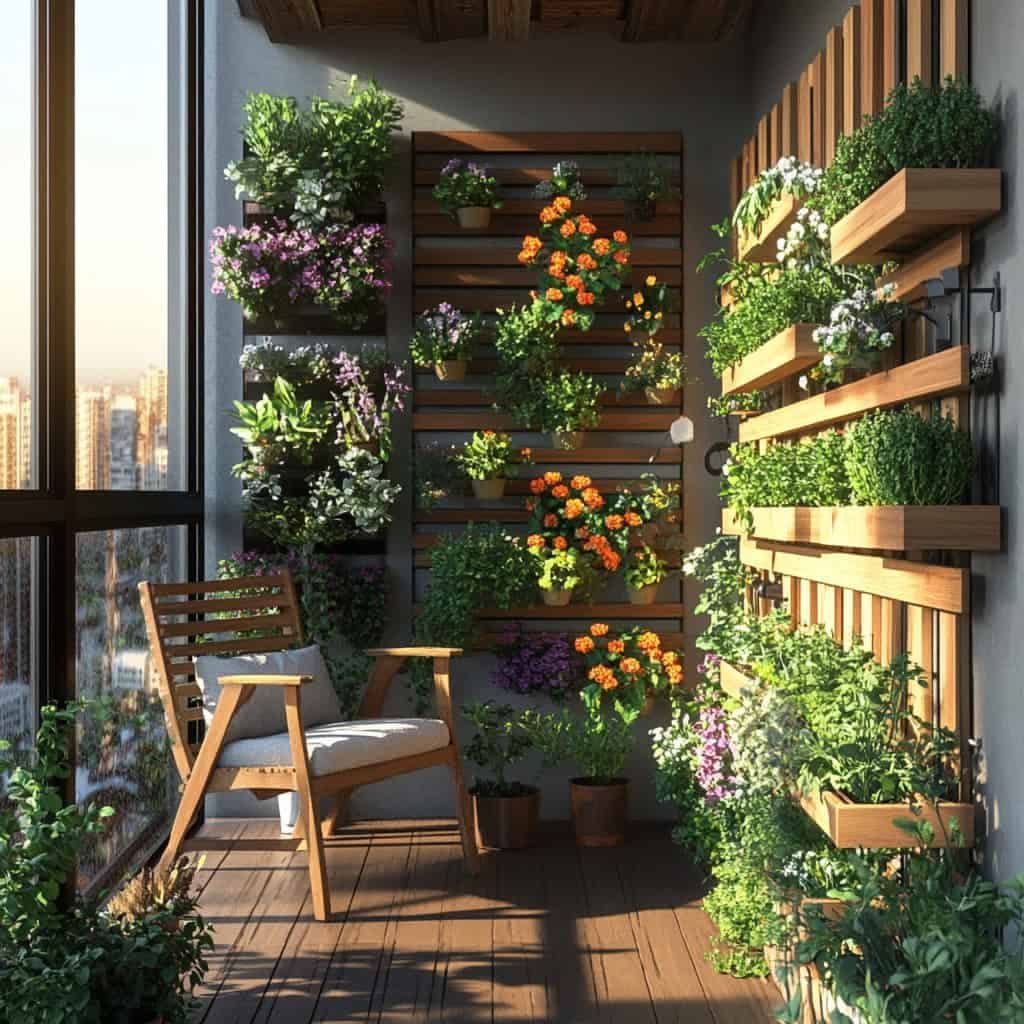
Tip 4: Maximize Vertical Space
Apartment gardeners have one resource they consistently overlook: the wall.
Floors and window ledges fill quickly. But your walls? The vast majority of apartment gardeners leave them entirely bare while complaining that they have no space to grow anything.
Vertical gardening can triple the space available for your crops — without taking up an inch of floor space.
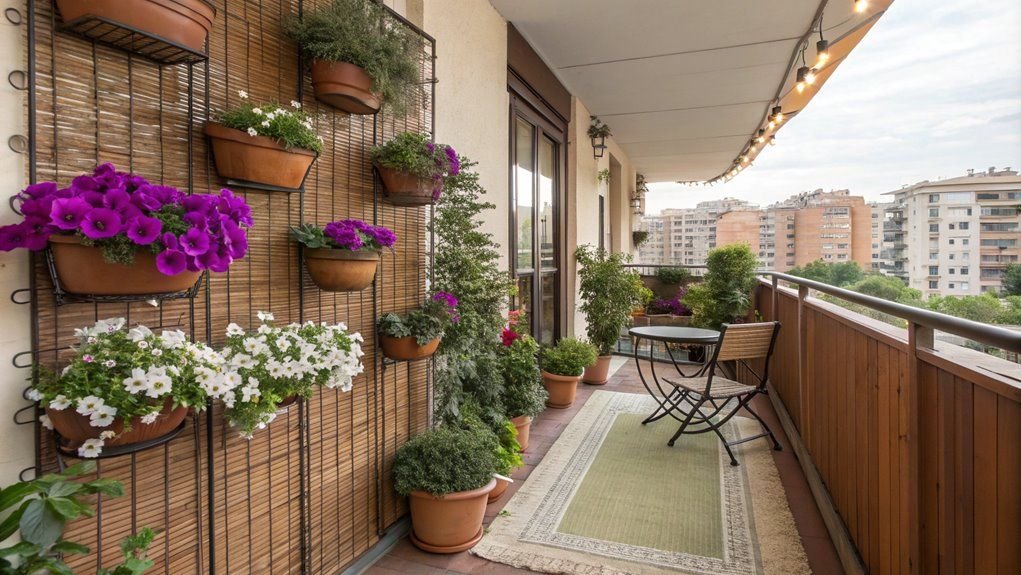
Smart Vertical Gardening Systems
Pocket Planters Fabric wall pockets hang from a curtain rod or hooks. Each pocket holds one plant. A single strip of 12 pockets occupies a wall space approximately 18 inches wide and 5 feet high. That’s 12 plants in the footprint of a doormat.
Works well for herbs, strawberries and smaller flowering plants.
Stackable Tower Planters These vertical towers stack on each other and sit on a balcony or the floor. Some designs hold up to 20 plants with a footprint of only one square foot.
(The Tower Garden brand is popular, but more affordable off-brand versions also work well.)
DIY PVC Pipe Planters Cut holes into a PVC pipe. Fill with soil. Mount vertically. Sounds simple? Because it is. This method is popular among small-space gardening communities and costs roughly $10–$20 in materials.
Pegboard Herb Wall Mount a pegboard on your kitchen wall. Attach small hooks and hang lightweight herb pots. This keeps your most-used herbs within arm’s reach while cooking and adds a beautiful visual element to your kitchen.
What Vertical Gardening Does for Space
| System | Floor Space Used | Plants Possible |
|---|---|---|
| Standard shelving | 2 sq ft | 6–8 plants |
| Pocket planter wall | 0 sq ft | 10–15 plants |
| Tower planter | 1 sq ft | 15–25 plants |
| Pegboard herb wall | 0 sq ft | Varies |
Go vertical. It is the simplest space multiplier in apartment gardening.
Tip 5: Feed Smart, Not Often — The Nutrient Timing System
Fertilizing feels complicated. But it doesn’t have to be.
Either apartment gardeners never fertilize (plants slowly starve) or they overfertilize (plants get nutrient burn and die even faster).
A simple system that takes five minutes a month will give your plants year-round health.
The 3-Phase Feeding Calendar
Phase 1 — Beginning Phase (Weeks 1–4) When you initially pot a plant, use fresh potting mix with slow-release fertilizer pellets already added. Most good potting mixes have sufficient nutrients for 4–6 weeks. No additional feeding needed at this stage.
Phase 2 — Growing Phase (Month 2 and Beyond) Begin feeding every two weeks with a balanced liquid fertilizer (10-10-10 NPK ratio is common). Dilute it to half strength. Less is more.
For herbs and leafy greens, choose a high-nitrogen formula (such as 10-5-5) to encourage leafy growth.
For fruiting plants such as tomatoes and peppers, once flowers form, transition to a phosphorus- and potassium-heavy formula (such as 5-10-10).
Phase 3 — Rest Phase (Winter) Winter is a time of dormancy for most plants. Reduce fertilizing to once a month or suspend it entirely for dormant plants. Overfeeding in winter damages roots.
Quick Fertilizer Cheat Sheet
| Plant Type | Best Fertilizer Type | Frequency |
|---|---|---|
| Leafy herbs | High nitrogen (10-5-5) | Every 2 weeks |
| Tomatoes (fruiting) | High potassium (5-10-10) | Weekly during fruiting |
| Succulents | Low-dose cactus formula | Monthly in growing season |
| Microgreens | None needed | N/A |
| Lettuce | Balanced (10-10-10) | Every 2–3 weeks |
A bottle of liquid fertilizer ranges from $8–$15 and lasts a whole growing season. This is one of the best investments for a small apartment garden.
Tip 6: Develop a 5-Minute Daily Garden Routine
This tip sounds too simple. Yet it is the biggest reason some apartment gardens flourish and others fade.
People who succeed at apartment gardening are not spending hours every weekend tending their plants. They spend five minutes a day.
Five minutes every day is far more effective than two hours on a Sunday — every single time.
What To Do During Your Five-Minute Garden Check
Stack this habit on top of something you already do. Morning coffee. Evening teeth brushing. Whatever works.
Your five-minute routine:
- Look — Walk past every plant. Does anything look droopy, yellow or off? (30 seconds)
- Touch — Stick your finger in the soil of any pot that looks like it might need watering. (60 seconds)
- Water — Water only those pots that truly need it. (2 minutes)
- Harvest — Snip any herbs or greens that are ready. (60 seconds)
- Remove — Clear away any dead leaves or fading flowers. (30 seconds)
That’s it. Five minutes. Every day.
The Weekly Add-On (10 Minutes on Sunday)
Take ten extra minutes once a week:
- Check for pests under leaves
- Turn pots so all sides receive even light
- Check self-watering reservoir levels
- Repot anything that looks root-bound
This weekly check gets ahead of problems before they turn into crises.
Habit-Stacking for Busy People
| Existing Habit | Garden Habit to Stack Onto It |
|---|---|
| Morning coffee | 5-minute daily plant check |
| Evening news | Watering check |
| Cooking dinner | Harvest fresh herbs |
| Weekend breakfast | 10-minute Sunday check |
Tip 7: Create a Garden Plan on Paper Before Planting a Single Seed
The best apartment gardeners are planners. They don’t just pick a few random plants off the shelf and hope for luck. They treat their garden like a small project.
It doesn’t have to be complicated. A 10-minute planning session upfront will save you hours of frustration later.
The One-Page Garden Plan Method
Grab a piece of paper or open a notes app. Write down:
Your goal Do you want fresh herbs for cooking? Salad greens to lower your grocery bills? Flowers to brighten your space? Knowing your goal helps you select the right plants.
Your space Measure your windowsill, balcony or shelving space. Write down actual dimensions. Most people think they have more space than they do.
Your light Using your light audit from Tip 1, list how many hours of sun each growing location receives.
Your time budget Be honest. Are you willing to spend 5 minutes per day? 10? Are you away for work often? This determines whether self-watering pots are essential or optional.
Your plant list Start with 3–5 plants. People who start with 3 plants are more likely to succeed than people who start with 12.
Seasonal Planting Calendar for Apartment Gardens
| Season | What to Grow Indoors |
|---|---|
| Spring | Herbs, lettuce, tomato seedlings |
| Summer | Peppers, basil, cherry tomatoes |
| Fall | Spinach, kale, chives |
| Winter | Microgreens, sprouts, herbs under grow light |
The Growth Tracker Habit
Keep a simple log. Take a weekly garden photo. Write one line about what’s growing or what you did differently. In three months, you’ll have a clear picture of what works in your specific apartment.
This is the secret weapon of experienced apartment growers. Your garden is a data source, not just a pastime.
Putting It All Together: The Weekly Apartment Garden System
Here’s how all seven tips blend into one easy weekly system:
| Frequency | Task | Time |
|---|---|---|
| Daily | 5-minute plant check (Tips 5 & 2) | 5 minutes |
| Weekly | Full check, fertilize if needed, harvest | 15 minutes |
| Monthly | Review growth log, plan next plants, prepare for next season | 20 minutes |
The total active time per week is less than 60 minutes. It covers everything — watering, feeding, harvesting and problem-solving.
Apartment Garden Mistakes to Stop Making Immediately
No matter how good your apartment garden guide is, small mistakes creep in. Here are the most common ones and how to avoid them:
- Using garden soil instead of potting mix — Garden soil compacts in pots and suffocates roots. Always use a quality potting mix designed for containers.
- Using pots without drainage holes — Roots sitting in standing water rot quickly. Every pot needs a drainage hole. No exceptions.
- Placing all plants in one spot — Not all plants need the same light. Don’t cluster them all in one window.
- Skipping pest checks — Aphids, fungus gnats and spider mites are common in apartments. Check under leaves weekly. Catch them early.
- Quitting after one plant dies — Every gardener loses a plant. It’s part of the process. Replace it, adjust what you did and keep going.
FAQs: Busy People’s Guide to Apartment Gardens
Q: How much space do I actually need to start an apartment garden? You could begin with a single windowsill. Most kitchen windowsills can fit two to three pots of herbs and yield a meaningful harvest. Start small. Expand when you’re ready.
Q: What is the most affordable way to start an apartment garden? Grow microgreens. All you need is a shallow tray ($2), potting mix ($5) and seeds ($3–$5). Total startup cost: under $15. Within two weeks, you’ll have your first harvest.
Q: Can I grow vegetables without a balcony? Absolutely. Lettuce, spinach, herbs and microgreens all thrive on indoor windowsills or with a simple grow light. Balconies help with sun-hungry crops like tomatoes, but they’re not essential.
Q: How can I prevent pests in my apartment garden? Prevention is better than treatment. Use clean potting mix (not garden soil), avoid overwatering (wet soil invites fungus gnats) and inspect new plants for pests before bringing them inside. If pests do appear, neem oil spray is safe, effective and widely available.
Q: How often should I replace the soil in my pots? Replace your potting mix every 1–2 years. Soil loses nutrients and structure over time. Refreshing with a new mix at the start of each growing season keeps plants healthy.
Q: Do I need to invest in costly grow lights? Not necessarily. A simple full-spectrum LED bulb that screws into any lamp fixture costs less than $20 and works well for herbs and greens. Unless you’re growing sun-hungry vegetables indoors year-round — like tomatoes — you don’t need a professional setup.
Q: What if my landlord doesn’t permit outdoor plants on the balcony? Focus on indoor growing. Windowsill herb gardens, kitchen shelving systems and wall-mounted pocket planters are all effective options that don’t require balcony access.
Closing Thoughts: Your Apartment Garden Journey Starts Now
The truth about apartment gardening is this: the hardest part is getting started.
And once you map where your light falls, set up one self-watering pot and grow your first batch of microgreens, it clicks. You stop viewing your apartment as a place that can’t support a garden. You start seeing it as a growing space full of real potential.
This apartment garden guide is not about perfection. It’s about creating a simple, low-effort system that works for your real life — your daily rhythms, your priorities, your living environment.
Start with one tip. Just one.
Map your light this afternoon. Order one self-watering pot. Buy a pack of microgreen seeds.
That’s all it takes to begin. Everything else follows from there naturally.
Your apartment garden is closer than you think.