Apartment Garden Guide: 11 Shortcuts for Growing Fresh Herbs, Veggies and Flowers Without a Yard
So you live in an apartment. No backyard. Perhaps just a small balcony or a few windowsills. And you want to grow something green — something alive, something yours.
Good news: you absolutely can.
In recent years, apartment gardening has boomed. More and more people are living in smaller quarters and craving fresh food, cleaner air and a little bit of nature nearby. The challenge? Time and space, and how to begin.
Which is precisely this apartment garden guide’s purpose.
These 11 hacks are actionable, simple — and help save you time without compromising the outcome. Whether you have a sunny balcony, a single bright window or just a corner where you can set up a grow light — there’s something here for you.
Let’s get growing.
Why Growing a Garden in an Apartment Is Worth It
Indoor or small balcony plant cultivation isn’t merely a hobby. It’s genuinely useful. Fresh herbs from your windowsill are better than anything in a plastic package at the grocery store. Homegrown leafy greens are harvested at peak nutrition. And the work of caring for plants — watering, trimming, observing something grow — is known to lower stress levels.
Research published in the Journal of Physiological Anthropology showed that interacting with indoor plants reduces heart rate and blood pressure. That’s a tangible, measurable benefit from something as easy as keeping a basil plant on your kitchen counter.
Plus, once your system is established, apartment gardening doesn’t have to take more than 10–15 minutes a day. This guide is designed to do just that.
Hack #1 — Find the Appropriate Plants (Not Just the Beautiful Ones)
This is where most novices make a mistake. They walk into a nursery, fall in love with a giant tomato plant, bring it home and wonder why it dies two weeks later.
Apartment gardening begins with selecting plants that will thrive indoors or in containers.
Best beginner plants for apartments:
| Plant | Light | Container | Time to Harvest |
|---|---|---|---|
| Basil | Bright indirect | Small pot | 3–4 weeks |
| Lettuce | Moderate | Shallow tray | 4–6 weeks |
| Green onions | Low to moderate | Any with drainage | 3 weeks |
| Cherry tomatoes | Full sun | Medium/large pot | 8–9 weeks |
| Mint | Low to moderate | Small pot | 4 weeks |
| Radishes | Low to moderate | Any with drainage | 3–4 weeks |
| Chili peppers | Full sun | Medium pot | 8–10 weeks |
Begin with two or three from this list. Master them. Then expand.
Your Best First Move Is an Herb Garden
Herbs are the ideal place to begin any apartment garden. They’re small, useful, fast-growing and forgiving. Basil, mint, cilantro and chives all thrive in pots on a sunny windowsill.
And when you snip a few leaves for dinner, you have an immediate payoff. That keeps you motivated.
Hack #2 — Fill Up Vertical Space Like a Pro
When you live in a small apartment, floor space is at a premium. The solution? Go up.
Vertical gardening converts blank walls, balcony railings and door backs into growing space. A vertical pocket planter that occupies less than two square feet of wall space can contain 8–10 plants.
Vertical gardening ideas that really work:
- Hanging pocket planters — Ideal for herbs and strawberries
- Wall-mounted shelf units — Ideal for pots of various sizes
- Balcony railing planters — Hook over railings, great for herbs and flowers
- Pegboard with hooks and pots — Customizable and removable
- Tension rod planters — Squeeze into windows without a drill
If you’re going vertical, the secret is to use lightweight pots and potting mix — not big bags of heavy garden soil. This protects your wall mounts and shelves.
Stackable Planters: Maximize Space Even More
Stacking tower planters give you the ability to grow strawberries, lettuce or herbs in a footprint no larger than a dinner plate. They are widely available online and work a treat on small balconies.
Hack #3 — The Game Changer: Self-Watering Pots
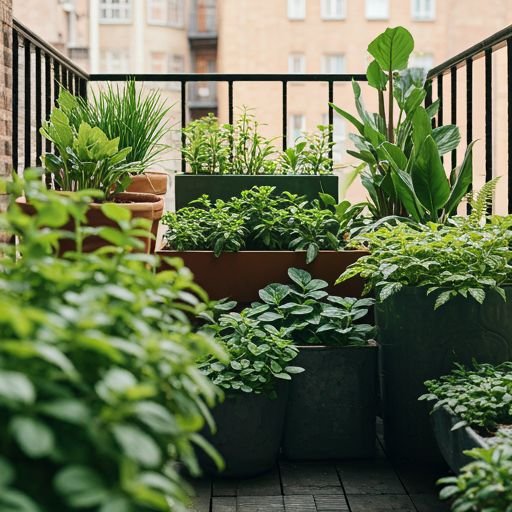
Self-watering pots are a game changer if you forget to water — or travel frequently.
These containers utilize a bottom reservoir. The plant draws water up through the soil as needed. That means you could potentially go 5–10 days between reservoir refills depending on the plant and season.
Self-watering pots are ideal for:
- Tomatoes
- Lettuce
- Herbs
- Peppers
They also lower the chances of overwatering (the No. 1 way novice gardeners kill plants) and underwatering. It’s one of the best investments you can make for your apartment garden.
Make Your Own Budget Self-Watering Pot
You don’t need to break the bank. Take a large plastic bottle, cut it in half, turn the top upside down into the bottom half, fill it with soil and plant your seedling. Add water to the bottom half. Done — you just made a self-watering pot for free.
Hack #4 — Grow Lights Make You Location-Independent
Not every apartment has good natural light. North-facing windows, tall buildings that block the sun, long winters — these are all real challenges.
A grow light can fix all of that.
LED grow lights have become cost-effective and efficient. They emit the exact light wavelengths (primarily red and blue) that plants require for photosynthesis and growth.
Quick grow light comparison:
| Type | Best For | Cost Range | Energy Use |
|---|---|---|---|
| LED panel | All plants | $20–$80 | Low |
| T5 fluorescent | Seedlings, herbs | $15–$50 | Moderate |
| Full-spectrum LED | Fruiting plants | $40–$150 | Low |
| Smart grow light | Automated setups | $50–$200 | Low |
Put your grow light on a timer. Most vegetables and herbs require 12–16 hours of light daily. Plug the light into a simple outlet timer, set it and forget it.
The 18-6 Rule for Grow Lights
For most vegetables and herbs, a cycle of 18 hours on and 6 hours off works well during growth phases. After plants begin flowering or producing fruit, switch to 12 hours on and 12 off, emulating the shorter days of late summer.
Hack #5 — Group Plants Together by Water Needs
It sounds simple enough, but it saves huge amounts of time.
You can save time by watering all your plants that need similar amounts of water at once, rather than going pot by pot and guessing what each one requires.
Basic watering groups:
- Low water: Succulents, rosemary, thyme, sage
- Moderate water: Basil, chili peppers, cherry tomatoes
- High water: Lettuce, spinach, mint, parsley
Group your high-water plants in one zone. Low-water plants in another. Now all it takes is one quick sweep to water rather than playing a guessing game.
The Finger Test Always Works
Before you water anything, poke your finger about an inch into the soil. If it feels dry, water it. If it still seems wet, let it be. This simple test eliminates 90% of overwatering errors and takes just two seconds per pot.
Hack #6 — Do Your Garden Work in a Single Weekly Session
One of the biggest reasons people give up on apartment gardening is that it begins to feel like a never-ending chore. A little watering here, a little pruning there — it builds up and seems unending.
The solution is to batch your tasks.
Choose one day per week — Sunday morning works for many — and complete all your garden maintenance at once. Here’s what a 20-minute weekly session might look like:
- Minutes 1–5: Inspect all plants for pests, yellowing leaves or other signs of stress
- Minutes 6–10: Trim dead leaves, pinch off flowers from herbs you want to keep leafy
- Minutes 11–15: Fertilize any plants that require it (typically every 2–4 weeks)
- Minutes 16–20: Refill pots, move pots if uneven sun exposure occurred, start new seeds
Every day, you’re just watering — which takes 5 minutes max for a small apartment garden. All the rest takes place once a week.
Hack #7 — Turn Kitchen Scraps into Liquid Fertilizer
Store-bought fertilizer works, but it’s surprisingly easy to make an effective liquid fertilizer from scraps you’d usually toss.
Easy DIY fertilizers:
- Banana peel water: Soak 2–3 banana peels in a jar of water for 48 hours. It absorbs potassium and phosphorus. Use it to water your plants.
- Eggshell tea: Crush a handful of dried eggshells into a jar of water. Let sit for a day or two. The calcium leaches into the water and feeds your soil.
- Cooled pasta or rice water: The starchy, mineral-rich water left after boiling (unsalted) pasta or rice is wonderful for plants.
- Coffee grounds: Dust used coffee grounds around the soil of acid-loving plants such as blueberries or tomatoes.
These hacks cost nothing and help cut down on kitchen waste. Win-win.
What Plants Need Most
Plants need three main nutrients: nitrogen (N) for leaves; phosphorus (P) for roots and flowers; potassium (K) for overall health. Balanced liquid fertilizers are labeled with their N-P-K ratio, such as 10-10-10. A balanced fertilizer applied once every 3–4 weeks does the job for most apartment plants.
Hack #8 — Regrow Vegetables From Grocery Store Scraps
This is one of the most gratifying tricks in any apartment garden guide — and it costs next to nothing.
Many of the vegetables you purchase at the grocery store will regrow from their roots or stems if you place them in a little water or soil.
Best vegetables to regrow from scraps:
| Vegetable | How to Regrow | Time to Use |
|---|---|---|
| Green onions | Place root end in water | 5–7 days |
| Lettuce | Place base in shallow water | 1–2 weeks |
| Celery | Place base in water, then soil | 2–3 weeks |
| Garlic | Plant a clove in soil | 3–4 weeks for greens |
| Ginger | Plant a piece with buds in soil | 4–6 weeks |
| Lemongrass | Place stalks in water | 2–3 weeks |
Green onions are the easiest and quickest. Simply drop the white root ends into a glass with an inch of water, set it on a sunny windowsill and snip off the green tops as you need them. They regrow endlessly.
Hack #9 — Stop Guessing With a Moisture Meter
A moisture meter is a simple device — typically less than $10 — that you insert into the soil to get a reading of how wet or dry it is. No more guessing, no more soggy roots, no more shriveled plants.
This is especially useful for:
- Succulents and cacti (very easy to overwater)
- Tomatoes and peppers (require consistent moisture)
- Any plant you’re not sure about
The scale typically ranges from 1 (bone dry) to 10 (soaking wet). Most vegetables prefer a reading between 4 and 7. Herbs generally do best between 3 and 5.
The first time a moisture meter saves a plant you would have otherwise killed, it pays for itself.
Hack #10 — Companion Planting Saves Space and Eliminates Pests
Companion planting is where two plants are grown close together because they support each other. It’s an ancient farming method and just as effective in pots.
Great apartment pairings for companion planting:
- Basil + tomatoes: Repels aphids and whiteflies, and strengthens tomato flavor
- Mint + anything: Most pests hate mint (keep it in its own pot — it spreads aggressively)
- Nasturtiums + vegetables: Nasturtiums attract aphids away from your other plants (a “trap crop”)
- Chives + carrots or lettuce: Chives deter aphids and carrot flies
- Marigolds + everything: Strong pest repellers and beautiful
Fewer pests means less time spent controlling them, and it saves money on pest control products. It also lets you tuck more variety into a small area.
Quick Pest Fix Without Chemicals
If you do spot pests — spider mites, aphids, fungus gnats — mix one teaspoon of dish soap into a liter of water and spray directly onto the affected leaves. This kills soft-bodied insects on contact without harming your plants or using harsh chemicals. The RHS has a helpful guide on identifying and managing common plant pests organically.
Hack #11 — Maintain a Minimalist Garden Diary
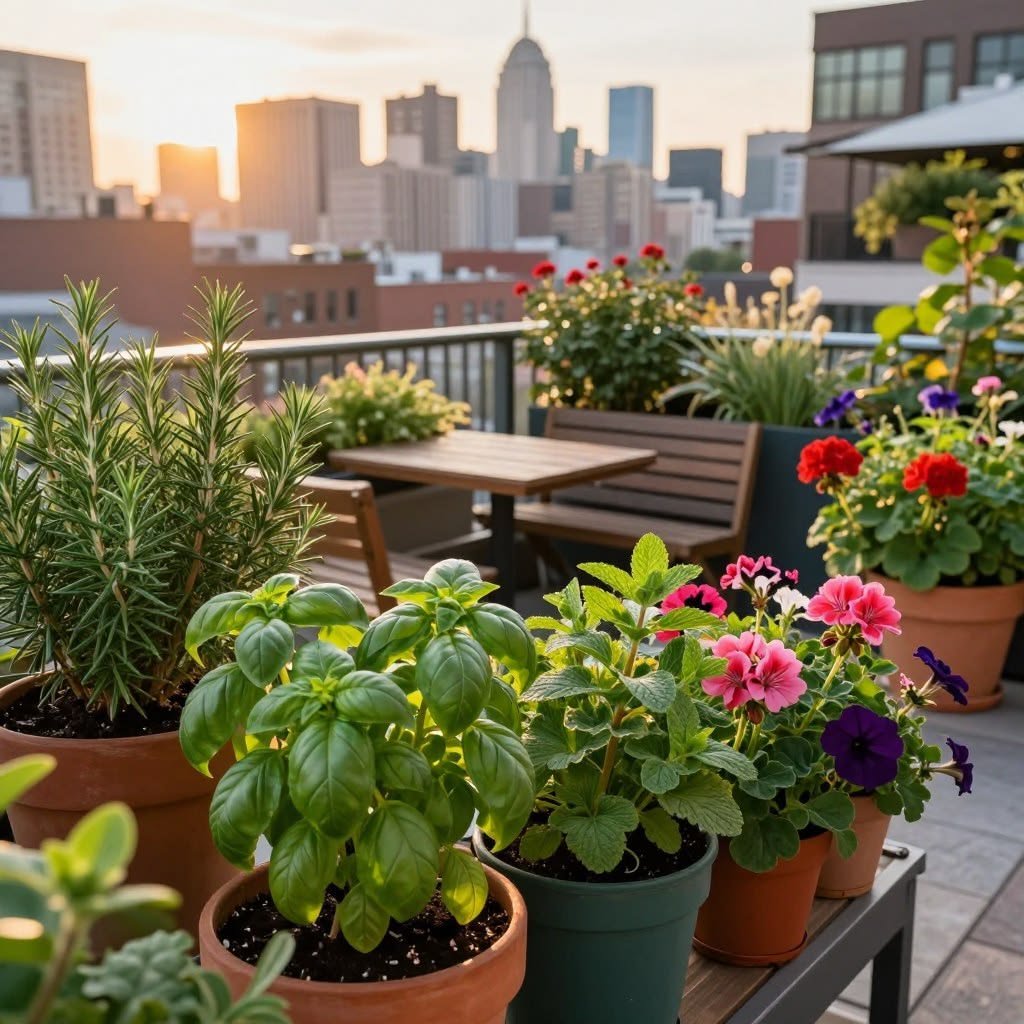
This is the hack most budding gardeners ignore, and it’s the one that makes the difference between those who improve and those who keep making the same mistakes year after year.
You don’t need anything fancy. A cheap notebook works perfectly. After each planting or major change, write down:
- What you planted and when
- What soil and pot you used
- Where you put it (window, balcony, grow light)
- How often you watered
- What went well, what didn’t
Over a full season you’ll have a road map tailored to your specific apartment, your specific light levels and your exact schedule. No blog post or YouTube video has that information.
It takes just two minutes after every session. It’s the highest return-on-time investment in this entire apartment garden guide.
Mistakes New Apartment Gardeners Make
Beginners, even with great hacks, commit a few classic blunders. Here are the ones to avoid.
Overwatering is the number one plant killer. Most plants die from too much water, not too little. Always check before you water.
Picking the wrong pot size is the second most common mistake. A little herb in a big pot retains too much moisture, which may cause root rot. Match pot size to plant size.
Avoiding drainage holes is a sure path to dead plants. A pot needs at least one bottom hole. If you love a decorative pot with no drainage, use it as a cover pot and keep your plant in a smaller nursery pot inside.
Too much too soon discourages beginners. Some plants are slow. Tomatoes take months. Start with fast-growing plants such as radishes or green onions — you’ll stay motivated while your slower crops catch up.
FAQs: Apartment Garden Guide
Q: What if I don’t have any natural light? You can still garden! LED grow lights are inexpensive and efficient. Hang them 6–12 inches above your plants and plug into a timer. Greens and herbs thrive beautifully under artificial light.
Q: How frequently should I water apartment plants? Indoor plants typically need watering every 2–4 days, depending on the season, pot size and type of plant. The finger test (an inch into the soil) is the best method. Self-watering pots can stretch this to once a week.
Q: Can I grow vegetables in a studio apartment? Yes! Dwarf varieties of tomatoes, peppers, lettuce and herbs all do well in tight spaces. Emphasize vertical growing and windowsill trays to work within a studio’s limited footprint.
Q: What’s the cheapest way to start an apartment garden? Start by regrowing kitchen scraps — green onions and lettuce can literally be free. Then add a few small pots and a bag of potting mix, and you’re set up for under $15.
Q: How can I keep pests away without chemicals? Grow companion plants such as marigolds, mint and basil near your other plants. For active infestations, diluted dish soap spray is effective against most soft-bodied insects. Keep dead leaves cleaned up — pests and fungus gnats love rotting leaf matter.
Q: Do apartment plants need fertilizer? Yes, but not constantly. Container plants have less soil than a garden bed, so they deplete nutrients faster. Feed every 2–4 weeks in the growing season. Use DIY banana peel water or diluted liquid fertilizer.
Q: What’s the easiest vegetable to grow in an apartment? Green onions. They grow in water, keep regrowing forever, require little light and can be harvested within a week. Start there, gain confidence and then diversify.
Start Your Apartment Garden Today
You don’t need a house, a yard or even a lot of sunshine. You just need a plan.
These 11 tried-and-true, time-saving hacks are based on real success in small spaces — choosing the right beginner plants, making use of vertical space, self-watering pots, grow lights and building a journal that improves each season.
The secret to apartment gardening success is not doing everything at once. It’s starting small, being consistent and adding one new hack at a time.
Today, pick two or three hacks from this guide. Put one plant on a sunny windowsill. Set a phone reminder to water just once. Begin on a single page of a cheap notebook.
That’s all it takes to begin.
And before you know it, your dinner will include fresh herbs, your balcony will be full of greenery and you’ll have a real connection to something you grew yourself.