7 Apartment Garden Guide Tools For Every Beginner
Meta Description: Tools for an apartment garden guide do not need to be daunting. Here Are The 8 Essential Tools Every Beginner Needs To Easily Grow An Outdoor Garden
Developing a garden in an apartment is thrilling — until you walk into the garden store and find yourself staring at a wall of products without having any idea where to start.
The good news? You don’t have to have a garage full of equipment. All it takes to grow herbs, vegetables and flowers at your balcony or windowsill is a small, smart set of tools.
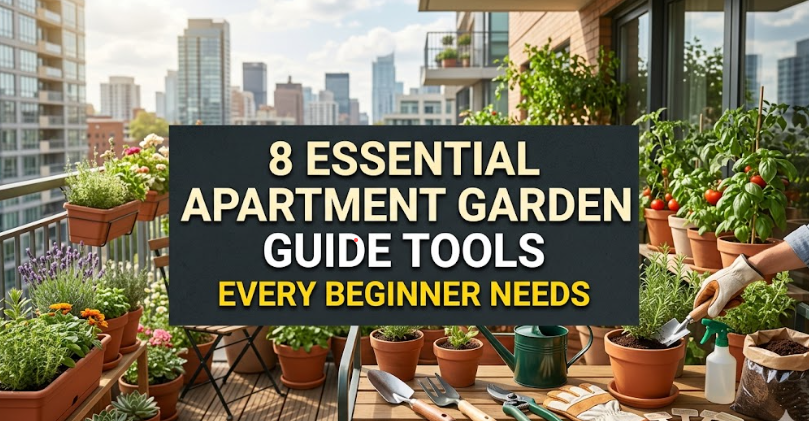
In this apartment garden guide, we break down the 8 tools that actually matter for a beginner. All of them are practical, cheap and easy to use — even if you’ve never grown a single plant.
Let’s dig in.
The Right Tools to Work With: Why It Really Matters
Many novice gardeners don’t give up because they have a bad green thumb; they give up because they use the wrong tools — or no tools at all.
You only use your hands to loosen the soil once. But incorrectly, over time the wrong technique harms roots, squanders water and stresses plants. The right tool lets you do the job cleanly and quickly.
You should think about your apartment garden tools the same way that you think about kitchen tools. You could chop vegetables with a butter knife. But a good sharp chef’s knife can make everything easier, faster and more fun.
The same logic applies to plants.
What to Consider When Purchasing Garden Tools
Before diving into the list, bear in mind these three things:
Size matters. Apartment gardening takes place in tight spaces — tiny pots, narrow balconies and crowded windowsills. Ordinary garden tools can be too heavy. You’ll find compact or miniaturized versions specifically for container and indoor gardening.
Material quality counts. Cheap plastic tools break and rust quickly. Rubberized handles and stainless steel blades last much longer and feel better in use.
Multi-use beats single-use. When space is tight, go for tools that have multiple functions. A quality hand trowel can dig, mix and transplant, for example.
8 Tools You Need for Your Apartment Garden
1. Hand Trowel — Your Most-Used Tool
If you can own only one garden tool, it would be a hand trowel.
This small, scoop-shaped tool can really do it all — dig holes for new plants, scoop potting mix, loosen compacted soil and even mix in fertilizer.
A good trowel should feel comfortable in your hand. Not cheap aluminum, but a stainless steel or carbon steel blade. The handle should provide a non-slip grip for when your hands are wet or dirty.
What to look for:
- Blade length of 5–7 inches for small to medium pots
- Markings on the blade for planting depth
- A hole in the handle for hanging storage
Fiskars, DeWit and Edward Tools make good starter tools for under $20.
Pro tip: Use the edge of the trowel to break up clumps of old potting mix. It’s easier on your hands and works faster than your fingers.
2. Watering Can With a Long Spout
Overwatering is the most common killer of indoor and balcony plants. A watering can with a long, narrow spout lets you control both how much and exactly where you pour.
Wide-mouth pitchers pour too much water out too quickly. That inundates the soil, drives nutrients out of the drainage holes and smothers roots.
The long-spout can allows you to target the water specifically at the base of the plant — exactly where the roots want it — without splashing on the leaves or spilling across nearby pots.
Key features to look for:
- Capacity of 1–2 liters, which is suitable for most apartment set-ups
- A detachable rose head (the sprinkler attachment) for a rain-like spray
- A comfortable handle that doesn’t tip awkwardly when full
Copper or galvanized steel cans are beautiful and last for years. Plastic options are lighter and cheaper.
3. Pruning Shears (Bypass Type)
Happy plants grow quickly. And rapid growth means frequent pruning.
Pruning shears — also known as hand pruners or secateurs — allow for clean, precise cuts that don’t rip stems. Torn stems are invitations for disease and bacteria. Clean, sharp cuts heal quickly and keep your plant healthy.
For apartment gardeners, go with bypass pruners. They operate like scissors: two blades that pass against each other. The other style, anvil pruners, crush the stem slightly and can injure tender plants.
What bypass pruners are good for:
- Harvesting herbs such as basil, rosemary and mint
- Removing dead or yellowing leaves
- Cutting back overgrown stems
- Cutting off spent flowers to stimulate new blooms
Choose a pair that has a safety lock so you can store them safely in a compact area. Keep the blades clean and dry between uses to help prevent rust.
Budget pick: Fiskars and Gonicc both offer excellent bypass pruners for under $20.
4. Soil Moisture Meter
Here’s a tool that avoids the most common beginner error: guessing how much to water.
Most people water according to a schedule — Monday and Thursday, for example. But plants are not concerned with schedules. They need water when their soil tells them they do, not when a date does.
A soil moisture meter solves this problem entirely. You insert the probe about 2 inches into the soil, and within seconds it displays a reading — dry, moist or wet.
Why it matters:
- Overwatering causes root rot, the most common cause of death for houseplants
- Underwatering can cause wilting and stress over time
- Plants have very different moisture needs — a cactus and a fern are total opposites
You don’t need anything fancy or digital. A simple analog dial meter works great and costs around $10–$15.
Bonus: Some models also measure light levels and soil pH, giving you additional data in one inexpensive gadget.
5. A Good Spray Bottle
Not all watering is done at the roots. Some plants require their leaves misted with moisture.
Tropical houseplants like ferns, calatheas and monsteras come from humid jungle environments. In a dry apartment — particularly in winter, when heating dries the air — they struggle to get enough humidity. A fine-mist spray bottle is an easy fix.
A spray bottle is also great for:
- Gently watering seedlings without blasting them out of their soil
- Cleaning dusty leaves so they absorb more light
- Foliar feeding (spraying liquid fertilizer on leaves)
- Maintaining moisture in moss poles and hanging plants
What to look for:
- An adjustable nozzle with a fine-mist setting
- A large, comfortable trigger that won’t cramp your hand
- Around 1 litre capacity — small enough to handle easily
Glass spray bottles are stylish and don’t absorb chemical smells the way plastic ones can.
6. Hand Cultivator (Three-Prong Rake)
Healthy plants need healthy soil. And healthy soil needs air.
Potting mix becomes compacted over time. Water can’t drain and roots can’t stretch, so the plant slowly struggles. A hand cultivator — the small three-pronged rake — breaks it up without causing harm. Scratch it lightly through the top 1–2 inches of soil, breaking up the crust so air and water can move again.
It’s one of the most satisfying tools to use. You can watch the soil transform from a hard, crusty surface to something supple and open in under a minute.
Other uses for a hand cultivator:
- Incorporating granulated fertilizer into the upper layer of soil
- Pulling up unwanted seedlings without disturbing neighbors
- Breaking up soil before transplanting
- Removing dead roots after repotting
Because cultivators are small and light, they’re ideal for window boxes, balcony planters and medium-size pots.
7. Drainage Trays and Pot Feet
This tool doesn’t look exciting. But it could save your floors, your furniture and your lease deposit.
Apartment gardening means growing indoors — or out on balconies with flooring. When you water a pot, excess water runs out the bottom. Without a tray to catch it, that water can damage wood floors, tile grout, balcony decks or metal railings.
A drainage tray underneath each pot catches excess water. Simple, cheap and completely essential.
Pot feet go a step further. These small props lift pots slightly above the ground, allowing air to flow underneath. This prevents:
- Root rot from sitting in stagnant water
- Mold growing under the pot
- Staining on wet terracotta or clay surfaces
On balconies, pot feet also keep pots from rusting metal grates or staining ceramic tiles.
What to look for:
- Trays slightly larger than the base of your pot to catch any overflow
- Plastic trays for everyday use; ceramic ones for a more polished look
- Sets of three pot feet, which form a stable triangle
They cost next to nothing and do a lot.
8. Plant Labels and Garden Markers
This final tool is the most underrated — and the one many beginners wish they had started using earlier.
When you first sow something, it’s clear in your mind what it is. Six weeks later, you may have no idea whether that pot contains basil or parsley, or whether you planted those seeds two weeks ago or six.
Plant labels fix this instantly.
Simply press a label into the soil and write the plant name, the date you planted it and any notes you want to remember — like “likes partial shade” or “needs weekly fertilizer.”
Why labels matter more than you think:
- They help you track whether things are growing on schedule
- They remind you of the specific care needs of each plant
- They let you record when you watered or fertilized
- They’re especially useful for seeds, where nothing changes visibly until germination
Ordinary wooden sticks and a waterproof pen work perfectly well. Or pick up reusable plastic labels you can write on with a permanent marker. Either works.
For a more creative touch, colored labels let you categorize plants by type — herbs, flowers, vegetables — at a quick visual glance.
How to Build Your Starter Tool Kit on a Budget
You do not have to buy everything at once. Here’s a straightforward three-phase plan to build your apartment garden kit without breaking the bank:
Phase 1 — Start Here (Under $40 total) Get a hand trowel, watering can and soil moisture meter. These three tools cover the essentials: planting, watering and knowing when to water. Everything else builds on this foundation.
Phase 2 — Add Next (Under $60 total) Add pruning shears and a spray bottle. Now you can keep plants alive, harvested and well-hydrated.
Phase 3 — Finish the Kit (Under $100 total) Add a hand cultivator, drainage trays and plant labels. Your toolkit is now complete for virtually any apartment gardening situation.
Buying in stages means you can start growing immediately and add tools as you discover what you actually need.
Maintaining Your Apartment Garden Tools
Good tools are made to last — but only if you care for them.
Rinse the metal parts of trowels, cultivators and shears under clean running water after each use. Dry them thoroughly before storing. Rust most commonly occurs because of lingering moisture.
Every three to four months, wipe a drop of cooking oil onto metal blades for protection. When pruning shears stop making clean cuts, use a small whetstone to sharpen them.
Keep everything organized in one place — a small bag, basket or hook by the door works perfectly. Knowing exactly where your tools are means you will actually use them.
The Most Common Mistakes New Gardeners Make With Tools
Even with the proper tools, a few bad habits can stifle your progress:
Using tools that are too big. A garden trowel the size of a shovel is clumsy in a 6-inch pot. Tool size should always match the container size.
Not cleaning after use. Dirty tools can transfer soil-borne diseases from pot to pot. A quick rinse takes 30 seconds and prevents a lot of trouble.
Skipping the moisture meter. Many beginners buy one and don’t use it consistently. Make it a habit to check before each watering session.
Buying cheap pruning shears. A $4 pair from a dollar store will crush stems instead of cutting them. Spend $15–$20 on a decent pair and your plants will thank you.
FAQs: Apartment Garden Guide Tools
Q: Do I really need all 8 tools, or can I start with less? Absolutely — you can begin with three: a hand trowel, a watering can and a soil moisture meter. These cover the essential tasks of planting, watering and knowing when to water. Add more tools as your garden grows.
Q: Can I use regular kitchen scissors instead of pruning shears? You can in a pinch, but kitchen scissors are not designed for plant stems. They tend to crush rather than cut cleanly, leaving entry points for bacteria. Bypass pruning shears are inexpensive and built specifically for the job.
Q: How often should I replace my apartment garden tools? With basic care — rinse, dry and lightly oil — a good hand trowel or cultivator can last 5–10 years or longer. Pruning shear blades may need sharpening or replacing every 1–2 seasons, depending on how often you use them.
Q: What’s the best material for apartment garden tools — plastic, stainless steel or wood? For trowels, cultivators and shears, stainless steel blades are the gold standard. They resist rust and hold their edge longer. Rubberized grips are the most comfortable and durable for handles. Avoid cheap aluminum or thin plastic tools.
Q: Can these tools be used for hydroponic or vertical garden setups? Most of them, yes. The moisture meter, spray bottle, pruning shears and plant labels are just as useful in hydroponic and vertical setups as in soil-based gardens. The trowel and cultivator are less relevant in systems without traditional soil.
Q: Where is the best place to buy apartment garden tools? These tools are available at local garden centers, hardware stores and online retailers such as Amazon. For quality on a budget, look at brands like Fiskars, Edward Tools and Radius Garden — all available online at reasonable prices.
Q: Are these tools safe for children to use? All of these tools are safe for older children when used with supervision. Pruning shears have a sharp blade and should be handled by adults or teenagers under guidance. Child-sized versions of trowels and cultivators with plastic handles are also widely available.
Wrapping It All Up
You don’t need a large space, a big budget or any prior experience to create an apartment garden. But building one successfully requires the right foundation — and tools are a significant part of that foundation.
This guide has walked you through the eight essentials every beginner truly needs: a hand trowel, long-spout watering can, bypass pruning shears, soil moisture meter, spray bottle, hand cultivator, drainage trays with pot feet and plant labels.
Start small. If budget is a concern, begin with three tools. Plant something easy — herbs are ideal for beginners. Then add tools as your confidence grows.
Every great gardener started exactly where you are: curious, a little intimidated and ready to dig in.
Your apartment garden is waiting. The tools are the easy part.