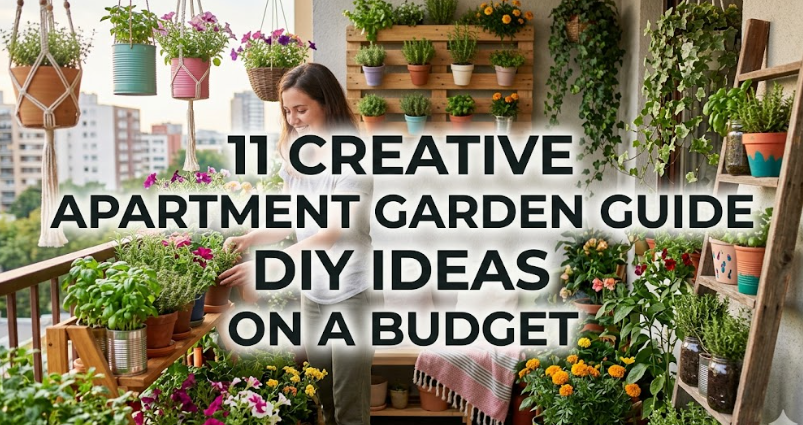
11 Creative DIY Apartment Garden Guide Ideas on a Budget
Meta Description: Apartment garden guide DIY ideas — 11 inexpensive, innovative ways to grow plants in a small apartment.
Do you live in an apartment or despise yard work and wish that you had a garden? You’re not alone. Millions of people dwell in cramped quarters yet still fantasize about cultivating their own herbs, vegetables, or flowers.
The good news? You don’t need a backyard. You don’t need a high budget, either.
It may not take much to transform a small balcony, a sun-soaked windowsill, or even a bare wall into an abundant patch of green with the help of an apartment garden guide. It just requires some creativity and smart planning.
This guide takes you step by step through 11 realistic, cost-efficient DIY ideas that can really make a difference — even in small apartments.
The Value of Gardening Inside an Apartment
Before we get into the ideas, let’s discuss why apartment gardening is such an amazing idea.
Here are real rewards for growing your own plants — even just a few herbs:
- Saves money on groceries
- Lowers stress and enhances mental health
- Improves indoor air quality
- Enhances the decor of your home
- Delivers fresh produce straight to your door
Studies show that time spent around plants can reduce anxiety and elevate your mood. Even a single pot of basil perched on a windowsill helps.
What You Should Know Before Getting Started
It doesn’t take much to get started. Here’s a simple checklist:
| Item | Estimated Cost |
|---|---|
| Potting soil (small bag) | $5 – $10 |
| Seed packets | $1 – $3 each |
| Basic pots or containers | Free – $10 |
| Watering can or bottle | $3 – $8 |
| Sunlight (from your windows/balcony) | Free |
Many of these items are available cheaply at dollar stores, thrift shops, or online. If you already have containers at home, you can reuse them too.
11 DIY Ideas for an Apartment Garden on a Budget
1. The Classic Windowsill Herb Garden
This is the most common jumping-off point — and with good reason.
A herb garden on a windowsill is inexpensive, easy, and incredibly useful. You grow herbs such as basil, mint, parsley, cilantro, and thyme directly in your kitchen.
How to set it up:
- Use tin cans, mason jars, or small plastic cups
- Fill with potting mix
- Plant your seeds or seedlings
- Position in a south- or east-facing window for maximum light
Herbs grow quickly, smell great, and help you cut down on buying fresh herbs at the store. A bunch of basil can cost $3 at the store. Grown yourself, you’ll have it all season for the price of one seed packet.
Pro tip: Use a popsicle stick and marker to label each container. It makes it easier to remember what’s growing where.
2. Pallet Garden for Vertical Walls and Balconies
Have a bare wall or a balcony railing? Put it to work.
A vertical pallet garden requires only an old wooden pallet to hold multiple plant pots or built-in planters. It transforms a flat surface into a lush green wall.
What you’ll need:
- 1 wooden shipping pallet (often available for free at hardware stores or on Facebook Marketplace)
- Landscape fabric or burlap
- Staple gun
- Potting soil
- Small plant starts or seeds
Steps:
- Cover the back and sides of the pallet with fabric or burlap to keep soil in
- Fill each rack with potting mix
- Plant herbs, strawberries, or small flowers in each slot
- Hang on the wall or rest against a balcony railing
This one setup can accommodate 10 to 20 plants in a space not much larger than a door — a huge return for almost no cost.
3. Upcycled Container Garden
The easiest way to garden on a budget is to stop buying pots and start looking around your home.
Just about any container can serve as a planter. The key is to add drainage holes at the base so water doesn’t collect and rot the roots.
Great containers to upcycle:
| Container | Best For |
|---|---|
| Tin cans | Herbs, small flowers |
| Plastic bottles | Hanging plants, small herbs |
| Old colanders | Strawberries, lettuce |
| Wooden crates | Larger veggies, flowers |
| Broken mugs or bowls | Succulents, cacti |
| Boots or shoes | Decorative plants |
Drill or punch some drainage holes, add soil, plant, and water. That’s it.
This method is creative, eco-friendly, and entirely zero-cost if you use what you already have.
4. DIY Hanging Planter System
Hanging planters free up floor and shelf space — which is gold in a small apartment.
You can make hanging planters with simple materials.
Macramé-style hanging planter (no knotting experience required):
- Cut 4 pieces of rope or twine about 4 feet long
- Fold them in half and knot at the top
- Pair into groups of 2 and tie evenly spaced knots down the length
- Insert a small pot into the lower cradle
- Suspend from a ceiling hook or curtain rod
This takes about 20 minutes and costs virtually nothing if you already have rope or twine at home.
Plastic bottles can also be hung from a balcony railing with zip ties or twine. Fill them with soil and grow lettuce, herbs, or trailing plants.
5. Mason Jar Hydroponic Herb Garden
Hydroponics sounds fancy — it simply means growing plants in water rather than soil.
A mason jar herb garden is the beginner-friendly version — something you can put together in an afternoon.
What you need:
- Mason jars or clear glasses
- Net cups (a few cents each online)
- Liquid hydroponic nutrients (small bottle, around $10)
- Water
- Herb cuttings (basil, mint, or green onion work well)
How it works:
- Fill the jar with water and add a few drops of nutrient solution
- Insert the net cup into the opening
- Place the herb cutting so roots hang down into the water
- Set in a sunny spot
The roots reach down into the water — no soil, no mess, and no watering schedule. Simply refill the water every few days.
Green onions are especially great for this. Snip off the bottom inch of store-bought green onions, place in water, and they’ll regrow within a week. Completely free food.
6. Tiered Ladder Plant Stand
Even a small wooden ladder can be turned into a great multi-level plant display.
Pick up an old ladder at a thrift store for $5 to $10, or build a simple leaning shelf from scrap wood.
Each rung holds pots with different plants, creating a layered effect of greenery and color that looks professional without the professional price tag.
Best plants for a ladder stand:
- Top shelf: Trailing plants like pothos or ivy (they’ll cascade beautifully)
- Middle shelves: Herbs and small vegetables
- Bottom shelf: Larger pots with tomatoes, peppers, or bigger herbs
This setup also works great on balconies. It keeps everything organized and maximizes vertical space.
7. Balcony Railing Planter Boxes
If you have a balcony, the railing is prime real estate.
Railing planter boxes clip or hook onto your railing and hang over the inside or outside edge. Basic ones can be found for $10 to $20, or you can build simple wooden versions for even less.
DIY railing planter box:
- Cut plywood or scrap wood into a rectangular box shape
- Fasten the pieces with nails or screws
- Drill drainage holes in the bottom
- Line with landscape fabric
- Fill with soil and plant
- Secure the box to the railing using hooks or metal brackets
They’re ideal for flowers, herbs, strawberries, and trailing vegetables like cherry tomatoes.
Safety note: Make sure your boxes are securely fastened. Check your apartment’s rules before drilling into railings or making permanent modifications.
8. Grow Bag Vegetable Garden
Fabric grow bags work amazingly well for vegetable production. They’re inexpensive, lightweight, and easy to store when not in use.
A standard 5-gallon grow bag costs around $2 to $4 — less than most plastic pots.
What grows well in grow bags:
| Vegetable | Bag Size Needed |
|---|---|
| Lettuce & greens | 1–2 gallon |
| Herbs | 1–2 gallon |
| Peppers | 3–5 gallon |
| Tomatoes | 5–10 gallon |
| Potatoes | 10–15 gallon |
| Cucumbers | 5 gallon |
The breathable fabric allows air to reach the roots, which promotes healthier plant growth. Line them up along a balcony wall or arrange them in the sunniest spot you have.
Grow bags are one of the best-kept secrets in apartment gardening. Experienced gardeners swear by them.
9. DIY Self-Watering Planter from Plastic Bottles
This clever hack creates a self-watering planter — ideal if you often forget to water your plants or travel frequently.
What you need:
- A 2-liter plastic bottle
- Scissors or a craft knife
- Cotton string or a shoelace
- Potting soil
- Seeds or seedlings
How to make it:
- Cut the bottle in half
- Flip the top half upside down into the bottom half (spout facing down)
- Thread a piece of cotton string through the spout hole — this is your wick
- Fill the top half with soil and plant your seeds
- Fill the bottom half with water up to the midpoint
The wick slowly draws water up into the soil, giving your plant a steady, consistent supply of moisture. You only need to refill the reservoir every few days.
This works particularly well for herbs and leafy greens — and costs nothing if you reuse old bottles.
10. Microgreens Growing Tray
Microgreens are young vegetable seedlings harvested shortly after sprouting. They’re nutrient-dense, grow incredibly fast, and require almost no space.
A full tray can be ready in just 7 to 14 days — faster than anything else you can grow.
What you need:
- A shallow tray (a takeout container, baking tray, or plastic lid all work)
- Seedling mix or a thin layer of coconut coir
- Microgreen seeds (sunflower, radish, broccoli, and pea shoots all work well)
Steps:
- Add 1 inch of moistened soil to the tray
- Sprinkle seeds densely over the surface
- Mist with water
- Place another tray on top for 2 to 3 days to aid germination
- Uncover and move into sunlight
- Mist daily
Harvest with scissors when they reach 1 to 3 inches tall. Snip directly into salads, sandwiches, or smoothies. Seed packets generally cost $3 to $5 and yield several harvests.
This is the best crop for beginners. No experience needed. No large space required.
11. Shelf with Indoor Grow Light Setup
What if your apartment doesn’t receive much natural light? A simple grow light setup makes all the difference.
You don’t need an expensive grow tent or complex system. A basic LED grow light strip costs $15 to $30 and mounts easily under a shelf. According to the Royal Horticultural Society, grow lights can effectively supplement or replace natural sunlight for a wide range of indoor plants.
Simple shelf grow station:
- Use an existing bookshelf or pick up an affordable metal wire shelf
- Mount LED grow light strips under each shelf tier
- Place pots and trays on each level
- Set a timer for 12 to 16 hours of light per day
This system works well for herbs, lettuce, microgreens, and even peppers. The lights mimic sunlight so your plants grow just as well as they would near a window. Stack multiple levels and you’ll be surprised how much food you can grow in a small footprint.
Smart Tips to Keep Costs Down
Here are a few more tricks to keep your apartment garden affordable:
- Save seeds. When your herbs flower, let them go to seed and collect them. Free seeds for next season.
- Propagate from cuttings. Basil, mint, and pothos all root easily in water. One plant becomes many, at no cost.
- Join a local seed swap. Many communities run free seed-sharing events or online groups.
- Use coffee grounds. They make a wonderful natural fertilizer for acid-loving plants like herbs.
- Shop end of season. Garden centres steeply discount plants and supplies at the end of summer.
Common Mistakes to Avoid
Even the most enthusiastic beginner apartment gardener can make mistakes. The most common ones look like this:
- Overwatering — The number one cause of plant death. Let the soil dry slightly between waterings.
- Wrong light — Research the light requirements for each plant. Not everything thrives in low light.
- Pots without drainage — Water needs somewhere to go.
- Over-planting — Start small with one or two containers, then expand.
- Low-quality soil — Cheap generic soil doesn’t drain well. Invest in a quality potting mix.
Frequently Asked Questions About Apartment Gardening on a Budget
Q: Can I really grow vegetables in an apartment? Yes, absolutely. Herbs, lettuce, peppers, tomatoes, and green onions can all thrive in containers indoors or on balconies.
Q: How much light does an apartment garden need? Most vegetables and herbs require 6 to 8 hours of direct or bright indirect light per day. South-facing windows or balconies are best. If natural light is limited, grow lights fill the gap.
Q: What are the easiest plants to grow as a beginner? Start with herbs like basil, mint, and chives. Lettuce, microgreens, and green onions are also very forgiving and grow quickly.
Q: How do I repel pests without toxic chemicals? A simple spray of diluted dish soap and water is effective on most common pests like aphids and spider mites. Neem oil is another natural alternative.
Q: Do I need different soil for container gardening? Yes. Use potting mix, not regular garden soil. Potting mix is lighter, drains more effectively, and contains nutrients suited to container plants.
Q: Can I compost in a tiny apartment? Yes! Worm composting (vermicomposting) is odorless, space-efficient, and apartment-friendly. A small worm bin on a shelf or under the sink turns kitchen scraps into rich compost.
Q: How often should I fertilize my potted plants? Every 2 to 4 weeks during the growing season (spring and summer). Use a balanced liquid fertilizer. Cut back in fall and winter when growth slows.
Final Thoughts
An apartment is not a limitation. It’s a different kind of canvas.
Whether you start with a single pot of basil on your windowsill or a full vertical pallet garden on your balcony, every step counts. You’ll spend less money, eat fresher food, and make your home a greener, calmer place to live.
The 11 ideas in this apartment garden guide give you plenty of options to work with — and none require a big budget. Start with what you have. Use whatever is available for free. Build from there.
Your apartment garden is waiting. It only takes you to get the ball rolling.