6 Simple Makeovers That Transformed My Apartment Garden
I would walk past my own balcony without so much as looking at it.
It was a sad little space. Cracked tiles, a plastic chair with a thin layer of dust coating it and perhaps a dead plant I somehow never quite remembered to throw out. It did not feel like any part of my home. It was wasted square footage, it felt like.
Then one spring, I decided to take action.
What resulted were six small but potent makeovers — each one teaching me something new about plants, space and how a balcony can really alter how you feel at home. Not one of these initiatives needed a big spending plan. None needed special skills. Some planning, a couple of visits to the nursery and lots of trial and error.
This apartment garden guide is my frank breakdown of what worked, what didn’t and exactly how you can recreate these ideas for your own balcony — no matter how small or odd-shaped it may be.
Why Balcony Gardens Give You So Much More
Before we dive into the makeovers, let’s discuss why balcony gardening hits different.
Indoor plants are lovely. But balcony gardens have an experience to offer. You go out, feel the air, hear the birds, and you are no longer in your apartment — you’re in a place that’s yours.
Research backs this up. Studies have shown that having access to green outdoor spaces, even small ones, has been shown to lessen stress and improve mood. A daily connection to an edible balcony garden delivers exactly that.
And a balcony, unlike a yard, is manageable. It’s small enough to customize and even save.
Makeover No. 1 — The Vertical Wall That Solved My Space Dilemma
My Balcony Had No Floor Space
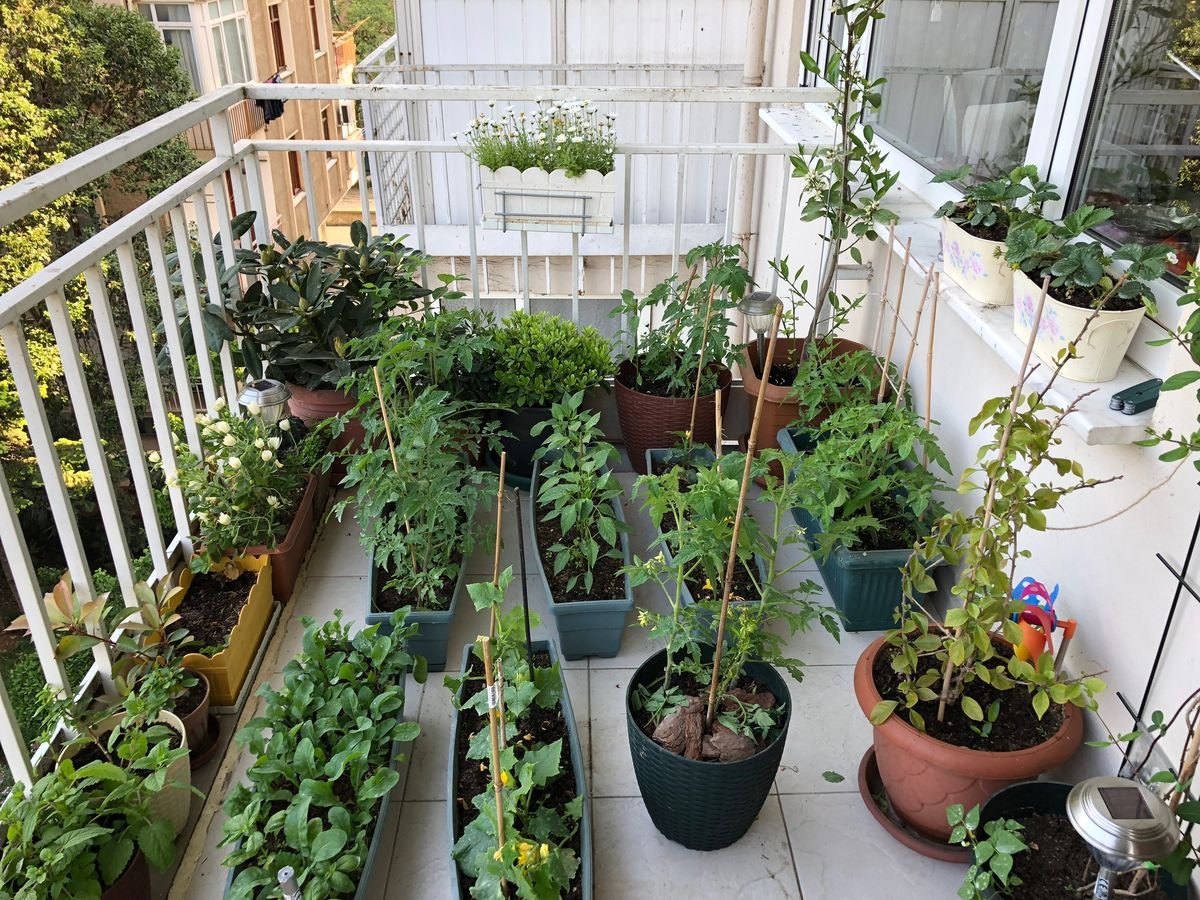
My balcony is approximately 40 square feet. When you put a chair on it, you can’t really get off of it. There was no question of floor space for pots and planters.
So I looked up.
Vertical gardening was the answer. I built a simple wood pallet planter against the back wall. For around $25 from a local hardware store and an afternoon of mounting, it’s done.
Into each pocket, I laid down herbs — basil, mint, rosemary, thyme. I added a couple of trailing plants like pothos and string of pearls for visual texture too.
What Happened After One Month
The wall transformed from bare and boring to lush and layered. Guests would walk onto the balcony and instantly say, “Wow, it’s like a little garden in here.”
More importantly, the herbs were practically helpful. I was sending basil into pasta, mint into drinks and rosemary onto roasted potatoes. My balcony was no longer just decorative — it was functional.
Tip: Line the back of a tight-slatted pallet with burlap before filling it with soil. This helps hold the dirt in place and allows water to seep through slowly.
Vertical Garden Starter Plants
| Plant | Light | Watering | Best For |
|---|---|---|---|
| Basil | Full sun | Every 2 days | Cooking herbs |
| Mint | Partial shade | Every 2–3 days | Drinks & desserts |
| Pothos | Low to medium | Once a week | Trailing visual effect |
| String of Pearls | Bright indirect | Every 10 days | Aesthetic draping |
| Ferns | Shade | Every 2 days | Lush greenery |
Makeover No. 2 — Planters Over the Rail That Provided Color Without Sacrificing Space
The Railing Was Doing Nothing
There was a metal bar for my balcony railing. Good for safety, bad for anything else.
And then I stumbled upon railing planters — narrow rectangular boxes that clamp or hook right onto the railing. You affix them to the outside of the railing, and suddenly that lifeless edge of your balcony is a blossoming border.
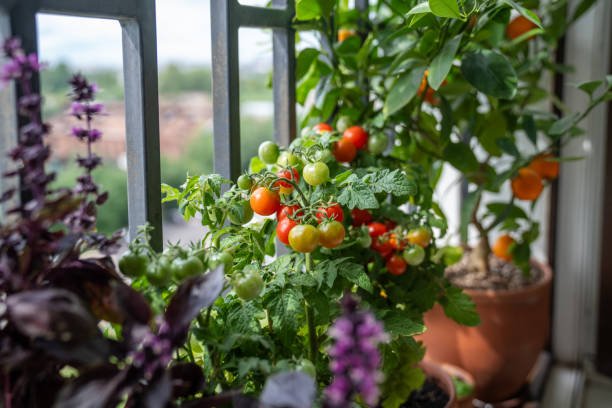
I purchased four planters for around $15 apiece. I filled two with purple and white petunias, and two with cherry tomatoes.
The Tomato Experiment Was a Home Run
I’m not kidding when I say that I thought the tomatoes would fail. I used to think you needed a garden bed, full sun and serious space to grow tomatoes.
But cherry tomatoes in railing planters? They thrived. Eight weeks later, I was harvesting fresh tomatoes about every other day.
A few things helped:
- I opted for a small variety called “Tiny Tim” — well suited to containers
- I watered every morning
- I applied a slow-release fertilizer once per month
The petunias, meanwhile, looked incredible. They spilled down the railing and gave a pop of color from the street below.
Pro Tip: Never skip on drainage holes. Railing planters can become waterlogged just as easily, particularly during rainy weather. Soggy roots = dead plants.
Makeover No. 3 — The Cozy Corner That Actually Inspired Me to Sit Outside
No One Was Using the Balcony, and It Wasn’t Comfortable
Here’s something I didn’t get for a long time: The thing that prevented me from spending time outside on my balcony wasn’t the plants. It was the furniture.
I had a rickety metal chair that grew hot in the sun and sore after five minutes. There was no table. No shade. No reason to stay.
So I used the balcony as if it were a room in my apartment.
I bought a small bistro set — a round table and two folding chairs — secondhand for $40. I placed a weather-resistant outdoor rug in warm terracotta color. Then I draped a simple sail shade between two wall hooks to provide some overhead protection.
Plants That Turned the Corner Into a Garden Room
I arranged some tall potted plants around this seating area to define a more enclosed space. The statement piece was a large fiddle-leaf fig in a white pot. Two bamboo stalks in tall narrow pots brought height and a gentle rustle when the wind blew through.
At ground level, I planted a lavender on each side of the chairs. The smell was worth it alone — calming, clean, absolutely lovely on a warm evening.
And suddenly the balcony wasn’t a place I walked through. It was somewhere I stayed.
Makeover No. 4 — The Herb Kitchen Garden That Saved Me Money
There’s No Point in Buying Fresh Herbs from the Store
Let’s be honest. Having to buy fresh herbs from the grocery store is costly and infuriating. You purchase a bunch of cilantro, use three sprigs and the rest goes slimy in the refrigerator within days.
This can be completely solved by growing your own herbs on the balcony.
I devoted one portion of my balcony to a real culinary herb garden. I used three terracotta pots in varying sizes, arranged them on a wooden tiered plant stand (roughly $30).
What I Planted and What I Actually Used
Here’s my no-BS assessment after a complete growing season:
| Herb | Ease of Growing | How Much I Used | Would I Grow Again? |
|---|---|---|---|
| Basil | Easy | Daily | Yes |
| Cilantro | Moderate | Weekly | Yes |
| Parsley | Easy | Weekly | Yes |
| Chives | Very easy | Frequent | Yes |
| Dill | Difficult | Occasional | Maybe |
| Lemongrass | Easy | Frequent | Yes |
The lemongrass turned out to be a surprising hit. It grows tall, looks good and I used it in teas, curries and soups all the time.
The dill bolted in the heat so quickly that it went to seed before I was able to use much of it. I would try a heat-tolerant variety next time.
Savings Estimate: After one growing season (around 5 months) I estimated I had saved approximately $80–$100 on fresh herbs. It cost roughly $60 to set it up initially. So by the third month, the herb garden had paid for itself.
5 Steps to Start a Balcony Herb Garden
- Find a sunny spot — Most herbs require 4–6 hours of direct sunlight
- Choose the right pots — Terracotta is breathable but dries out sooner; plastic holds onto moisture longer
- Use good potting mix — Garden soil is too heavy for containers; purchase a quality potting mix
- Water regularly — Water in the morning; it reduces fungus problems
- Harvest often — The more you cut, the more it grows
Makeover No. 5 — Shady Side Balcony Plants for Low Light
The Other Balcony, Without Sun
My apartment has two balconies. The main one, which faces south, receives lovely light. One faces north and is shaded much of the day.
For years, I thought nothing grew there.
I was completely wrong.
In fact, there’s a whole category of plants that thrive in low light environments. And once I found them, that shady balcony became one of my favorite places.
The Best Plants for Balconies With Low Light
The most obvious first choice are ferns. Ferns that enjoy humidity and shade include Boston, sword and maidenhair ferns. They introduce a lush, foresty texture.
Hostas are incredible. Large, glossy leaves in shades of green, blue-green and variegated white. They’re architectural and dramatic, and they require almost nothing in return.
Impatiens are the workhorse of shady balconies. They flower constantly in pinks, reds, corals and whites — even without direct light.
Caladiums are my personal obsession. They have leaves in wild combinations of red, pink, white and green. They are living artwork and despise direct sun.
| Plant | Light Required | Water | Special Notes |
|---|---|---|---|
| Boston Fern | Indirect/shade | Every 2 days | Loves humidity |
| Hosta | Full shade | Every 3 days | Spectacular foliage |
| Impatiens | Partial shade | Daily in heat | All-season blooms |
| Caladium | Full shade | Every 2 days | Dormant in winter |
| Peace Lily | Low light | Weekly | Purifies air |
The shady terrace became a cool, green refuge. During summer it became my favorite spot because it was 5–8 degrees cooler than the sunny balcony.
Makeover No. 6 — Lighting and Final Touches That Made It Magical
Plants Alone Don’t Create Atmosphere
This last makeover was the one that brought it all together.
I had the plants. I had the furniture. But at night, the balcony simply faded away. I wasn’t using it at all after dark.
String lights changed that completely.
I stretched warm white LED fairy lights across the railing and over the wall behind the vertical garden. The result was instant and magical. The balcony glowed softly, the plants threw gentle shadows, and the whole space felt like somewhere special.
The Complete List of Final Touches I Made
- String lights: Warm white, battery-powered, so no outdoor outlets required. About $12 for a set.
- Lanterns: Two small weather-resilient lanterns on the bistro table with flameless LED candles. Safe, wind-proof, and charming.
- Decorative pebbles: I covered each pot with a thin layer of white or terracotta-colored pebbles. This minimizes water evaporation, deters pests and looks clean and intentional.
- A mini water feature: I set out a tabletop solar fountain — basically, a shallow bowl with a small solar-powered pump that made a gentle trickle. The sound was surprisingly soothing. The cost was about $25.
- Painted pots: I spray-painted a few old mismatched pots in matte white and terracotta shades so they would have a consistent, curated look without having to buy all new pots.
The result was a balcony that looked designed. Intentional. Beautiful.
Six Makeovers: Total Cost Breakdown
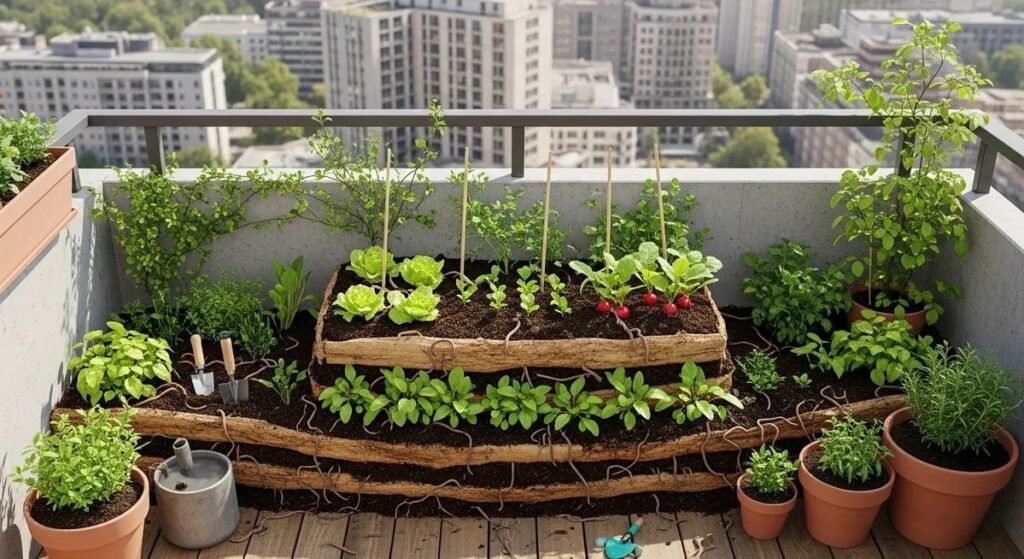
Cost is one of the most common fears regarding balcony gardening. Here’s a straightforward breakdown of what I actually spent:
| Makeover | What I Did | Approximate Cost |
|---|---|---|
| #1 — Vertical wall | Pallet planter + herbs | $45 |
| #2 — Railing planters | 4 planters + petunias + tomatoes | $80 |
| #3 — Cozy corner | Bistro set + rug + shade sail | $90 |
| #4 — Herb garden | Pots + stand + plants + soil | $60 |
| #5 — Low-light plants | Ferns + hostas + caladiums | $55 |
| #6 — Lighting & details | Lights, lanterns, fountain | $65 |
| Total | ~$395 |
That’s less than $400 for the total balcony makeover — and that’s very manageable, spread across six projects done over one season.
And many of these items — the furniture, lights, pots, stands — will last longer than a season.
Seasonal Maintenance: How to Keep Your Balcony Garden Through the Seasons
No apartment garden guide would be complete without a word about seasonal care.
Spring This is the time for replanting, soil refreshment and new plant introductions. Most annuals (such as petunias and impatiens) need to be replanted every spring.
Summer Water more often — sometimes every day during heat waves. Look out for pests such as aphids and spider mites. Neem oil spray is a natural deterrent.
Fall Remove frost-tender plants before the first frost. Bring indoors-friendly plants (peace lilies and pothos) inside. Plant hardy perennials like lavender and ornamental grasses that can withstand the cold.
Winter Most container gardens go quiet. Clean and repair pots, refresh soil, plan next year’s layout. Certain evergreen plants, including boxwood and holly, can be left outdoors year-round in mild climates.
Frequently Asked Questions About Apartment Balcony Garden Makeovers
Q: What’s the best introductory plant for a balcony? Pothos or mint. Both are virtually unkillable, grow quickly and thrive in all light conditions.
Q: Can I grow vegetables on a small balcony? Yes. Cherry tomatoes, lettuce, spinach, peppers and herbs all thrive in containers. Select compact types marketed as “patio” or “dwarf.”
Q: How can I prevent my pots from drying out too quickly? Use water-retaining crystals in your potting mix. Place a drip tray under each pot. Cover the top of the soil with wood chips or pebbles.
Q: Does vertical gardening damage apartment balcony walls? Choose wall anchors that are rated for outdoor use. Avoid anything too heavy. Lightweight pallet planters or fabric pocket planters will usually be safe for most walls.
Q: What if I get really strong wind on my balcony? Opt for short and stable plants such as sedums, ornamental grasses and geraniums. Use heavier ceramic or concrete pots so they don’t tip. Add a windbreak — a trellis with climbing plants is lovely.
Q: How much time does balcony garden maintenance require? 10–20 minutes per day to water, and perhaps an hour a week for pruning, deadheading and general maintenance. It morphs into a calming ritual rather than a task.
Q: Do I need special soil for container gardening? Yes — please use a quality potting mix, not garden soil. Garden soil is too dense for containers and can become compacted, suffocating roots and housing pests.
What I Actually Learned From These 6 Makeovers
In retrospect, these six projects were more than just things that made my balcony better.
They taught me to slow down. Watering in the morning before the busy day was a quiet ritual. It gave me something to look forward to.
They connected me to food. Having herbs and tomatoes available made cooking seem more purposeful. There’s something very satisfying about reaching out the window and snipping a sprig of fresh basil.
They showed that space is not as important as intention. My balcony is still 40 square feet. But it feels like the most valuable room in my apartment.
This apartment garden guide does not require a perfect setup. It’s about beginning somewhere — anywhere — and growing from there.
Your Balcony Is Waiting
If you’ve gazed helplessly out at your empty balcony and thought “I don’t know where to start,” you can start with one single pot of mint. Or one string of lights. Or a balcony planter with three petunias.
You don’t have to do all six makeovers at once. Pick one. See how it feels. Then add another.
Before long, you’ll have a balcony that delights you — a green, living and breathing space that makes every day at home a little bit better.
That’s the real purpose of this apartment garden guide. Not perfection. Just possibility.