Fast-Growing Apartment Garden Plants: 6 Best Picks for Small Spaces
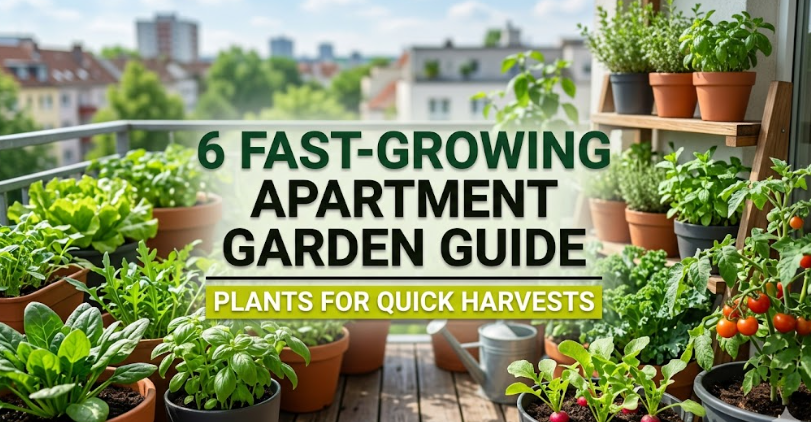
Fast-growing apartment garden plants are a game-changer for small spaces. Here are six of our best picks that provide fast and fresh harvests from your balcony or windowsill.
Things You Can Grow in Your Apartment Garden — to Make Things Easy for You
It sounds impossible to grow your own food in a small apartment. But the fact remains that you don’t need a large backyard to enjoy homegrown, fresh foods. With the right apartment garden guide plants, growing food is possible on a balcony, windowsill, or even a kitchen counter.
The key is to select plants that grow quickly and require little space. Certain vegetables and herbs can be sown, sprouted, grown, harvested, and eaten in as little as a few weeks. That means you don’t have to wait months to taste what you’ve worked on.
Here’s a guide to some of the fastest-growing plants for apartment gardens. For beginners or just about anyone else, these are easy plants to manage and provide relatively quick and gratifying harvests.
Fast-Growing Plants: Ideal Choices for Apartment Gardens
Before diving into the plant list, it helps to know why speed is so important in a small space.
Apartment gardens have limits. You have less light, less volume of soil, and less space to spread out. Slow-growing plants are holding your containers hostage for months before you see anything in return. Fast-growing plants, by contrast, complete their life cycles quickly. You can harvest and replant and harvest again — all in the same season.
Fast growers help you stay motivated, too. That early success maintains the motivation of new gardeners by preventing them from feeling like quitting.
What Makes a Plant “Fast-Growing”?
For an apartment garden, a fast-growing plant is one that:
- Days to Harvest: 20–60 days
- Grows well in containers or small pots
- Does not need deep soil (less than 12 inches is fine)
- Can live with moderate or indirect light
- Requires minimal maintenance
Without further ado, here are the six best options.
Plant #1 — Radishes: The Speediest Vegetable You Can Grow Indoors
Radishes are the Usain Bolts of vegetables. Certain types mature in as little as 22 days. That’s under a month from planting to eating.
They’re also one of the most forgiving plants for apartment gardeners. They don’t require much — just a pot at least 6 inches deep, some good potting mix, and regular watering.
Choosing the Right Radish Variety
Some radishes simply don’t grow at the same pace. For apartment gardens, go with these types:
- Cherry Belle — 22 to 25 days, round and crispy
- French Breakfast — oblong, mild taste, ready in about 25 days
- Easter Egg Mix — colorful, fun for kids, matures in 25 to 30 days
Skip the big varieties like Daikon. They take longer and require deeper soil.
Tips for Growing Radishes in a Container
Fill a 6-inch pot or long window box with loose potting mix. Sow seeds half an inch deep and 2 inches apart. Water lightly and keep the soil moist — not soggy.
Put the pot next to a sunny window. Radishes appreciate a minimum of 6 hours of light daily. In 3 to 5 days you will see sprouts.
Thin the seedlings when they are around an inch high. Leave one every 2 inches. That allows each radish to develop its round root in the soil.
Harvest once the tops of the roots bulge a bit above the soil. Pull and enjoy fresh — in salads, with a bit of salt and butter.
Radish Growing Quick Reference
| Feature | Details |
|---|---|
| Days to harvest | 22–30 days |
| Minimum depth needed | 6 inches |
| Sunlight required | 6 hours daily |
| Watering frequency | Every 1–2 days |
| Best apartment spot | Sunny windowsill or balcony |
Plant #2 — Microgreens: Edible Harvest in 7–14 Days
When it comes to the fastest possible harvest, microgreens are simply in a league of their own. These are tiny seedlings of vegetables and herbs, harvested right after the very first leaves have formed.
You can eat the whole little plant — stem and leaf in one. They are full of nutrients and pack a ton of flavor. Microgreens are expensive at restaurants. You can raise them at home for virtually no cost.
Which Microgreens Are Best to Grow at Home?
Pretty much any leafy plant can be grown as a microgreen. Among the best ones for beginners are:
- Radish microgreens — spicy, 7-day grow
- Sunflower microgreens — nutty taste, 10 days to harvest
- Pea shoots — sweet, tender, sprout in 10 to 14 days
- Broccoli microgreens — mild, nutritious, 10 days
- Wheatgrass — very fast to grow for juicing
The Simple Setup You Need
No special equipment required. Here is what works:
- A shallow tray (even a takeout container with holes poked in the bottom)
- One layer of potting mix or a growing mat
- Microgreen seeds
- A spray bottle for watering
- Some sunshine (a grow light also works great)
Soaking the seeds overnight helps with germination speed. Scatter them generously across the tray and top lightly with soil. Mist twice daily. Keep covered with another tray for the first 3 to 4 days to encourage faster sprouting.
Remove the cover when the seedlings are about an inch high. Move to light. They’ll be ready to cut with scissors in another 3 to 5 days.
Pro tip: Start a new tray every 5 days. That way you always have fresh greens ready to harvest.
Plant #3 — Lettuce and Salad Greens: Harvest Cut-and-Come-Again
Lettuce is one of the most rewarding plants in an apartment garden, as you can harvest a single plant several times. This is referred to as the “cut-and-come-again” method.
Rather than uprooting the entire plant, you trim back the outer leaves. The plant continues to grow and put out new leaves. One container of lettuce can give you fresh salads for weeks.
Loose-Leaf vs. Head Lettuce — What to Buy?
Always opt for loose-leaf varieties when growing in an apartment. They mature more rapidly, require less depth, and are ideal for the cut-and-come-again method.
Head lettuce, such as iceberg, takes 70 to 80 days and requires more space. Instead, stick with these fast varieties:
- Black-Seeded Simpson — ready in 28 days, light green, tender
- Oak Leaf — nutty flavor, 30 days from sowing to harvest
- Buttercrunch — compact, ready in 45 to 55 days
- Mesclun mix — assorted greens, 30 to 35 days
How to Grow Lettuce on a Windowsill or Balcony
Lettuce actually prefers cooler temperatures. It grows well in spring and fall, when window temperatures are moderate. In summer, place it where it gets morning sun but not harsh afternoon light.
Choose a pot with at least 4 to 6 inches of depth. A window box works well, since you can grow multiple plants in a row. Keep the soil evenly moist — lettuce wilts quickly if it dries out.
When the plant is 3 to 4 inches tall, begin harvesting outer leaves. Never take more than one third of the whole plant at once. Fertilize with a liquid fertilizer every two weeks to encourage leaf growth.
Plant #4 — Green Onions (Scallions): Regrow from Kitchen Scraps
Green onions, also known as scallions or spring onions, may be the easiest fast-growing plant to regrow from scraps. You can actually grow them again from kitchen scraps you would typically discard.
Buy a bunch of green onions from the grocery store. Use the green tops in cooking, then place the white root ends into a glass of water on your windowsill. New green shoots will emerge in 5 to 7 days. You can continue to snip and regrow them for a very long time.
Growing Green Onions from Seed
If starting from scratch, growing from seed is also simple. Seeds sprout in 7 to 10 days, and the plants are ready for harvest in about 3 to 4 weeks.
Plant in 6-inch pots using standard potting mix. Sow seeds ¼ inch deep and 1 inch apart. Water, then place in a sunny location.
Since the edible part grows above the ground, green onions don’t require deep soil. They work well in a small apartment — one pot can accommodate 8 to 12 plants.
Step-by-Step Guide: How to Regrow Green Onions
This is one of the most satisfying tricks in any apartment garden:
- Buy green onions and use most of the green top
- Leave roughly 2 inches of the white root bottom
- Stand them in a glass with an inch of water
- Place on a sunny windowsill
- Change the water every 2 days
- New green tops will be ready to harvest in about a week
After a few cycles, transplant the roots into soil. They will grow much faster and yield thicker, more flavorful shoots.
Plant #5 — Spinach: The Unsung Hero of Low-Light Apartments
Spinach is a super practical choice for apartment growing because it has a relatively short time to maturity and grows well in lower light. Most apartment dwellers don’t have full sun all day, and spinach is quite tolerant of that.
It’s also one of the most nutrient-dense plants you can grow. Fresh spinach is rich in iron, vitamin K, folate, and antioxidants. When harvested fresh, you are receiving far more nutrition than spinach that has been sitting on store shelves for days.
Spinach Varieties That Grow Fastest
When buying seeds, look for these:
- Bloomsdale Long Standing — traditional dark green leaves, 40 to 45 days, withstands heat well
- Tyee — hybrid, disease-resistant variety, 37 days to harvest
- Space Spinach — bred for container growing, compact, 35 to 40 days
Setting Up Your Spinach Container
Spinach develops a moderately deep root system, so use a pot that is at least 6 inches deep. A 12-inch wide container is enough for approximately 6 plants.
Enrich with potting soil and compost. Spinach is a heavy feeder — fertile soil matters. Plant seeds ½ inch deep and 2 to 3 inches apart.
Water thoroughly but allow soil to dry slightly between waterings. In soggy conditions, spinach roots rot quickly. Water at the base of the plant rather than from above to prevent fungal problems.
How to Harvest Spinach Without Killing the Plant
Do not harvest until leaves measure at least 3 inches long. Trim outer leaves one at a time. Never remove the inner cluster of young leaves — that’s your plant’s growing point.
Spinach will eventually bolt (shoot up a flower stalk) in hot weather, and then the leaves taste bitter. When this happens, harvest everything and start over with a new planting.
Plant #6 — Basil: The Gift That Keeps Giving
Last on this apartment garden guide is basil. It takes a bit longer than the other plants on this list — about 50 to 60 days from seed — but it compensates for that with months of steady harvests.
One basil plant can produce fresh leaves every week throughout the growing season. It is also among the most useful herbs in the kitchen. Fresh basil is a game changer for pasta, pizza, salads, and many other dishes.
Why Basil Thrives in Apartments
Basil loves warmth and sunlight. Most apartments are warm, and a south-facing windowsill provides exactly the kind of direct sun basil craves. This makes it a perfect match for growing indoors.
It also does well under grow lights if your apartment doesn’t get much natural light.
The Biggest Mistake Most Basil Growers Make
Many people allow their basil plant to flower. Once basil flowers, its leaf production slows and the leaves become smaller and less flavorful — the plant is investing its energy in seeds, not leaves.
The solution is easy: pinch off all flower buds as soon as you spot them. Repeat this consistently, and your plant will remain focused on growing the big, flavorful leaves that you actually want.
How to Harvest Basil for More Growth
Instead of picking single leaves, cut whole stems just above a pair of leaves. That is where the plant will branch — from that point you should have two new stems where you made the cut.
This technique, known as “pinching,” transforms a single-stem plant into a bushy, productive one. Every harvest done properly gives you additional future harvests in return.
And How to Prepare Your Apartment Garden for Success
Now that you know which plants to grow, here are the essentials of setting up a productive apartment garden space.
Containers and Pots — Which Are Best
You don’t have to invest in expensive planters. Many items already in your home can work:
- Used colanders (the holes provide drainage)
- Wooden crates lined with plastic
- Fabric grow bags (they breathe well and help prevent overwatering)
- Old tin cans repurposed for herbs
- Standard terracotta pots
Whatever you use, drainage is non-negotiable. All containers need holes in the bottom. Without them, roots drown and rot in standing water.
Soil Is More Important Than You Think
Outdoor garden soil is not suitable for container gardening. It compacts in pots and chokes roots. Always choose a quality potting mix created specifically for containers.
For optimal performance, add some perlite (the small white balls) for better drainage and aeration. Compost adds extra nutrients for your plants.
Light — Work with What You Have
The majority of success or failure with apartment gardens depends on light. Here is a simple guide:
- South-facing window: Best. Provides full light for most of the day. Ideal for basil and radishes.
- East or west-facing window: Bright indirect light. Great for lettuce, spinach, and green onions.
- North-facing window: Low light. Suitable for microgreens only — otherwise, use a grow light.
A simple grow light plugged into a timer costs $20 to $30 and can turn a dark apartment into a productive growing environment.
Watering — The Most Frequent Mistake of Beginners
Plants in an apartment garden die more from overwatering than anything else. Always test the soil before watering. Push your finger in about an inch — if it feels moist, wait. If it feels dry, water well until water drains out the bottom.
Planting by Season
One benefit to growing indoors is that the seasons become less of a concern. But temperature and light continue to change throughout the year. Microgreens and green onions are the stars of year-round performance. These two are your best friends if you want steady harvests in winter without a grow light.
Common Issues in Apartment Gardens (And Their Solutions)
Even the simplest plants occasionally run into trouble. Here are the most frequent problems and easy fixes.
Yellowing Leaves Yellowing leaves usually indicate one of three things: overwatering, lack of nutrients, or not enough light. Check your watering habits first. If the soil is wet and soggy, allow it to dry out. If your soil is fine, try feeding with a weak solution of liquid fertilizer.
Leggy, Stretched-Out Plants When plants grow tall and spindly instead of bushy and compact, they are reaching for more light. Bring your pot closer to the window, or add a grow light. Turn your pots every couple of days so that all sides receive equal light.
Pests on Indoor Plants Even indoor plants get pests. Fungus gnats are the most common issue — they lay eggs in moist soil. Allow the upper inch of soil to dry between waterings to interrupt their life cycle. Spider mites and aphids may also appear. Wipe leaves with a damp cloth or spray with a diluted mix of dish soap and water.
Plants Not Germinating If seeds don’t germinate within 10 to 14 days, it’s usually one of three things: the seeds are too old, the soil is too cold, or the soil is too wet. Seeds need three things to germinate: freshness, warmth, and moisture.
FAQ — Questions You May Have About Your Apartment Garden
Q: I live in an apartment with no balcony. Can I still grow food? Absolutely. Most of the plants in this guide are happy on a sunny windowsill. Microgreens, green onions, lettuce, and spinach all do well on a kitchen counter or windowsill. If you have limited light, a simple grow light is the answer.
Q: How much money can I save by growing my own food? It differs based on what you grow and how much you eat. A small package of microgreens at specialty stores costs $5 to $10. A $3 packet of seeds can yield dozens of trays. Herbs such as basil are also expensive to buy fresh — a bunch at the grocery store runs $2 to $4 and wilts within days. A potted plant costs $3 to $4 and will produce fresh leaves for months.
Q: Do I need special soil for container gardening? Yes. Standard potting soil often compresses in pots, impeding root growth. Always use a quality potting mix specifically for containers. Adding perlite can improve drainage and help prevent overwatering.
Q: What is the easiest plant for total beginners? Microgreens are the most accessible entry point. They sprout quickly, grow in small shallow trays, require little light, and are harvested before most problems can happen. If you want something you can snip from multiple times, green onions regrowing in a glass of water are equally foolproof.
Q: How many hours of light do apartment garden plants need every day? It depends on the plant. Basil and radishes require about 6 to 8 hours of direct sunlight. Lettuce, spinach, and microgreens can survive on 4 to 6 hours. Green onions are the hardiest and can grow in lower light. If your apartment receives less than 4 hours of direct sunlight, invest in a basic grow light.
Q: Is it possible to use grow lights instead of natural sunlight? Yes, and they work very well. A full-spectrum LED grow light, set 6 to 12 inches above your plants for 12 to 16 hours a day, closely imitates natural sunlight. They are inexpensive, efficient, and let you garden regardless of your window situation.
Q: When do I fertilize my apartment garden plants? Container-grown, fast-growing plants quickly deplete nutrients. Begin fertilizing two weeks after planting with a balanced liquid fertilizer, diluted to half strength. Feed every week or two during the growing season. Microgreens are a notable exception — they grow so fast that they seldom need fertilizer.
Q: Is it okay to grow these plants in the same pot? Some combinations work well. Radishes and lettuce make good companions — the radish is a quick-harvest crop, which makes room for the lettuce to spread. Basil and spinach don’t work well together — basil thrives in heat, while spinach prefers cool conditions. Stick to companion planting combinations with similar light and temperature requirements.
The Bottom Line — Start Small, Harvest Often
The best apartment garden plants are the ones that suit your lifestyle and your space. You don’t require an elaborate setup to begin. It only takes a few pots on a windowsill, a bag of potting mix, and a packet of seeds.
If you want results by week’s end, start with microgreens. Add radishes and green onions for your first “real” vegetable harvest. Then expand to lettuce, spinach, and basil as you build confidence.
The key thing is that you have to start. All seasoned apartment gardeners started out with one small pot and a little experiment. Your first harvest — however small — will transform the way you think about growing food at home.
There’s nothing that can quite replicate the rush of having fresh food you’ve grown yourself, in your own space. And with the six plants in this guide, your first fast harvest could be less than two weeks away.