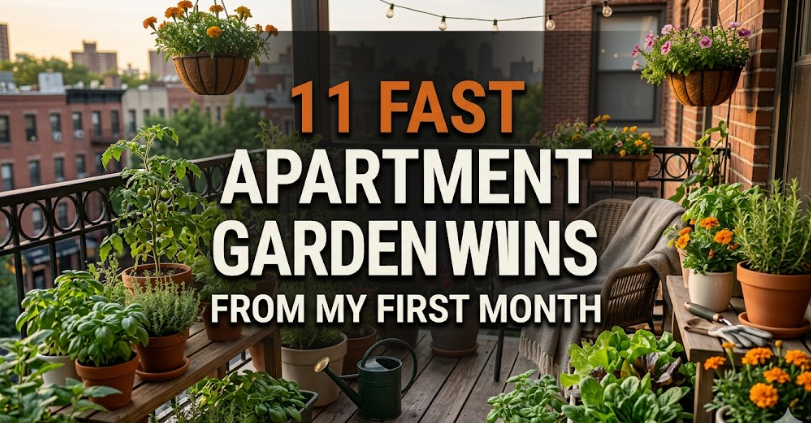
11 Easy Apartment Garden Hacks I Learned In My First Month
Discover 11 simple, time-saving apartment garden tips that actually deliver real results — seriously, check out my first month of growing plants in a small space — with this handy guide!
Starting a garden when you live in an apartment seems impossible at first. No yard. No soil. No idea where to begin. But one month in, I had living proof that small spaces can yield big results.
This apartment garden guide is everything I learned — the wins, the shortcuts, and the simple tricks that made my little balcony and windowsills come to life. Whether you have a sunny window or a small outdoor space, all 11 of these wins are completely doable for you too.
Let’s dig in.
Why You Should Start Gardening In An Apartment, Now
You do not need a backyard to grow food or flowers. Every single day, millions of people grow herbs, veggies, and even small fruit right inside their homes.
Here’s why it’s a good idea to get started today:
- Herbs and vegetables save on grocery bills
- Plants improve indoor air quality
- Gardening decreases stress and elevates mood
- You know what you are putting on your food — no mystery pesticides
- It’s one of the most fulfilling hobbies you can quickly learn
Gardening, as it turns out, isn’t the hardest part. It’s starting. So let’s make that easy.
Victory #1 — Using Herbs From The Start Revolutionized Everything
My first act was to plant herbs. Basil, mint, and parsley were my original trio.
Why herbs first? They grow fast. You can pick them in as little as a few weeks. And they’re genuinely useful — snip a little basil into your pasta or some mint into your tea and suddenly your garden seems legitimate.
I used small plastic pots from a dollar store along with some simple potting mix. That’s it.
The Herb Starter Lineup
| Herb | Minimum Light Required | Days to First Harvest | Difficulty |
|---|---|---|---|
| Basil | Full sun (6+ hrs) | 21–28 days | Easy |
| Mint | Partial sun | 30 days | Very Easy |
| Parsley | Partial sun | 30–45 days | Easy |
| Chives | Full or partial sun | 30 days | Easy |
| Cilantro | Full sun | 21–30 days | Easy |
“I started with herbs, which made me feel more confident. Every new leaf was a tiny victory.”
Win #2 — Knowing the Light Before Buying Anything
Light is the single most important factor behind apartment gardening. I spent one full day watching how sunlight moved through my apartment — before I’d purchased a single seed or pot.
But this one step prevented me from killing my plants right out of the gate.
What I Found Out
Direct sun came through my south-facing window for approximately six hours. My east-facing window received soft morning light — three, possibly four, hours. The corner near the TV? Almost zero natural light.
Once I knew that, I matched my plants to their places.
Quick Light Guide
- South-facing window — Ideal for sunlight-loving plants, including basil, tomatoes, and peppers
- East-facing window — Excellent for herbs, lettuce, and ferns
- West-facing window — Good for most herbs and some flowering plants
- North-facing window — Challenging, but try low-light plants such as pothos or ferns
If your apartment doesn’t get much sun, don’t panic. Grow lights are cheap, and they work surprisingly well.
Win #3 — The Right Pots (And It’s Not About Size)
A lot of beginners buy pots that are too big. I almost did the same.
Bigger pots hold more water. More water means soggy soil. Soggy soil kills roots. The size of your pot should match the size of your plant — not what you want the plant to become.
Pot Rules I Followed
- Most herbs like to be in pots that measure 4–6 inches
- Lettuce and greens require shallow 6–8 inch wide containers
- Tomatoes require a pot that is 5 gallons or larger
- Always choose pots with drainage holes at the bottom
I also used self-watering pots for my windowsill herbs. They have a water reservoir at the bottom. The plant absorbs what it needs. I refill every few days. No guesswork.
Win #4 — Potting Mix vs Garden Soil (Every Single Time)
I made this mistake early. I went for a bag of “garden soil” since it was less expensive. My plants were trapped in it like cement.
Garden soil is for outdoor beds. It’s dense and heavy in pots. Roots can’t breathe. Water doesn’t drain.
Potting mix is different. It’s light, fluffy, and designed specifically for containers. It drains nicely but retains just enough moisture.
Soil Type Comparison
| Soil Type | Good For | In Pots? |
|---|---|---|
| Garden Soil | In-ground beds | No — too heavy |
| Potting Mix | Containers & pots | Yes — ideal |
| Seed-Starting Mix | Germinating seeds | Yes, for seedlings |
| Cactus Mix | Succulents, cacti | Yes — very well-draining |
Pay a few extra dollars for quality potting mix. Your plants will thank you.
Win #5 — The Most Important Lesson: Water Less
I overwatered everything during week one. Yellow leaves. Drooping stems. Sad-looking basil.
The reality of apartment gardening: most indoor plants and herbs prefer to dry out between waterings. Soggy soil is one of the leading causes of why indoor plants die.
The Finger Test
Insert a finger an inch into the soil. If it feels dry, water. If it still feels damp, wait another day and check again. Simple. Effective.
Signs of Overwatering:
- Yellow leaves
- Mushy stems near the soil
- Moldy soil surface
- Wilting even if the soil is wet
Signs of Underwatering:
- Dry, crumbly soil
- Crispy leaf edges
- Wilting that recovers after watering
In warm months, I watered my herbs once every 2–3 days. In cooler months I pushed it to every 4–5 days.
Win #6 — Lettuce Became My Fastest Food
Lettuce was the next-fastest payoff after herbs. I planted a small container of “cut-and-come-again” lettuce and had salad greens in less than four weeks.
The trick is not to pick the entire plant. Cut off the outer leaves and allow the center to continue growing. One container yielded fresh salad ingredients for nearly two months.
Lettuce Varieties Perfect for Pots
- Butterhead — Tender, floppy leaves; ideal for small containers
- Leaf lettuce (Red or Green) — Fast growing, easy to harvest
- Romaine — Requires a slightly deeper container
- Mesclun mix — A mix of greens, easiest to grow
Sow lettuce seeds directly in moist potting mix. Cover lightly with soil. Keep them in a bright spot. They germinate in only 7–10 days.
According to the University of Minnesota Extension, lettuce is one of the best vegetables for container growing because of its shallow root system and quick harvest time — making it perfect for apartment gardens.
Win #7 — A Simple Watering Schedule Removed All the Stress
Watering was a daily panic until I made a schedule. Did I water yesterday? Was that two days ago? Is it too soon?
So I took small chalkboard labels and inserted one in each pot. I wrote the last watering date on it. Problem solved.
Later on, I switched to a basic weekly chart on my fridge.
Sample Weekly Watering Chart
| Plant | Mon | Wed | Fri | Notes |
|---|---|---|---|---|
| Basil | ✓ | — | ✓ | Test soil first |
| Mint | ✓ | — | ✓ | Likes moisture |
| Lettuce | ✓ | ✓ | ✓ | Keep soil lightly moist |
| Succulents | — | — | ✓ | Allow to dry completely |
| Pothos | — | ✓ | — | Very forgiving |
Such an easy system — it puts a stop to both overwatering and underwatering. It takes only two minutes to set up and saves a ton of plants.
Win #8 — Vertical Space Opened Up My Whole Garden
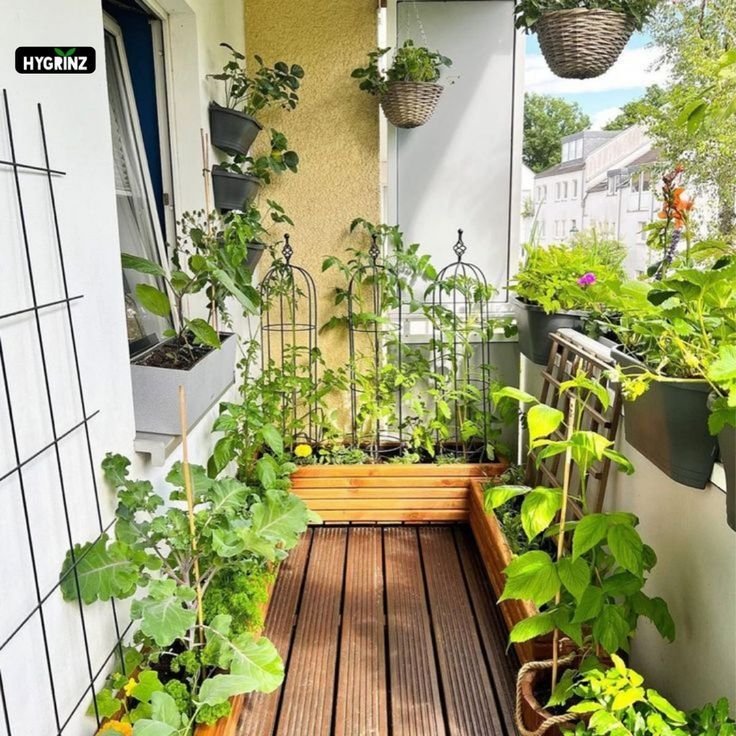
My apartment doesn’t have a huge balcony. But as soon as I started thinking vertically, I doubled my growing space overnight.
I added:
- A wall-mounted pocket planter for herbs
- A small tiered plant stand by the window
- Wall mounts for hanging planters (for lightweight pots)
- Trailing plants on wall-mounted adhesive hooks
This is one of the best tricks from any apartment garden guide — vertical gardening saves floor space and lets you grow more without taking up any extra ground.
Vertical Planting Ideas by Space
| Location | Idea | Ideal Plants |
|---|---|---|
| Balcony railing | Railing planters | Herbs, flowers, strawberries |
| Windowsill | Hanging planters | Trailing varieties, small herbs |
| Wall | Pocket planters | Herbs, succulents, ferns |
| Floor corner | Tiered stand | Pothos, peace lily, herbs |
Even a simple three-tier shelf massively increased how many plants I could grow.
Win #9 — Grow Lights Saved My Darker Areas
One side of my apartment is north-facing. That corner is basically a cave for plants.
I purchased a cheap clip-on grow light for around $20. Within two weeks, I had flourishing pothos and even a baby snake plant growing in a spot that previously couldn’t support anything.
What to Look for When Buying a Budget Grow Light
- Full spectrum LED — Mimics natural sunlight, suitable for most plants
- Adjustable timer — Automatically set for 12–16 hours a day
- Flex neck or clip mount — Position it exactly where you need it
- Low heat output — Won’t damage leaves even if placed nearby
I left my grow light on for 14 hours each day using a simple plug-in timer so I never had to remember to switch it on and off.
You don’t have to be a serious gardener to benefit from grow lights. They are a complete game changer for low-light apartments.
Win #10 — Monthly Fertilizing Made a Noticeable Difference
For the first three weeks I didn’t fertilize at all. My plants looked healthy but weren’t growing particularly quickly.
Once I added a small dose of liquid fertilizer, the difference was noticeable within ten days. New leaves. Fuller growth. Greener color.
Fertilizer Basics for Apartment Plants
Potting mix contains nutrients, but those nutrients deplete after 4–8 weeks. After that, your plants could use a little extra feed.
Types of fertilizer for containers:
- Liquid fertilizer — Mix with water, quick-release, easy to manage
- Slow-release granules — Incorporated into soil; nutrition lasts for months
- Fertilizer spikes — Insert into soil, a low-effort option
For herbs and vegetables, I used a balanced 10-10-10 liquid fertilizer once a month at half the recommended dose. Container plants do best with less.
Never fertilize a dry plant. Water first, then fertilize. This prevents root burn.
Win #11 — A Simple Garden Journal Tied Everything Together
This last win is the one most beginners overlook. I almost did too.
You don’t need a fancy garden journal. I used a small notebook. I wrote down:
- What I planted and when
- What the plant label said about sun and water needs
- When I watered and fertilized
- Quick notes on what worked, what didn’t, and what to change
By the end of month one, I had an actual record of what was thriving and what needed tweaking. That notebook became my personal apartment garden guide — built from my own experience.
You can also use a free app like Garden Answers or even just the notes app on your phone. The format doesn’t matter. What matters is writing it down.
My Month One Results
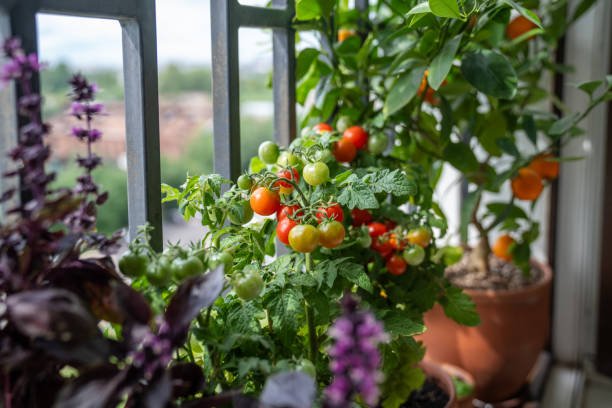
After my first month, I was growing:
| Plant | Location | Status |
|---|---|---|
| Basil seedling | South window | Harvesting weekly |
| Mint cutting | East window | Full and spreading |
| Parsley seed | South window | Small but growing |
| Lettuce mix | Grow light shelf | Harvesting outer leaves |
| Pothos cutting | North corner | New leaves appearing |
| Snake plant | North corner | Stable, slow grower |
| Chives seed | East window | Ready to snip |
Not a bad haul from an apartment, a few pots, and one month of learning.
First Month Mistakes to Avoid
I had wins and losses. Here are the things I did wrong:
- Using garden soil in pots — it compacts and kills roots
- Overwatering out of excitement — check the soil before every water
- Buying all the plants at once — start with five or fewer
- Ignoring drainage holes — water must have somewhere to go
- Placing all plants in one spot — match each plant to its light needs
- Forgetting to fertilize after week four — potting mix runs out of nutrients by then
Mistakes are part of the learning experience. The trick is to spot them early and adjust.
Apartment Garden Guide FAQs
Q: What is the easiest plant to grow in an apartment? Pothos, likely. It can survive low light, irregular watering, and near-total neglect. For edibles, mint is your best bet — it grows fast and is practically impossible to kill.
Q: Can I grow vegetables in a small apartment? Yes. Lettuce, radishes, cherry tomatoes, most herbs, and chili peppers do well in even small containers. Stick to compact or “dwarf” varieties bred specifically for pots.
Q: How much sun do apartment plants require? It depends on the plant. Herbs and vegetables usually require 6+ hours. Many leafy greens do well with 4 hours. Low-light plants such as pothos or peace lily need around 1–2 hours of indirect light to thrive.
Q: Do I need a grow light in an apartment? Not always. If you have a south- or west-facing window with 4–6 hours of light, you’re in good shape. For dimmer apartments or north-facing rooms, a basic LED grow light is a game changer.
Q: How often should I fertilize container plants? For most herbs and vegetables, once a month is ideal. Use a balanced liquid fertilizer at half strength. Slow-release granules work every 2–3 months.
Q: What’s the best container size for a beginner? For herbs, start with 4–6 inch pots. For greens and lettuce, choose a shallow container at least 6–8 inches wide. Always make sure it has drainage holes at the bottom.
Q: Can I start a garden with no outdoor space at all? Absolutely. Herbs, small peppers, and even lettuce are happy on a sunny windowsill. Add a grow light and your options grow even further. Many apartment gardeners grow exclusively indoors.
The Bottom Line — Your First Month Can Look Like This Too
A month ago, I had no plants and no experience. Now I harvest fresh herbs several times a week. I have greens for salads. My apartment is alive in a way it never was before.
This apartment garden guide isn’t about perfection. It’s about starting. Picking one plant. Finding the sunniest window. Grabbing a small pot and some good potting mix.
You don’t need a yard, a huge budget, or a green thumb. You just need one small victory — and let that momentum carry you forward.
Pick your first win from this list. Put it in motion today. Your first harvest will feel even better than you expected.