Your Complete Guide: Master the Techniques You Need to Grow Indoor Plants in Small Apartment Spaces
Learn 5 Important Ways to Do It Right Regarding Light, Watering, Soil, and More
October 25, 2023 — Get Messy: A Kitchen Garden Journal
You can grow beautiful, healthy plants without a backyard. People are transforming their apartments into green sanctuaries — and you can do the same.
But the truth is, indoor plants die more from improper care than from neglect. The same issues keep coming up over and over for beginners. Too much water. Too little light. Wrong soil. Wrong pot.
This guide to apartment gardens will correct all of that!
And for absolute newcomers (or people who’ve murdered a few succulents and want to give it another shot), these 5 must-know tips will make sure your plants have the best chance at a long, healthy life. Let’s dig in.
Why a Garden in an Apartment Is Worth It
Before we get to the tips, let’s discuss why this is important.
Indoor plants can do more than look beautiful. Research shows they can lessen stress, sharpen focus and even purify the air around you. In a small apartment, that’s pretty significant.
Plants also help make a space feel alive. They provide color, texture and a feeling of serenity unlike anything wrought in furniture.
And the best part? You don’t require tons of space, money or experience. All you need is the right information — and that’s precisely what this apartment garden guide will provide.
Tip No. 1: Match Your Plants to Your Light
Light is the most crucial factor for healthy indoor plants. And if you get this wrong, nothing else matters.
How to Interpret the Light in Your Apartment
Go through your apartment at various times of day. Notice where the sun hits. Notice where it doesn’t.
Here’s a simple breakdown:
| Light Level | What It Looks Like | Good Plant Choices |
|---|---|---|
| Bright Direct Light | Sun hits the spot directly for 4 or more hours | Cacti, succulents, herbs |
| Bright Indirect Light | Room is bright but sun isn’t hitting the plant directly | Pothos, snake plant, spider plant |
| Medium Light | A few feet back from a window; slightly dim | Peace lily, ZZ plant, dracaena |
| Low Light | Very far away from windows, consistently dark | Cast iron plant, Chinese evergreen |
Near windows, most apartments have bright indirect or medium light. That’s pretty much ideal for most popular houseplants.
The Number One Light Mistake Beginners Make
The biggest mistake is placing a sun-lover in a dark corner and expecting it to flourish. It won’t.
If your apartment doesn’t receive much natural light, don’t fret. Grow lights are inexpensive and effective. For many plants, just a simple LED grow light on a timer can substitute for sunlight.
Seek out grow lights labeled “full spectrum.” Install them 6–12 inches above your plants and run them for 12–14 hours each day.
Rotating Your Plants
Here’s a trick most guides won’t include: Rotate your plants every 1–2 weeks.
Plants grow toward light. Without rotating them, they slant to one side. Giving them a quarter turn each week or two ensures that growth is even and balanced.
Tip 2: Water Less Frequently, but More Wisely
Houseplants die more often from overwatering than anything else. It’s not a minor issue — overwatering is the top cause of plant deaths indoors.
Why Too Much Water Is Deadly
When soil is too wet for an extended period, the roots suffocate. They start to rot. By the time you notice yellowing leaves or a wilting plant, damage is usually already done beneath the surface.
The problem is that overwatered plants and underwatered plants often appear similar at first — both become droopy, both get yellow leaves. So how can you differentiate between the two?
The Finger Test (Easy and Reliable)
Insert your finger into the soil approximately 1–2 inches.
- Wet or damp? Don’t water yet.
- Dry? Time to water.
- Bone dry and shriveling away from the pot? Water right away and begin watering more often.
This test applies to most common houseplants. It doesn’t cost a cent and takes two seconds.
Watering Schedules by Plant Type
| Plant Type | How Often to Water |
|---|---|
| Succulents & Cacti | Every 2–4 weeks |
| Tropical Plants (pothos, philodendron) | Every 7–10 days |
| Herbs (basil, mint, parsley) | Every 2–3 days |
| Snake Plant / ZZ Plant | Every 2–6 weeks |
| Peace Lily | When top inch of soil is dry |
These are general guidelines. Always check the soil first. Seasons matter, too — plants drink less in the winter when growth slows down.
Watering Technique Matters
Don’t merely pour some water on top. Water deeply and slowly until it drains from the drainage hole at the bottom of the pot. Then discard the water from the saucer so the pot is not sitting in standing water.
This promotes downward root growth and creates deeper, stronger, more stable plants.
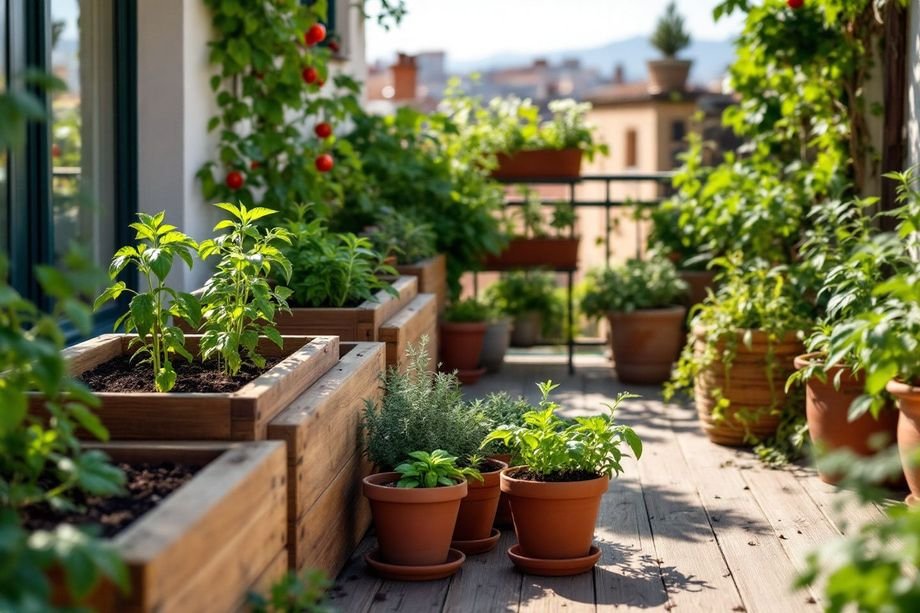
Tip 3: Choose the Right Soil and Pots
Soil and pots may sound dull. They’re not. They’re the bedrock of your whole apartment garden.
Why Potting Mix Is More Important Than You Think
Garden soil — the stuff from your backyard — is too heavy for indoor pots. It gets compacted over time, impedes drainage and chokes roots.
Always use a potting mix suitable for indoor plants. These mixes are light, airy and drain well.
But not all potting mixes are alike. Different plants need different blends:
| Plant Type | Best Soil Mix |
|---|---|
| Succulents & Cacti | Cactus/succulent mix (or regular mix + perlite) |
| Tropical Houseplants | Standard potting mix |
| Orchids | Orchid bark mix |
| Herbs | Light potting mix with good drainage |
| African Violets | African violet specialty mix |
What Perlite Does
Perlite is a white, fluffy material that resembles little foam balls. Adding it to regular potting soil provides better drainage and air around roots.
For succulents, a 1:1 mix of potting soil and perlite works wonderfully. A small handful of perlite per tropical pot is sufficient.
Choosing the Right Pot
The pot you choose determines everything — drainage, moisture retention, root health.
- Terracotta pots are porous. They allow air and moisture to pass through the walls. Especially good for succulents, cacti and any plant that prefers to dry out between waterings.
- Plastic pots hold moisture longer. Best for tropical plants that require constant moisture.
- Ceramic pots sit somewhere in the middle and look sleek on shelves.
The most important rule: Every single pot must have a drainage hole. No exceptions.
Water pools at the bottom and rots the roots if there’s no drainage. If you want to use a decorative pot that has no hole, use it as a cover pot — keep your plant in the plastic nursery pot inside the decorative one.
When to Repot Your Plants
Plants need repotting when:
- Roots are coming out of the drainage holes
- The soil dries out considerably faster than usual
- Growth has slowed down significantly
- Roots are winding round and round the inside of the pot
Increase to the next pot size gradually. Going too big, too soon, leads to waterlogged soil and root rot.
Tip 4: Fertilize with Moderation
Plants require food just like we do. But in an apartment environment, they depend entirely on you to provide it.
What Plant Food Actually Does
Fertilizer provides three essential nutrients to plants:
- Nitrogen (N) — for vegetative, green growth
- Phosphorus (P) — for healthy roots and blooms
- Potassium (K) — for overall plant health and disease resistance
You’ll find these numbers listed as three consecutive digits on fertilizer labels, such as 10-10-10 or 20-20-20. That’s the N-P-K ratio.
Most houseplants respond well to a balanced, all-purpose liquid fertilizer.
The Golden Rule of Fertilizing
More is not better. Over-fertilizing burns roots, causes leaf tips to turn brown, and can kill a plant faster than under-feeding.
Here’s a conservative fertilizing schedule for most indoor plants:
| Season | Fertilizer Frequency |
|---|---|
| Spring | Every 2 weeks |
| Summer | Every 2 weeks |
| Fall | Once monthly |
| Winter | Stop or pause |
Spring and summer are when plants make most of their new growth — that’s when they need nutrients most. Most houseplants go into semi-dormancy during winter and won’t require feeding.
Organic vs. Synthetic Fertilizers
Synthetic fertilizers work fast. Plants readily absorb the nutrients. They’re inexpensive and easy to find.
Organic fertilizers (such as worm castings or fish emulsion) work slowly. Over time, they feed the soil, which builds long-term plant health. They’re harder to over-apply.
A diluted liquid synthetic fertilizer is the simplest starting point for beginners. To prevent burning roots, dilute it to half the recommended strength.
Signs Your Plant Is Hungry
- Pale or yellow leaves (especially older ones)
- Slow, stunted growth during the growing season
- Smaller-than-normal new leaves
- Loss of color or vibrancy
If you notice these signs and the plant is in good light with appropriate watering, a dose of fertilizer may be just what it needs.
Tip 5: Monitor Humidity and Temperature
Humidity and temperature once again play a role in how well your plants grow. But these two factors can be the difference between life and death for tropical houseplants.
What Humidity Means to Indoor Plants
Pothos, monsteras, peace lilies, ferns — most popular houseplants are native to tropical rainforests. They love humid air.
Indoor apartments, particularly during winter when heating systems constantly run, can have humidity levels of 20–30%. That’s desert-dry.
Signs that your plant is suffering from low humidity:
- Brown, crispy leaf tips and edges
- Leaves curling inward
- New leaves that appear small, wizened, or distorted
- Dry, papery texture on leaves
Easy Ways to Boost Humidity
Group your plants together. Plants release moisture. Bundling them creates a little humid microclimate among themselves.
Use a pebble tray. Place a shallow tray filled with pebbles and water under your pots. As the moisture evaporates, it increases the humidity surrounding your plants. Ensure that the pot rests on top of the pebbles, not in the water.
Get a small humidifier. This is the most efficient option. A small humidifier near your plant shelf can keep humidity in the 50–60% range, which suits most tropical plants.
Misting — spraying water on leaves — is popular but largely ineffective. It only raises humidity for a few minutes, and if leaves remain wet overnight it can lead to fungal problems.
Temperature: The Hidden Threat
Most houseplants prefer temperatures of 60°F to 80°F (15–27°C). That’s comfortable for people too, so your apartment is typically fine.
But watch out for:
- Cold drafts near windows in winter. Even if your apartment is warm, cold air near the glass can stress tropical plants. Move them a foot or two away from drafty windows in cold months.
- Air conditioning vents in summer. Cold, dry air moving directly onto plants creates stress quickly. Avoid direct airflow on plants.
- Heating vents in winter. Same problem — hot, dry air depletes moisture from leaves.
- Sudden temperature swings. Plants thrive at steady temperatures. Sudden changes cause leaf drop and stress.
Best Plants for Apartment Conditions
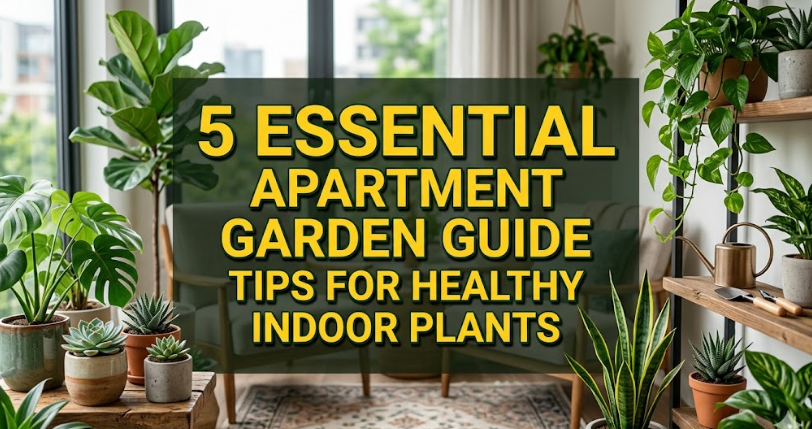
Some plants are simply more resilient than others. If you’re new to apartment gardening, start with these:
| Plant | Light Needs | Humidity Tolerance | Difficulty |
|---|---|---|---|
| Pothos | Low to bright indirect | Very tolerant | Easy |
| Snake Plant | Low to bright indirect | Very tolerant | Easy |
| ZZ Plant | Low to medium | Very tolerant | Easy |
| Spider Plant | Bright indirect | Moderate | Easy |
| Peace Lily | Low to medium | Loves humidity | Easy–Medium |
| Monstera | Bright indirect | Loves humidity | Medium |
| Rubber Plant | Bright indirect | Moderate | Medium |
Putting It All Together: A Simple Apartment Garden Routine
You don’t have to spend hours a day tending your plants. A routine helps simplify everything.
Weekly:
- Check soil moisture on all plants using the finger test
- Water those that need it
- Look for signs of pests or disease
- Rotate plants a quarter turn
Monthly:
- Fertilize during the growing season (spring/summer)
- Dust leaves with a damp cloth (this helps them absorb light)
- Check if any plants need repotting
Seasonally:
- Adjust how much or how often you water as seasons change
- Move plants closer to or farther from windows
- Pause fertilizing in winter
Common Apartment Gardening Mistakes to Avoid
Even with the best intentions, newcomers fall into predictable traps. Here are the big ones:
Purchasing plants that don’t match your light. Check light requirements before you buy. A monstera will not thrive in a windowless bathroom.
Using decorative pots without drainage. It looks great. It kills plants. Always ensure drainage.
Watering on a rigid schedule. Water when the plant needs it, not on a set day. Soil moisture is your guide, not the calendar.
Neglecting pests until the damage is done. Regularly examine the undersides of leaves. Catching a pest early makes it easy to manage. Catch it late and it can spread to every plant you own.
Giving up too soon. A drooping plant isn’t always dead. With a bit of care and patience, many plants can recover.
FAQs: Apartment Garden Guide
Q: Which indoor plants are easiest for a small apartment? Pothos, snake plants and ZZ plants are ideal for beginners. They tolerate low light, inconsistent watering and variable humidity without fuss.
Q: How can I tell if my apartment gets enough light for plants? If you can comfortably read a book by natural light during the day, you likely have enough for low to medium light plants. For sun-lovers, if your windows face north or don’t receive direct sun, you may need a grow light.
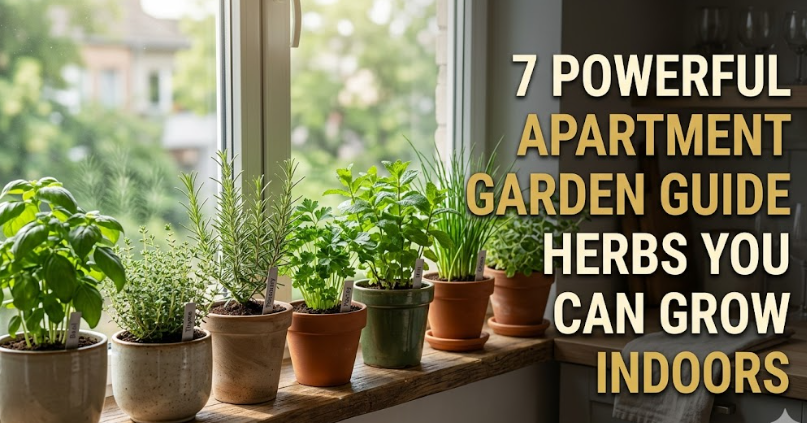
Q: Can I grow herbs in my apartment? Yes! Herbs like basil, mint, chives and parsley do well indoors with adequate light. A south- or west-facing windowsill is ideal. A grow light is also a great option for herbs.
Q: How frequently do I need to repot my houseplants? Most houseplants need repotting every 1–2 years. Look for roots emerging from the drainage holes or spiraling inside the pot — these are your clearest indicators.
Q: Why are my plant’s leaves turning yellow? Yellow leaves can indicate overwatering, underwatering, low light or nutrient deficiency. Start by checking soil moisture. If that seems fine, consider the light conditions and whether the plant has been fertilized recently.
Q: Do houseplants really clean the air? They do, but modestly. According to NASA’s Clean Air Study, you’d need a significant number of plants per room to meaningfully improve air quality. Even so, a handful of plants can improve the atmosphere and reduce stress — and that counts for a lot.
Q: How should I deal with indoor plant pests? Wipe leaves with a damp cloth weekly. For pests such as spider mites or mealybugs, use neem oil spray or insecticidal soap. Immediately isolate affected plants so pests don’t spread.
Final Thoughts
Filling your apartment with plants is one of the most satisfying things you can do in a small space. It takes no green thumb — it takes the right knowledge.
This apartment garden guide has given you five core pillars: the right light, the right amount of water, the right soil and pot, balanced feeding, and the right humidity and temperature. Get these five things right, and your plants will flourish.
Start small. Pick one or two easy plants. See how they respond in your space. Build confidence. Then expand your collection.
Your apartment garden is waiting — and it’s going to be beautiful.