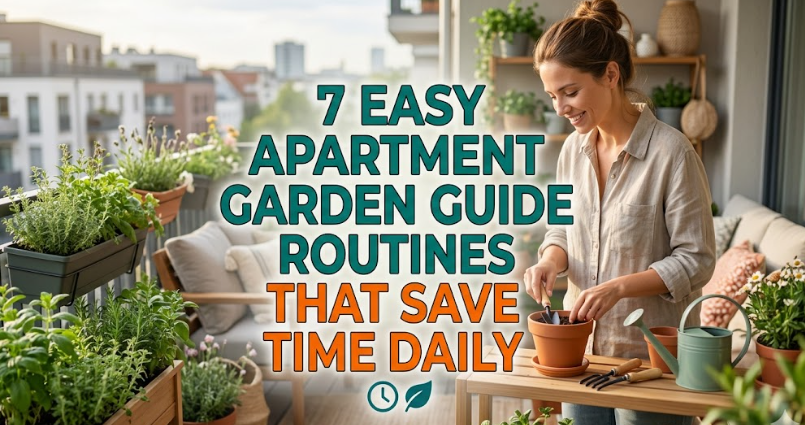
7 Daily Routines for Apartment Gardens That Save Time
Apartment gardens seem complicated. No yard (or very limited space for planting), no free time — it can seem like gardening is just not in the cards for you.
But the fact is, apartment gardening may be the most agile hobby you could ever take up. And if you create the right routines, it doesn’t take as long as you’d think.
This apartment garden guide outlines 7 easy daily practices that’ll keep your plants thriving without consuming all of your time. Whether you have a balcony, a windowsill, or just a small corner by the kitchen, these habits work for all.
Let’s dig in.
Why Apartment Gardening Is All About Routines, Not Effort
For a lot of people, successful gardening is all about having a green thumb. It’s not.
It’s about consistency.
It doesn’t matter how hard you work one day if the plant is ignored for the next five. Nature craves regular, predictable care. That’s where routines come in.
When you integrate small, repeatable habits into your day, taking care of your apartment garden becomes second nature. You stop forgetting to water. You catch problems early. You spend less time troubleshooting and more time enjoying your plants.
The good news? Each routine featured in this guide takes 5 to 15 minutes, tops.
Routine 1 — Quick Walk-Through of Your Plants Every Morning
The 5-Minute Morning Check
A good apartment garden guide begins with observation. Before pouring your morning coffee or scrolling through your phone, take a slow walk by your plants.
Look for these things:
- Any leaves yellowing or drooping?
- Does the soil look bone dry?
- Are there bugs crawling on the leaves?
- Did any of the plants tip over overnight?
This quick scan takes less than five minutes — but it gives you a complete view of your garden’s health every single day.
Why Morning Is the Best Time
In the mornings, plants are at their most “readable.” Wilting in the evening may simply be heat stress. But drooping in the morning almost always indicates something is wrong.
Catching issues early saves plants. One pest caught on day one is far easier to deal with than a full infestation a week later.
This is your daily non-negotiable. It’s the foundation of everything else in this guide.
Routine 2 — Water Smarter, Not More
The Problem Apartment Gardeners Face More Than Anything Else
More houseplants die from overwatering than underwatering. This surprises most beginners.
In apartments, pots don’t drain like garden beds. Water sits at the bottom. Roots rot. You keep pouring water on the plant, believing you’re doing good — and after a week, the plant gives up.
Building a Smart Watering Habit
Instead of watering on a fixed schedule, water when the soil tells you.
Here’s a simple method:
- The Finger Test — Stick a finger about an inch into the soil. If it feels dry, give the plant a drink. If it’s still damp, wait another day.
- The Lift Test — Pick up the pot. Dry soil is significantly lighter than wet soil. With practice, you’ll be able to tell by weight alone.
| Plant | Watering Frequency (General Guide) |
|---|---|
| Succulents & Cacti | Every 10–14 days |
| Tropical Houseplants | Every 5–7 days |
| Herbs (Basil, Mint) | Every 2–3 days |
| Snake Plant | Every 10–14 days |
| Pothos | Every 7 days |
| Tomatoes (Balcony) | Every 1–2 days in summer |
Note: These are starting points. Always check soil moisture first.
Water in the Morning If Possible
Watering in the morning allows roots to soak up moisture before the day’s heat. It also helps prevent leaves from staying damp, which lowers the risk of fungal issues.
If you’re an evening-only waterer, that’s fine — just avoid splashing the leaves.
Routine 3 — Give Your Plants Their Daily Light Turn
Light Is Food for Plants
In an apartment, light is your rarest resource. Most windows receive direct sun only part of the day. Walls and buildings block light. The angle of sunlight changes with the seasons.
Your plants need you to compensate for this.
The Simple Rotation Habit
Rotate your pots a quarter turn every day or two.
Why? Because plants grow toward light. If one side of a plant consistently faces a window, that side grows more vigorously — and the plant becomes uneven and weak.
Rotating a quarter turn regularly promotes balanced, healthy growth.
How to Identify Light Zones in Your Apartment
Before committing to a plant placement, spend a day observing where sunlight lands in each room.
| Light Zone | Description | Best Plants |
|---|---|---|
| Bright Direct | Full sunlight on pot for 4+ hours | Herbs, Succulents, Citrus |
| Bright Indirect | Close to window but no direct rays | Pothos, Monstera, Ferns |
| Medium Light | A few feet from window | ZZ Plant, Peace Lily |
| Low Light | Further from windows | Snake Plant, Cast Iron Plant |
Choosing plants suited to your actual light conditions saves you endless maintenance hours. A plant in the wrong spot will always struggle, no matter how well you water or feed it.
Routine 4 — The 3-Minute Leaf Cleaning Session
Why Dirty Leaves Are a Problem
This one surprises most beginners. Cleaning leaves sounds fussy and unnecessary.
But dust on leaves does two things:
- It blocks light from reaching the leaf surface, inhibiting photosynthesis.
- It creates a warm, sheltered nesting spot for spider mites and other pests.
Dust builds up faster in apartments than in outdoor gardens — air conditioning, cooking and everyday indoor life all contribute.
How to Clean Leaves Without Damaging Them
You don’t need any special products. Here’s what works:
- Large-leaved plants (Monstera, Rubber Plant, Fiddle Leaf Fig): Wipe each leaf gently with a damp cloth. Use room-temperature water — cold water can leave spots.
- Small-leaved or delicate plants (Ferns, Herbs): Take them to the sink and rinse with lukewarm water.
- Succulents and cacti: Brush off dust with a soft, dry brush (like a paintbrush). Water trapped in the crevices can cause rot.
Do this two to three times a week. The entire process takes roughly three minutes per plant. Your plants will look healthier — and grow better too.
Routine 5 — Weekly Soil and Root Health Check
Stop Waiting for Problems to Find You
Most apartment gardeners are reactive. A leaf turns yellow. They Google it. They try a fix. Sometimes it works. Sometimes the plant is too far gone.
Proactive gardeners check soil and root health regularly. This is one of the most underrated habits in any apartment garden guide.
What to Check Every Week
- Soil Surface — Look for white crusty patches (mineral buildup from tap water), green algae (too much moisture), or mushrooms (overwatering).
- Drainage Holes — Make sure they aren’t clogged. Lift the pot and look. Pooled water below the surface signals imminent root rot.
- Root Peeking — Roots poking out of the drainage holes means the plant is rootbound. It needs a larger pot soon.
- Smell — Healthy soil has an earthy, neutral scent. A sour or rotten odour indicates a problem — usually overwatering or root rot.
| Sign | What It Means | How to Fix |
|---|---|---|
| White crust on surface | Mineral buildup | Flush soil with distilled water |
| Green algae on soil | Too much moisture or light | Reduce watering, improve airflow |
| Roots out of drainage hole | Rootbound | Repot into a larger container |
| Sour smell from soil | Beginning root rot | Check roots and reduce watering |
| Soil pulling away from pot edges | Extremely dry | Soak pot in water for 30 minutes |
A few minutes each week spent on this check will save you the heartache of losing plants unnecessarily.
Routine 6 — Fertilize on a Simple Schedule
Why Fertilizing Feels Complicated (And Why It Shouldn’t)
Many apartment gardeners skip fertilizing. It feels overwhelming — too many products, confusing instructions.
Here’s a simple way to think about it:
Potting soil is not garden soil. It depletes nutrients quickly — often within two to three months. After that, your plant is running on empty unless you feed it.
A No-Fuss Fertilizing Routine
You don’t need expensive or complex fertilizers. A balanced liquid fertilizer (look for something like 10-10-10 or 20-20-20 on the label) will work for most houseplants.
Active growing season (spring and summer): Fertilize every two weeks at half the recommended strength. Less is more — too much fertilizer burns roots.
Dormant season (fall and winter): Feed monthly or not at all. Most ornamental houseplants slow down significantly in winter.
Herbs and vegetables: These are hungry plants. Fertilize weekly during the growing season with a vegetable fertilizer.
| Plant | Fertilizer Type | Frequency |
|---|---|---|
| Herbs & Vegetables | Balanced liquid (10-10-10) | Weekly, growing season |
| Tropical Houseplants | Balanced liquid | Every 2 weeks, spring/summer |
| Succulents & Cacti | Cactus-specific fertilizer | Once a month in summer |
| Flowering Plants | High phosphorus (bloom booster) | Every 2 weeks when budding |
| Snake Plant, ZZ Plant | Any balanced liquid | Once a month, spring/summer only |
Set a phone reminder. “Plant food — every two weeks.” That’s genuinely all it takes.
Routine 7 — Close Out Your Day With a 5-Minute Garden Reset
The Evening Wind-Down Habit
This final routine pulls everything together. Taking five minutes to reset your apartment garden before bed sounds small — but this is often the difference between a struggling garden and a thriving one.
What the Evening Reset Involves
- Remove dead leaves — Snip off any yellowed or dead leaves. Pests and disease love dead plant material. It takes 30 seconds.
- Empty saucers — Pour out any water that has pooled beneath your pots. Sitting water encourages fungus gnats and leads to root rot.
- Straighten leaning plants — If a plant has grown toward the light, gently reposition it now.
- Mist humidity-loving plants — Tropicals such as ferns, calatheas and orchids love humidity. A gentle evening mist keeps them happy. Don’t mist succulents or cacti.
- Jot a quick note — Keep a small notebook or use your phone’s notes app. Write down anything you noticed that day. For example: “Basil looks droopy — check water tomorrow” or “Spot on the pothos — keep an eye on it.” This 60-second habit stops issues from slipping through the cracks.
Why Ending the Day This Way Is So Powerful
This routine creates a natural feedback loop. You visit your garden twice a day — morning and evening. Problems don’t fester unnoticed. Your plants receive regular attention without requiring hours of your time.
Over time, this rhythm becomes second nature. You’ll do it without thinking.
Putting It All Together — A Daily Schedule for Your Apartment Garden
Here’s how all 7 routines fit into a realistic day:
| Time of Day | Routine | Time Required |
|---|---|---|
| Morning (with coffee) | Plant walkthrough | 5 minutes |
| Morning | Watering check (finger/lift test) | 5 minutes |
| Morning | Light rotation (quarter turn) | 2 minutes |
| Midday (2–3x per week) | Leaf cleaning session | 3–5 minutes |
| Once a week | Soil and root health check | 10 minutes |
| Every 2 weeks | Fertilizing session | 10 minutes |
| Evening | Garden reset | 5 minutes |
Total daily time: 12–17 minutes Weekly total (including weekly check): About 1.5 hours spread across 7 days
That’s it. Fewer than 15 minutes a day to maintain a productive apartment garden.
Bonus Tips to Make Your Routines Even Easier
Use Self-Watering Pots
Self-watering pots have a water reservoir at the bottom. Roots absorb moisture as needed. This reduces how often you need to water and eliminates the guesswork.
Best for: herbs, tomatoes and anything needing consistent moisture.
Group Plants by Watering Needs
Keep all of your drought-tolerant plants (succulents, snake plants, ZZ plants) together. Place moisture-loving plants (herbs, tropicals) in a separate group.
You can then water each group at once instead of checking each pot individually.
Set Phone Reminders
Don’t rely on memory. Set two recurring reminders:
🌱 “Morning plant check” — 7:00 AM 🌙 “Evening garden reset” — 9:00 PM
Add a bi-weekly fertilizing reminder. Done.
Keep Your Supplies Within Reach
Store your watering can, fertilizer, misting bottle and cleaning cloth near your plants. If supplies are buried in a closet, you’ll skip the routine. Convenience builds habits.
6 Common Apartment Gardening Mistakes (and How to Avoid Them)
- Planting the wrong plant in the wrong spot — A sun-loving herb on a north-facing windowsill will always struggle. Match plants to your actual light conditions.
- Using pots without drainage holes — They can look nice, but they’re plant killers. Always ensure pots have drainage holes, or add a drainage layer.
- Ignoring seasonality — Winter brings much lower light levels. Plants slow down. Reduce watering and feeding accordingly.
- Repotting too frequently — Most plants don’t need a new pot every year. Repot only when rootbound. Unnecessarily disturbing roots stresses plants.
- Impulse-buying plants — Research care needs before purchasing. Consider your light levels, available space and time.
- Skipping the evening reset — Small issues compound quickly. Even five minutes in the evening keeps everything under control.
FAQs — Apartment Garden Guide
Q: How many plants can I realistically support in an apartment? Start with 5 to 10 plants. As your routines become second nature, you can expand. It’s better to have fewer plants thriving than many plants struggling.
Q: Do I need special soil? Yes. Use a good potting mix — not garden soil. Garden soil compacts in pots, impedes drainage and often introduces pests. Use a cactus mix for succulents and a vegetable-specific potting mix for herbs and edibles.
Q: What are the easiest plants for apartment gardening? Pothos, snake plants and ZZ plants are virtually indestructible. For edibles, basil, green onions and cherry tomatoes on a sunny balcony or south-facing windowsill are excellent starting points.
Q: My apartment gets very little natural light. Can I still garden? Yes. Use grow lights. Full-spectrum LED grow lights are affordable, energy-efficient and very effective. Put them on a timer for 12 to 16 hours a day. Snake plants, pothos and peace lilies also do well in genuinely low light without grow lights.
Q: What should I do about gnats in my apartment garden? Fungus gnats are caused by overwatered soil. Allow the soil to dry out more between waterings. Use yellow sticky traps near pots to catch adult gnats, and apply a layer of sand on top of the soil to prevent egg-laying.
Q: Is it worth growing vegetables in a small apartment? Absolutely. Cherry tomatoes, lettuce, herbs, radishes and peppers all thrive in containers on sunny balconies. You won’t replace a grocery store, but fresh herbs and salad greens are very achievable — and far more satisfying.
Q: How do I know when it’s time to repot? Look for roots emerging from drainage holes, soil drying out unusually fast, or plants that aren’t thriving despite good care. When you see these signs, go up one pot size — not two.
Wrapping It All Up
An apartment garden doesn’t have to be complex or time-consuming.
All it requires is consistent, regular attention.
These 7 routines — the morning walkthrough, smart watering, light rotation, leaf cleaning, soil checks, steady feeding and evening reset — cover every need your plants have. And they do it in fewer than 15 minutes a day.
Start with one or two routines. Build the habit. Then add others as they become automatic.
This apartment garden guide has always had one intention: to help you spend less time worrying about your plants and more time enjoying them.
Your apartment can be greener, fresher and more alive than you ever imagined. All it takes is five minutes in the morning and five minutes in the evening.
That’s it. Your plants will do the rest.