Meta Description: Apartment garden guide space hacks that actually work — discover 7 clever strategies to transform your tiny balcony, windowsill, or blank wall into a thriving green space.
7 Backyardless Apartment Garden Hacks: It’s Not About the Space You Have, But How Smartly You Can Use It!
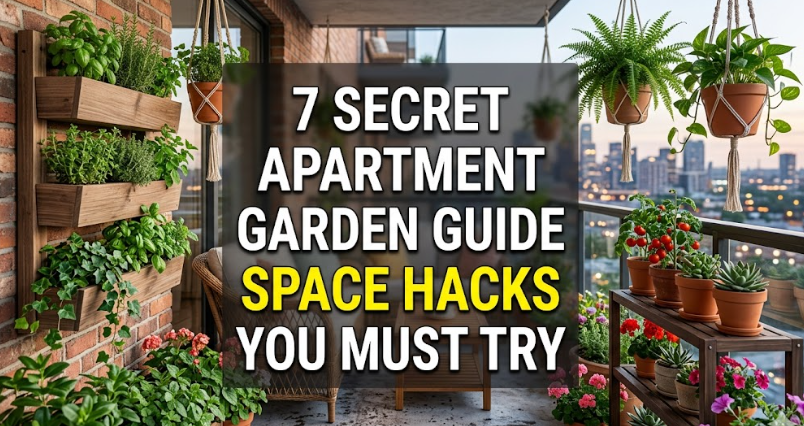
Top 7 Secret Apartment Garden Guide Space Hacks You Need to Try
You live in an apartment. Space is tight. But that vision of growing plants, fresh herbs, or even vegetables is very real.
The good news — you don’t need a backyard to make it happen.
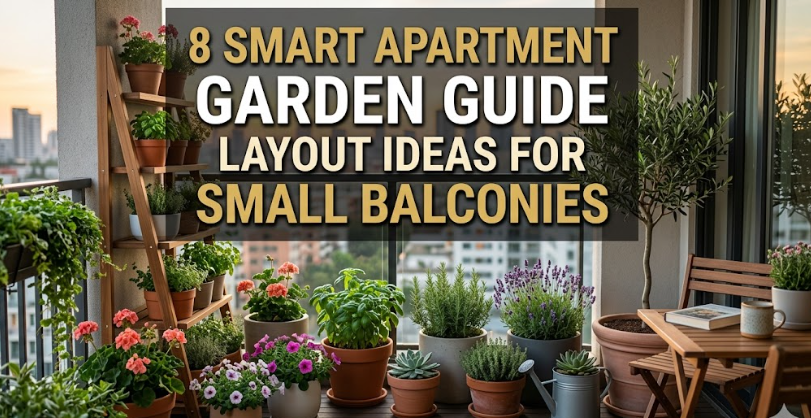
Across the globe, millions of those living in apartments are transforming tiny balconies, windowsills, and even blank walls into verdant green land. And the trick isn’t having more space. It’s about how to make use of the space you already have.
This apartment garden guide features 7 clever yet simple-to-follow (we’ve tested all of them!) hacks that can turn any larger courtyard, balcony, as well as patio into a contemporary and beautiful little patch of bloom. And these tips — whether you have never tackled the bed before or tried in vain to do so previously — are for you.
Let’s dig in.
To The Rescue: Why Apartment Gardening Is Worth All Your Work
Before we get into the hacks, let’s discuss why this is important.
Apartment gardening isn’t only for aesthetics. It’s about mental health, fresh food, cleaner air, and the simple pleasure of watching something grow.
Research has shown that indoor plants decrease stress and blood pressure levels, as well as enhance concentration. Cultivating your own herbs or veggies — even in just a small pot — offers you a sense of agency and achievement.
And here’s something that may surprise you: small-space gardening can be more efficient per square foot than traditional gardens. The right containers and the smartest choices with plants can make your apartment produce a surprisingly copious amount of greenery — and food.
Hack #1 — Go Up, and Multiply Your Growing Space in an Instant
The biggest error apartment gardeners make is to think only in terms of horizontal space. They sit one pot on a shelf and declare it finished.
Flip your thinking. Go up.
Walls Are Free Real Estate
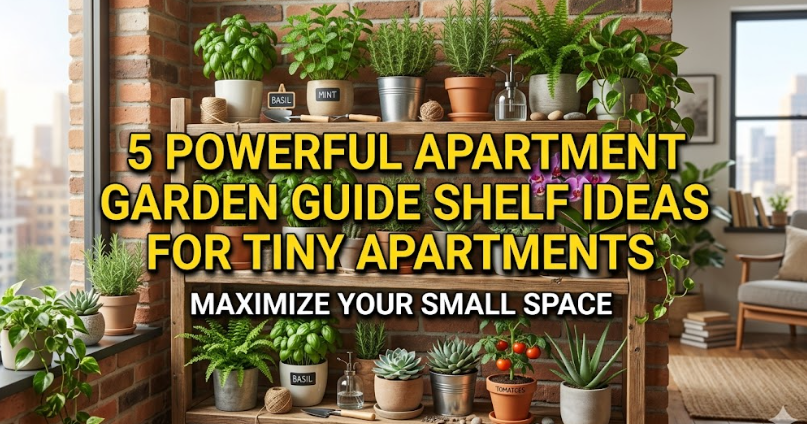
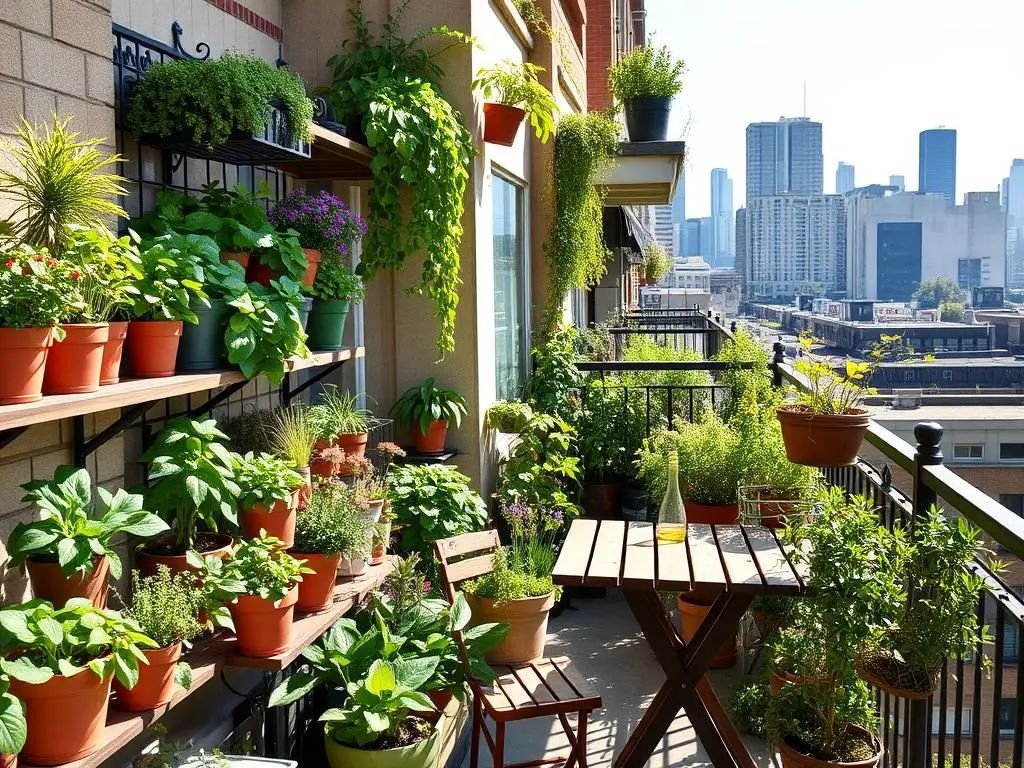
There are tons of goldless gardens waiting to be planted behind every blank wall. Wall-mounted planters, pegboards with hooks, and hanging pockets are inexpensive and simple to set up. One 5-foot wall can accommodate 10–15 small plants that would otherwise require 10–15 floor spots.
Best plants for vertical walls:
- Pothos
- String of pearls
- Fresh herbs — basil, mint, and cilantro
- Ferns
- Small succulents
DIY Vertical Pallet Garden
Got an old wooden pallet? Sand it down, line the back with landscape fabric, fill it with soil, and plant directly into the gaps. Lean it against a wall or mount it properly. One pallet gives you a complete herb wall for less than $20.
Tiered Shelf Planters
Three-tiered plant stands are a total game changer. They occupy less than one square foot of floor space and are capable of hosting 9–12 plants at different heights. Put one by a window and rotate plants every week so that each receives equal light.
| Setup | Floor Space Used | Plants Supported |
|---|---|---|
| Single pot on floor | 0.5 sq ft | 1 |
| 3-tier plant stand | 1 sq ft | 9–12 |
| Wall-mounted pockets (5 ft) | 0 sq ft | 10–15 |
| Hanging basket cluster | 0 sq ft | 3–5 |
The biggest return on investment in this whole apartment garden guide is going vertical.
Hack #2 — Use Proper Containers (Bigger Is Not Always Better)
With few exceptions, beginners grab whatever pot they think looks nice. That’s a mistake.
Plant growth is directly related to container size. Too small and roots become cramped. Too big, and the soil stays wet too long, leading to root rot.
Matching Plant to Pot
Here’s a simple breakdown:
- Small pots (4–6 inches): Herbs, succulents, small flowers
- Medium pots (8–12 inches): Tomatoes, peppers, lettuce, kale
- Large pots (14+ inches): Eggplants, dwarf fruit trees, and large ferns
Self-Watering Containers Are a Life-Saver
If you forget to water (we all do), self-watering pots are your best friend. They have a built-in reservoir on the bottom. The plant only drinks when it needs to. Less waste, less stress, healthier roots.
Soil does dry out quickly in heat on balconies.
Fabric Grow Bags — Inexpensive, Flexible, and Efficient
One of apartment gardening’s best-kept secrets are fabric grow bags. They’re lightweight, foldable when not in use, and encourage something known as “air pruning.” It means roots don’t go around in a circle or choke themselves at the edge of the bag.
A 5-gallon fabric bag costs around $3–5 and can grow tomatoes, peppers, and even small potatoes.
Hack #3 — Nail the Light Game, Even With No South-Facing Window
The biggest point of contention for beginners is light. “My apartment doesn’t get enough sun.”
The lowdown: there is a plant for every light situation. And there are devices that generate light where there is none.
Know Your Light Zones
At noon, walk around your apartment to see where sunlight naturally lands.
- Bright direct light: 1–2 feet away from a south or west-facing window
- Bright indirect light: 2–5 feet away from a window
- Low light: Far from windows or in north-facing rooms
Plants That Thrive in Low Light
If your apartment is dark, fear not. These plants love it:
- ZZ plant
- Snake plant (Sansevieria)
- Peace lily
- Pothos
- Chinese evergreen
Grow Lights — The Secret Weapon
Grow lights have been a complete game changer for indoor gardeners. You can grow herbs, salad greens, and small fruiting plants in a room without windows.
What to look for in a grow light:
- Full spectrum (mimics sunlight)
- LED (energy efficient, low heat)
- Timer function (set it and forget it)
- Vegetables need a minimum of 2,000–3,000 lumens
According to the University of Missouri Extension, most edible plants need between 14–16 hours of supplemental light per day when grown indoors without natural sunlight. A basic LED grow light strip costs $15–30 and runs 12–16 hours a day for mere pennies worth of electricity. For best results, place it 6–12 inches above your plants.
Hack #4 — Grow the Edible Apartment Garden
Here’s one hack that pays you back: grow what you actually eat.
The edible apartment garden puts fresh ingredients at your doorstep. No grocery store. No pesticides. Just real, living food.
Best Edibles for Small Spaces
Not all vegetables are apartment-friendly. Corn and pumpkins are out. But many delicious crops do just fine in containers.
| Plant | Min. Pot Size | Sunlight Needed | Time to Harvest |
|---|---|---|---|
| Cherry tomatoes | 10 inches | 6–8 hrs direct | 60–70 days |
| Lettuce | 6 inches | 4–6 hrs | 30–45 days |
| Radishes | 6 inches | 4–6 hrs | 25–30 days |
| Green onions | 4 inches | 4 hrs | 3–4 weeks |
| Basil | 4–6 inches | 6+ hrs | 3–4 weeks |
| Dwarf peppers | 8–10 inches | 6+ hrs | 80 days |
| Spinach | 6–8 inches | 3–4 hrs | 50 days |
Regrow Vegetables From Kitchen Scraps
This is one of the most satisfying tricks you can learn from any apartment garden guide. Certain vegetables can regrow from scraps you’d typically discard.
- Green onions: Put the root ends in a glass of water. New growth in 3–5 days.
- Lettuce: Place the base in shallow water and set it on a sunny windowsill.
- Celery: Same as above — the base grows leaves fast.
- Garlic: Set a clove in an inch of dirt. Green shoots appear in about a week.
It’s almost free gardening, and it teaches you a lot about how plants behave.
Hack #5 — Create a Mini Balcony Ecosystem That Runs on Autopilot
If you have even a tiny balcony, there’s serious potential in your hands.
The secret to a thriving balcony garden isn’t working harder. It’s designing it more intelligently so that everything works together.
The Three-Layer Balcony Design
Imagine your balcony as three levels:
- Floor layer: Large tubs for tomatoes, peppers, or dwarf fruit trees
- Mid layer: Railing planters containing herbs, flowers, or trailing plants
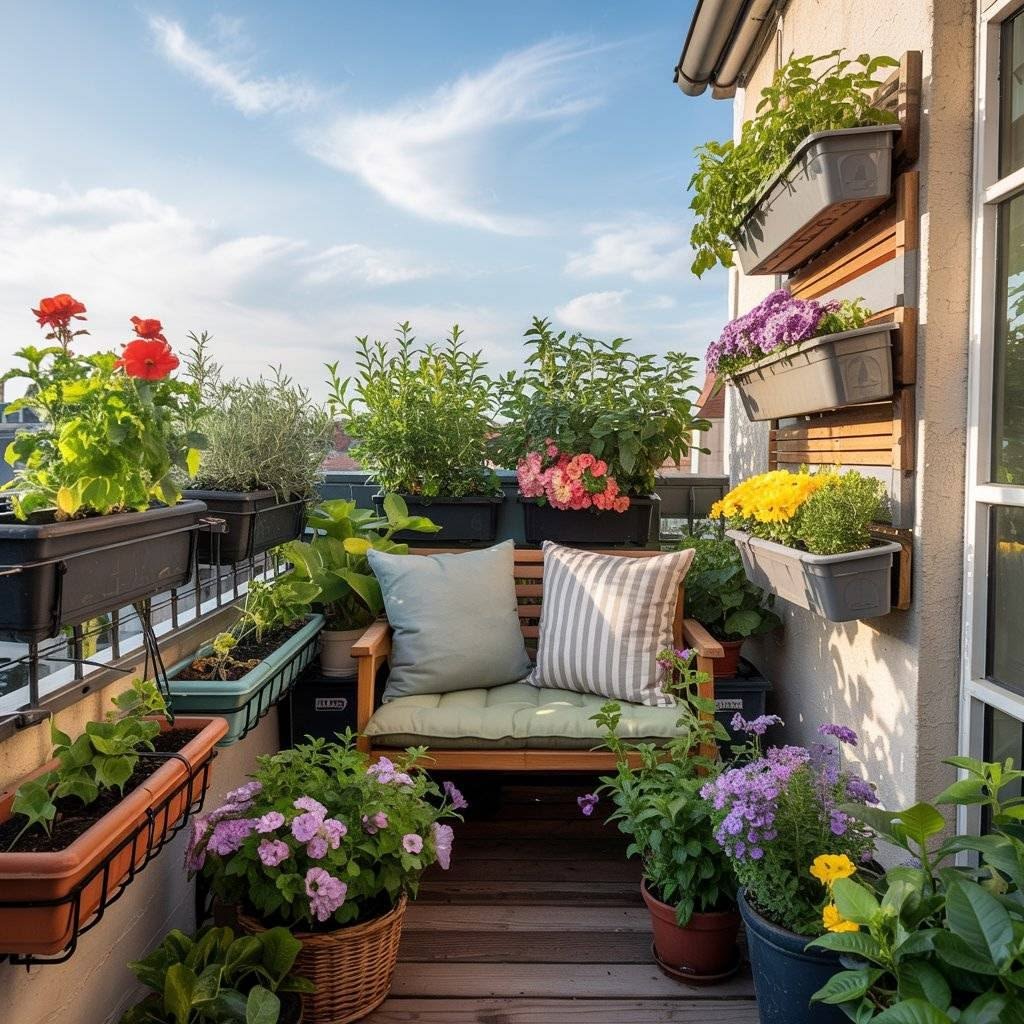
- Top layer: Hanging baskets with a tension rod and hanging pots
This three-layer system makes the most of every inch, both vertically and horizontally.
Companion Planting in Small Spaces
Companion planting is planting certain plants next to each other because they are beneficial to one another. Not only does this maximize space, but it also helps with plant health, especially in small containers.
Great companion combos for containers:
- Tomatoes + basil: Basil acts as a pest repellant and enhances the flavor of tomatoes
- Peppers + marigolds: Marigolds keep aphids away
- Lettuce + tall herbs: The shade of tall herbs like rosemary and sage prevents lettuce from bolting in external heat
Balcony Wind and Weight Considerations
One thing most guides miss: balconies can be windy and weight is a real issue.
Wind dries pots out quickly and can blow lightweight containers over. Heavier ceramic pots or fabric bags filled with dense potting mix are more stable. If you’re planning on getting serious with large containers, always check your building’s balcony weight limit. Most modern balconies support 50–100 lbs per square foot — though it never hurts to check.
Hack #6 — Get the Soil and Watering Formula Right for Container Gardening
This is the hack that most people ignore — and it’s the one that kills the most plants.
Container garden soil is very different from soil you dig out of the ground. It compacts and doesn’t drain well, suffocating roots. A completely different mixture is required for container gardening.
The Perfect Container Mix Recipe
Here’s a simple DIY potting mix that works well for most apartment plants:
- 60% peat moss or coco coir (retains moisture and keeps it light)
- 30% perlite or coarse sand (increases drainage and airflow)
- 10% compost or worm castings (feeds plants naturally)
You can purchase each ingredient individually and combine them yourself. It’s less expensive than store-bought potting mix and you get to determine the quality.
Getting Watering Right — The Finger Test Always Works
Overwatering is the most common cause of plant death in apartments. Too much water kills more plants than too little.
Use the finger test: insert your fingertip into the soil an inch or two. If it feels dry, give it a good soaking. If it still feels damp, give it another day.
For most herbs and vegetables in the warm months, every 2–3 days is about right. Most plants only require watering once a week in winter.
Drainage Is Non-Negotiable
All pots require a drainage hole. Period.
Without drainage, water collects at the bottom and roots decay within days. If you love a pot with no hole, use it as a decorative sleeve and place one with drainage inside.
Fertilizing Small-Space Gardens
Container plants consume nutrients far faster than those grown in garden beds, because water flushes through more frequently.
Fertilize your plants every 2–3 weeks during the growing season with a balanced liquid fertilizer (around 10-10-10 NPK). Slow-release granular fertilizers mixed into the soil at planting are also a great option — they feed plants for months with no extra effort.
Hack #7 — Aesthetic Design: Create an Apartment Garden That Is Both Beautiful AND Functional
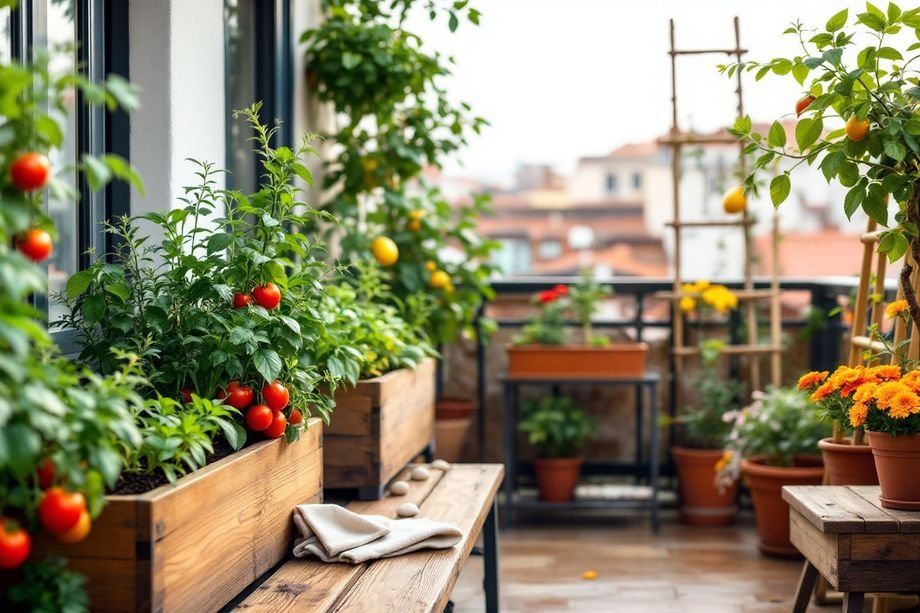
The most successful apartment garden is one you actually want to be in.
Functionality is important, but so is how your garden makes you feel. A well-thought-out small garden can transform the entire feel of your home.
Pot Groupings and Visual Balance
Even numbers are boring. Odd numbers look good. Plant in threes or fives. Vary heights within each group. Put the tallest plant in the back, middle plants in the middle, and trailing plants at the front or edges.
All terracotta pots, all white pots, or all black pots — in small spaces, that creates a clean, intentional look.
Use Mirrors to Visually Double Your Garden
A mirror safe for outdoor use, positioned behind your plant arrangement, gives the area twice the sense of space. It also reflects additional light onto your plants. Win-win.
Incorporate a Small Water Feature or Wind Chime
Sound matters in a garden. A small tabletop fountain or simple wind chime brings an element of calm that makes your balcony or windowsill garden feel like a proper retreat.
Seasonal Refresh Strategy
Keep your garden from getting stale by planning for the seasons:
- Spring: Pansies, herbs, lettuce
- Summer: Tomatoes, peppers, basil, marigolds
- Fall: Kale, mums, ornamental cabbage
- Winter (inside): Succulents, snake plants, forced bulbs
This rotation keeps things fresh and gives you something new to look forward to every few months.
Apartment Garden Hacks: Quick-Reference at a Glance
| Hack | Core Idea | Difficulty | Cost Range |
|---|---|---|---|
| Go Vertical | Use walls and height, not just floor space | Easy | $5–$50 |
| Right Containers | Match pot size to plant type | Easy | $3–$30 |
| Master Light | Use grow lights + right plant placement | Medium | $0–$30 |
| Grow Edibles | Grow food you actually eat | Medium | $5–$40 |
| Balcony Ecosystem | Three-layer design for maximum output | Medium | $20–$80 |
| Soil & Watering | Use proper mix and water by touch, not schedule | Easy | $10–$25 |
| Design for Joy | Combine beauty and function intentionally | Easy | $0–$50 |
Mistakes to Avoid When Gardening in an Apartment
Even armed with the best apartment garden guide, mistakes can happen. Here are the most frequent — and how to avoid them.
Mistake 1: Using regular garden soil in pots It compacts and drowns roots. Always use lightweight potting mix.
Mistake 2: Overwatering Touch the soil before watering every time. Do not water on a set timetable.
Mistake 3: Picking plants that aren’t suited for your light A sun-loving tomato in a dim north-facing room is doomed. Choose plants that suit your true light conditions.
Mistake 4: Neglecting pot drainage Drainage holes are non-negotiable. Always.
Mistake 5: Planting too many things at once Start with 3–5 plants. Learn their needs. Then expand. Rushing leads to feeling overwhelmed — and dead plants.
FAQs About Apartment Gardening
Q: Can I actually grow vegetables in an apartment without any outdoor space? Yes, absolutely. With grow lights and the right containers, you can grow herbs, salad greens, radishes, and small tomato varieties entirely indoors.
Q: What are some of the easiest plants for a total newbie? Beginners can start with pothos, snake plants, mint, green onions, or lettuce. They are very forgiving and grow quickly, which keeps you motivated.
Q: What should I do about pests in my apartment garden? Fungus gnats, spider mites, and aphids are the most common pests found indoors. Most of them can be handled with neem oil spray diluted in water. Allow soil to dry out more between waterings to discourage gnats.
Q: Is there special soil for indoor plants versus outdoor balcony plants? You can use the same lightweight, well-draining potting mix for either. Outdoor plants in pots may dry faster, so you might blend in a little more moisture-retaining material like coco coir.
Q: How much does it cost to set up an apartment garden? You could start a basic herb garden for under $20 with seeds, two pots, and a bag of potting mix. A more complete balcony setup with grow lights costs $50–$150.
Q: What if I travel frequently and my plants suffer during extended absences? Self-watering pots and wicking systems — a string that runs from a water bottle into the soil — can keep plants alive for 1–2 weeks with no attention.
Q: Can children do apartment gardening? It’s an extremely great activity for kids. Fast-growing seeds such as radishes, beans, and sunflowers show progress quickly and can teach patience and responsibility, as well as help kids learn about where food comes from.
Wrapping It All Up
You don’t need more space. You need smarter strategies.
This apartment garden guide has given you seven real, actionable hacks to help even the smallest apartment become a green, productive, and beautiful space. From going vertical and selecting the right containers to mastering light and designing for joy — each hack builds on the next.
Start small. Choose one or two from this list to try out this week. It might mean hanging a wall planter or switching to a self-watering pot. Perhaps it’s buying a packet of lettuce seeds and a fabric grow bag.
These small steps build up to something you will be proud of.
Your apartment garden is waiting. All it needs is you to start.